


Journalism of Courage
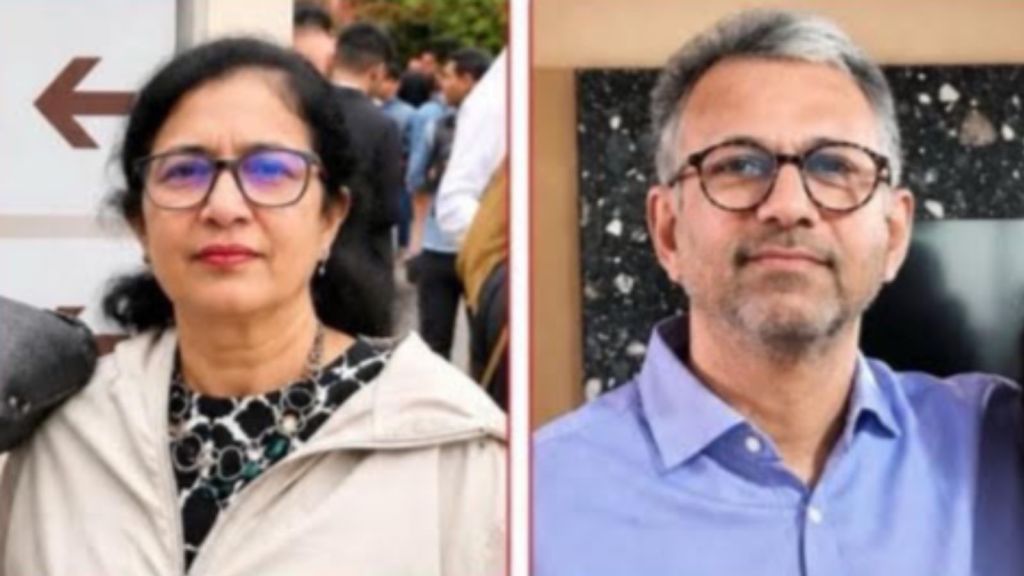 Meenakshi Subramaniam and Venkata Subramaniam, the Mumbai couple missing in Nepal along with a group of 67 trekkers. (Photo by special arrangement)
Following the devastating floods in Nepal, one of the biggest challenges after the recovery of bodies and human remains has been their identification.
“Given the condition of many of the recovered remains, visual identification is often difficult or impossible. DNA profiling has therefore become a crucial tool in the identification process,” Umesh Zirpe, veteran mountaineer and president of the Akhil Maharashtra Giryarohan Mahasangh (AMGM), told The Indian Express.
The AMGM and its Maharashtra Mountaineers Rescue Coordination Centre (MMRCC) have been in continuous coordination with the Maharashtra State Disaster Management authorities. Arrangements for forensic DNA sample collection have been established at three locations in Maharashtra—state-run forensic laboratories in Mumbai, Pune, and Nashik. “So far 51 people from across Maharashtra have agreed to send their samples,” Zirpe said.
The floods and landslides that struck Nepal 11 days ago have left a heartbreaking trail of destruction. A large number of travellers from India, particularly from Maharashtra, were in Nepal for the Kailash Mansarovar Yatra when the disaster occurred. As rescue operations continue, bodies and human remains are being recovered from vast quantities of mud and debris. Because of the large number of casualties, hospitals and mortuaries in cities such as Kathmandu, Pokhara, and Chitwan are facing severe shortages of space and refrigeration facilities.
The condition of many recovered bodies makes visual identification difficult. Authorities are therefore photographing the bodies and collecting DNA samples before carrying out identification and, where necessary, the final rites.
The Nepal government has issued advisories urging the close relatives of missing persons to come forward and provide DNA samples. A dedicated online portal has also been established to facilitate information collection and coordinate the identification process. The DNA profiles collected from relatives in Maharashtra will be used for comparison with DNA profiles obtained from unidentified bodies and human remains recovered in Nepal. A positive match can help establish the identity of a missing person through the appropriate official process.
“This is an important and sensitive stage for the affected families. Until the forensic identification process is completed and the authorities formally confirm the identity, information about recovered remains must be treated with caution. For families searching for their missing loved ones, DNA identification offers a scientific and reliable pathway towards certainty, dignity, and closure.
According to Zirpe, for families in India, particularly in Maharashtra, an important question was where close relatives of missing travellers could provide their DNA samples.
“AMGM is providing coordination and assistance to families throughout this process. Two MMRCC volunteers are also available 24×7 by telephone to provide information, guidance and support to relatives regarding DNA sampling and the subsequent procedure,” he said.
Appeal to families of those missing in Nepal disaster
Zirpe said the immediate priority is to establish the identities of those who remain missing. “Close blood relatives of those who are missing are urged to provide DNA samples at facilities designated by the authorities. DNA matching between relatives and unidentified remains can play a crucial role in confirming identities and providing families with closure. At this difficult moment, accurate information, coordinated rescue efforts and timely DNA identification are essential—not only to bring the missing home, but also to give grieving families the answers they desperately need,” Zirpe appealed.
‘Still hoping for a miracle’
Meanwhile, the family members of Meenakshi and Venkata Subramaniam—the Mumbai couple missing along with the group of 67 trekkers led by Milind Chitaley—are keeping their hopes alive. Meenakshi’s brother C G Ramakrishnan said, “The rescue of three people 9-10 days after the flood has infused some hope in us. My sister and brother-in-law’s only son is in the UK, and he has also submitted his DNA sample as required, but we are still hoping for a miracle. We have not gone to Nepal because we were told not to go there unless there is some specific information. We are constantly following updates on the WhatsApp group created for the families and providing support to each other. “


