4 min readPuneDec 6, 2024 09:50 AM IST
First published on: Dec 4, 2024 at 06:43 PM IST
Earlier this year, at Arentshof in Bruges, Belgium, artist Monali Meher cooked and ate heaps of potatoes painted with words such as war, hate, and violence, which she said had become meaningless in a violent world and urgently needed replacement.
At an exhibition at VHC, a contemporary art gallery in Koregaon Park in Pune, the performance and visual artist revisits the concern with, among other things, a photographic work of stacks of vessels from a Pune bazaar on which she has painted words such as zameen, killed, tears, soil, and land.
 Monali in her bright and beautiful studio in Ghent, Belgium. (Image: Instagram/@monalimeher)
“Look at what is happening in Gaza? This is on our faces, and some people are vocal about it, while others are very quiet. In the West, we are in protest very often. What is happening to our humanity? The wars are not in our control but it affects me,” says Meher.
Born in Pune, Meher is now based in Ghent, Belgium. She graduated from Sir J J School of Art, Mumbai, and was awarded the prestigious Rijksakademie Artists Residency, Amsterdam, in 2000. She held her first exhibition in the city in January last year, titled “Homecoming”. In a world marked by migration and displacement, Meher is exploring her connection to the place of her origins with the present exhibition at VHC, titled “Walking Root Route”.
Never Again(left) and Sea Sail Sell(right) from ‘Walking Root Route’ by Monali Meher. (Image credits: VHC)
The symbolic, and most powerful, work of the show is an installation comprising a wallpaper image of one of Pune’s best-known trees, the banyan, covered with red threads in a way that resembles a map or recalls the ritual threads tied around holy trees across India.
“In this exhibition, I trace an intricate map of connections between origin and movement, where root becomes ‘route’. The banyan tree is a symbol of grounding and growth, its branches eternally stretching towards both sky and earth. Each descending root is a testament to resilience, to life’s cycles of renewal, and to the unseen bonds that bind us to our histories and landscapes,” says Meher.
Rooted by Monali Meher at display. (Image: VHC)
The exhibition is a way to wrestle with “the shifting borders of home, identity and time”. “I look to the banyan tree as a keeper of stories, as it has borne witness to generations and its roots embody both anchor and memory,” she adds.
Monali Meher’s Unknown Landscape (2024) from ‘Walking Root Route’ at VHC. (Image credits: VHC)
Another installation, ‘Unknown Landscape’, is an interplay of branches, bricks, soil and blown glass forms, among others, spread on the floor and conveying temporariness as well as resilience. “I had created ‘Unknown Landscape’ in 2019. It was a vibrant, research-driven piece that blended natural materials with glass sculptures created during my residency at Gent-Glas in Belgium. The work mirrored the fluidity and impermanence of natural landscapes, evolving silently like a living organism,” she says.
In Pune, Meher used locally-sourced materials and recycled glass that “allowed the installation to continually transform and invited viewers to engage with its evolving narrative”.
The exhibition will go on till December 7.

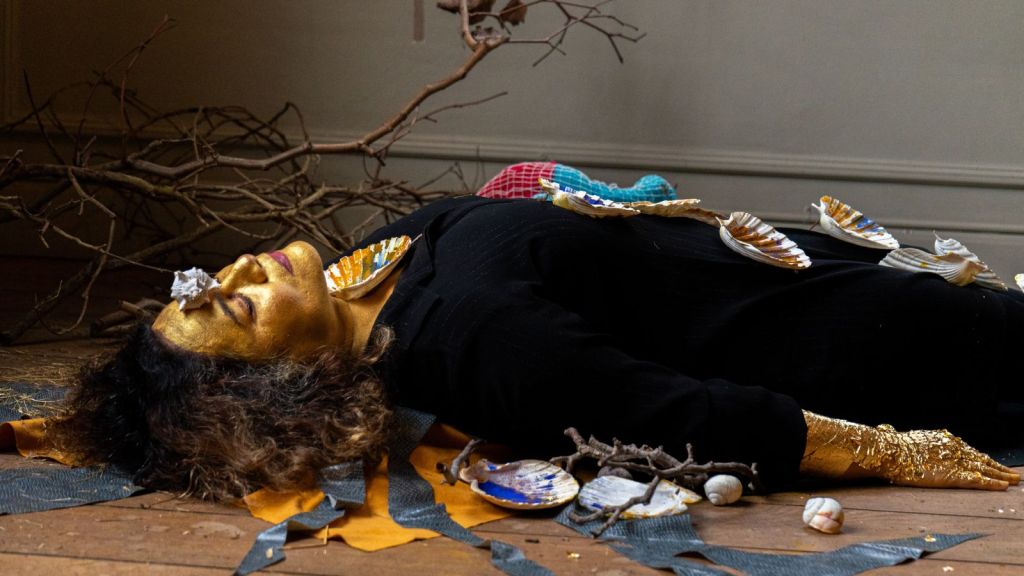 Gilded from the exhibition 'Walking Root Route' by Monali Meher. (Image credits: VHC)

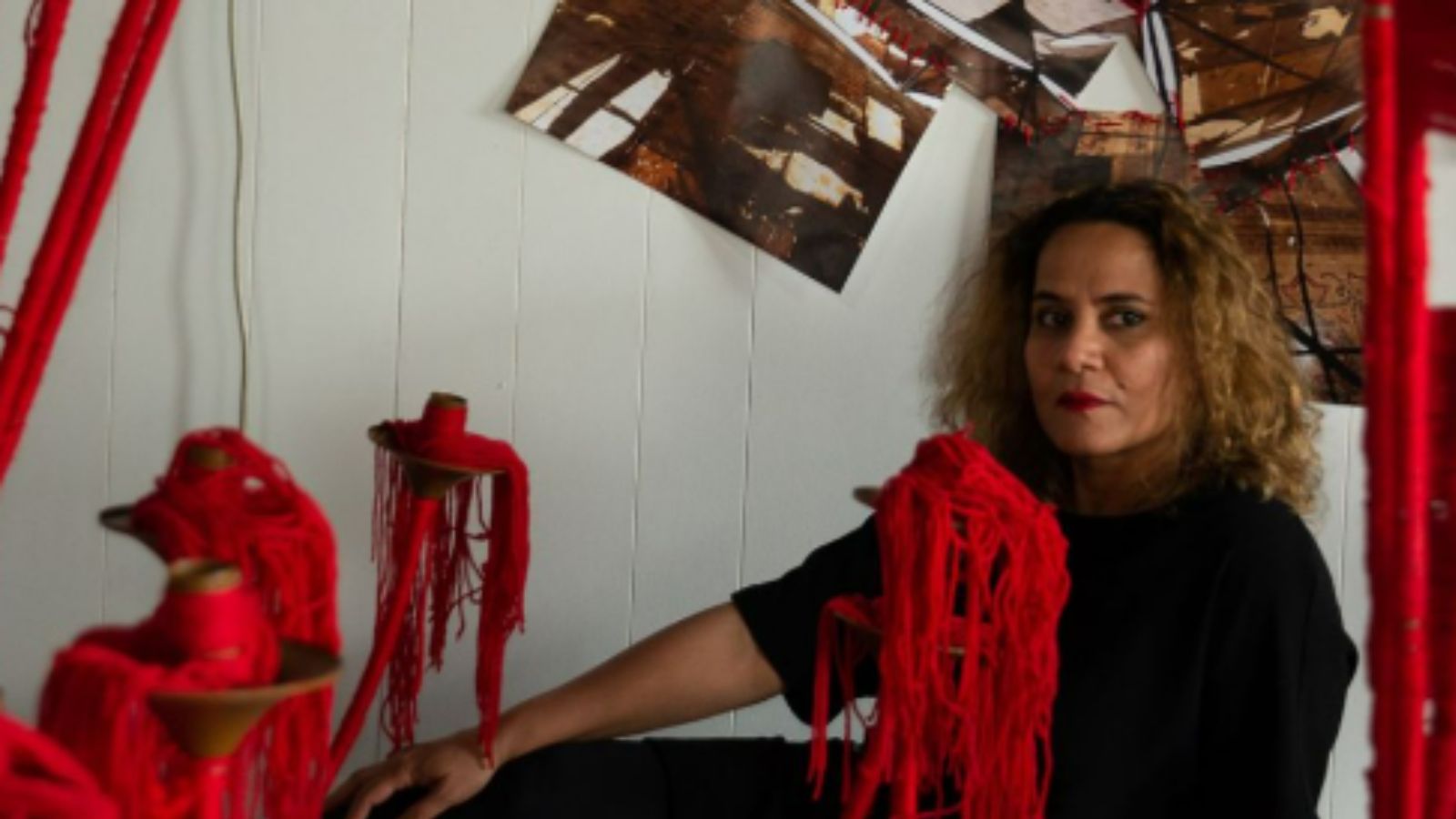 Monali in her bright and beautiful studio in Ghent, Belgium. (Image: Instagram/@monalimeher)
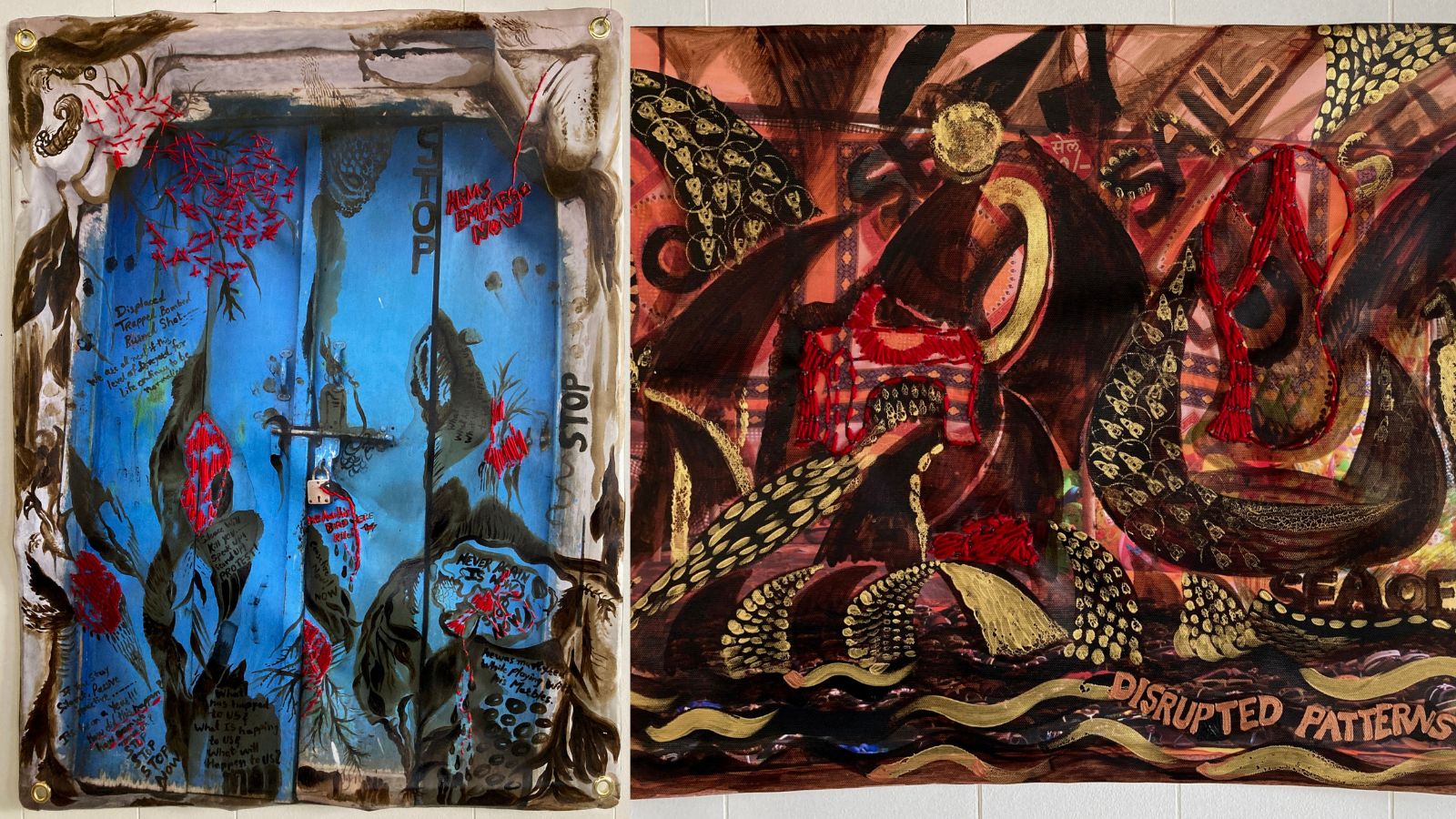 Never Again(left) and Sea Sail Sell(right) from ‘Walking Root Route’ by Monali Meher. (Image credits: VHC)
 Rooted by Monali Meher at display. (Image: VHC)
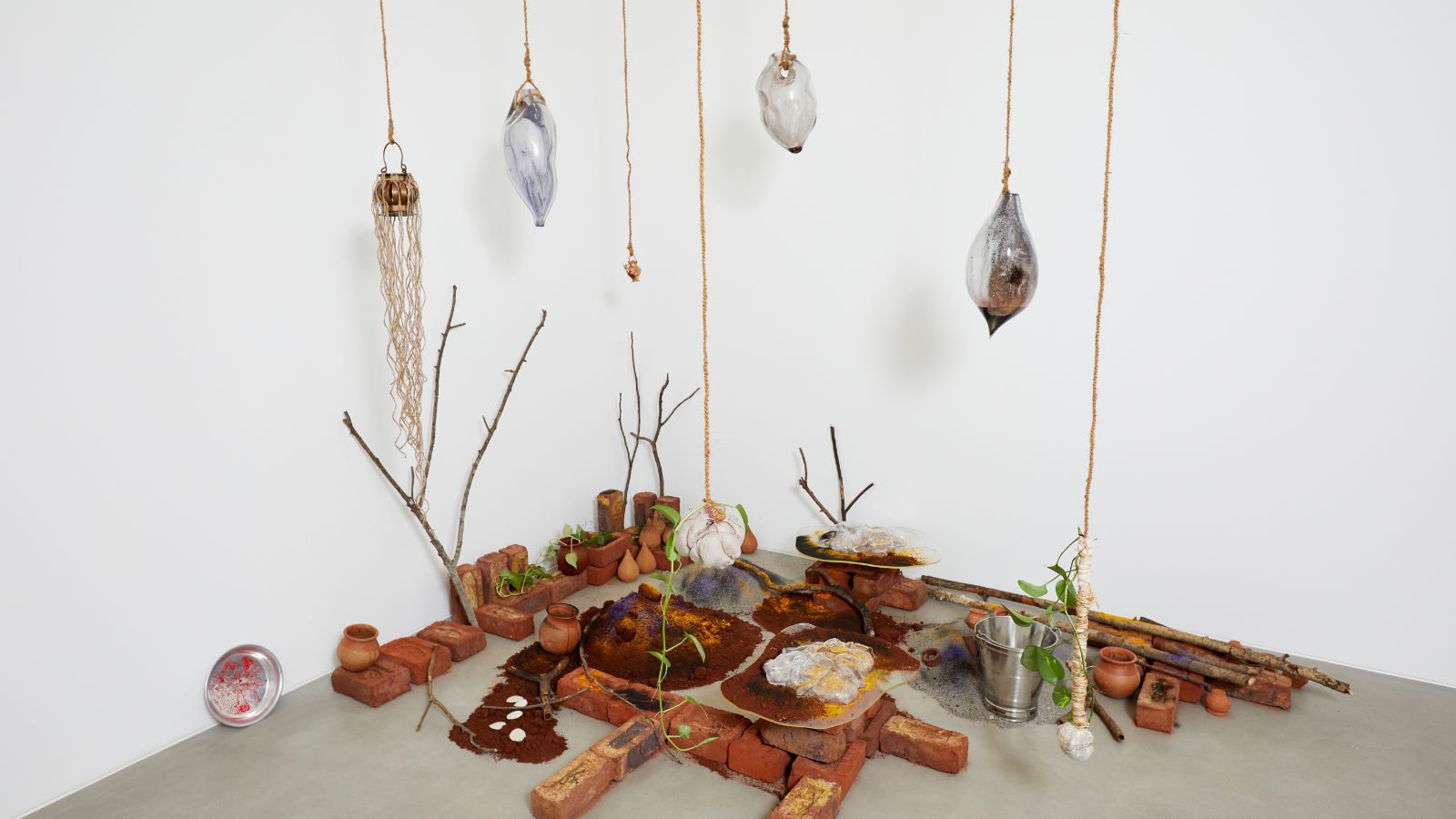 Monali Meher’s Unknown Landscape (2024) from ‘Walking Root Route’ at VHC. (Image credits: VHC)


 Share


