


Journalism of Courage
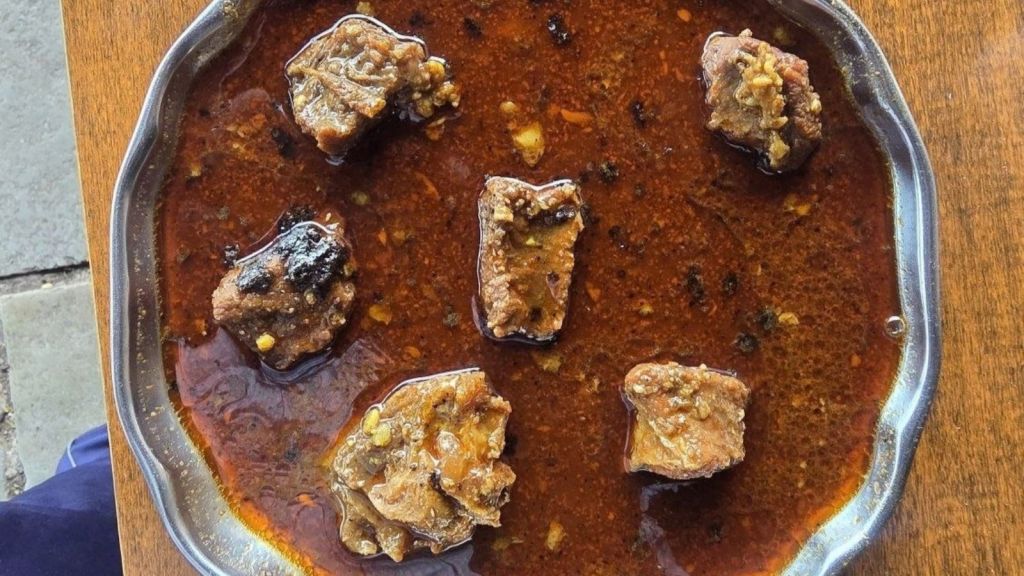 Kasagi mutton, cooked without water in its own juices, oil and spices. (Express)
Every Tuesday, the weekly bazaar in Kasagi village in Maharashtra’s Dharashiv district (formerly Osmanabad) draws farmers, traders and a growing crowd of food lovers who travel long distances for one dish. Kasagi mutton, a fiery, oil-rich curry that the village has cooked since 1960, is now popular across the Maharashtra-Karnataka border region.
Diners arrive from Latur, Dharashiv, Gulbarga and Solapur. Jameer and Dawood Mulla’s grandfather began selling the dish at the weekly market in 1960. More than six decades later, the third generation continues the family business through separate branches.
According to Jameer, who owns Hotel Hindustan in Kasagi, customers consume around nine to 10 goats over about seven hours on a Tuesday. Rather than prepare large quantities in advance, the family cooks the mutton in batches of about 7-8 kg at a time so customers get a freshly prepared dish.
The cooking method sets traditional Kasagi mutton apart. Unlike many mutton preparations that require water during the initial stages of cooking, the family slow-cooks the meat without adding external water. The meat cooks in its own juices and fat, along with onions, oil and a locally prepared spice mixture.
“For us, the most important part is that no water is added while the mutton is cooking. The meat cooks in its own juices and fat. If customers want more gravy, water is added only after the mutton is completely cooked,” said Dawood Mulla.
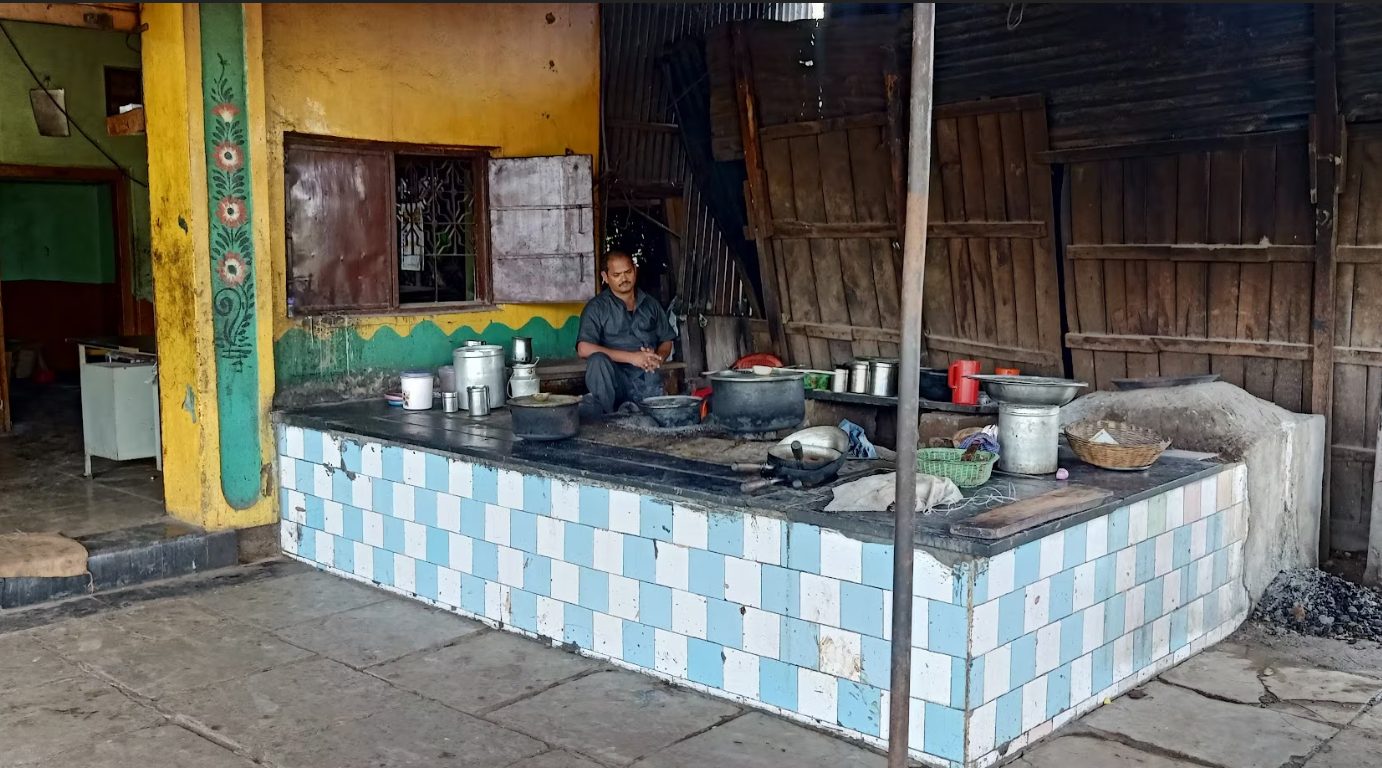 The kitchen at Hotel Hindustan in Kasagi, where the mutton is slow-cooked. (Express)
The family also considers the choice of meat important. It prefers a medium-sized goat aged around nine to 12 months, as the Mullas believe the quality and tenderness of the meat directly influence the final taste.
The preparation begins with about 150 ml of groundnut oil for every kilogram of mutton. The cooks add onions first and cook them until they turn red, followed by ginger-garlic paste and the mutton. They let the meat cook until it is about halfway done before adding tomatoes and the remaining spices, along with locally prepared coconut powder and the family’s spice mixture. The ingredients gradually change the colour and texture of the preparation as the meat continues to cook.
The spice mix includes Rajapuri coconut copra, a blend of Teja and Guntur varieties of red chillies, and rock salt. The family heats the copra in an earthen stove before turning it into a powder. It also uses locally prepared spice pastes, known as watan, which contribute to the dish’s distinctive flavour.
“The ingredients, including the spices, are prepared locally. We use Rajapuri coconut copra, which is heated in an earthen stove and then powdered. We also use a mixture of Teja and Guntur chilli powder. The meat, spices and coconut come together slowly, and the colour and taste change as the cooking progresses,” Dawood said.
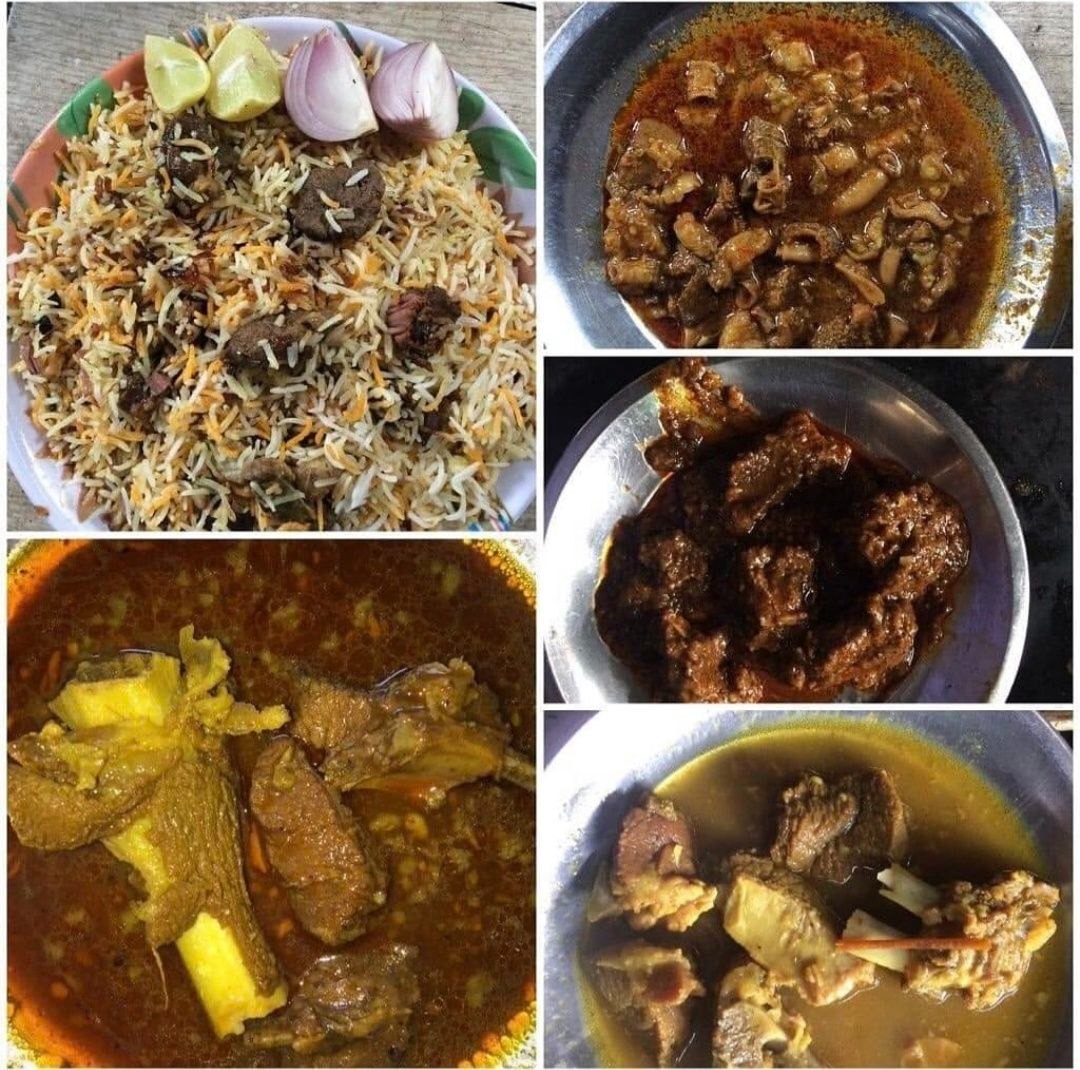 Besides the original Kasagi mutton, the menu now includes mutton biryani, kalija and gurda, among other dishes. (Express)
The cooks take about 75-80 minutes to prepare the mutton. They continuously stir and move the meat to ensure it cooks evenly. The family also believes the earthen stove contributes to the dish’s rustic flavour. According to the family, the technique defines the character of Kasagi mutton. Slow cooking allows the spices and the meat’s natural juices to concentrate, while the absence of water during the initial cooking keeps the flavours intense.
Over the years, the family has expanded its menu beyond the traditional mutton curry. Its branches now also serve mutton jigri, biryani, kalija and gurda.
“Even today, the Tuesday market continues to be an important day for us. The next generation has taken over the business and we have expanded to four branches,” said Jameer.


