4 min readPuneJan 23, 2026 09:56 PM IST
First published on: Jan 23, 2026 at 09:56 PM IST
The Constitution of India is the most powerful book in the country – and also, its the most unread one. In 2024, Mumbai-based artist and entrepreneur Darshan Mahajan wondered, “What if the Constitution of India wasn’t something you read but something you experienced?” What if it were presented as a Marathi play and staged across the cities and villages of the state? “The vision was to make a play that had never been made before,” says Mahajan.
Within a year, a play, Rashtragranth, was ready. Mahajan and a team of 50 artists have been tweaking it into “a gripping two-act production that takes you on a powerful journey through India’s historical and modern relationship with its Constitution”. There are 51 protagonists and the stage design, recreating 15 historic locations, is by Sandesh Bendre, an award-winning set designer.

Since 2025, Rashtragranth has been touring as free, pilot performances through nine districts of Maharashtra for audience feedback, including of Bhimrao Yashwant Ambedkar, the grandson of Dr Babasaheb Ambedkar. This Republic Day, the grand, large-scale play will have its public launch in Mumbai. It will travel to Pune on February 9, with the city actor Mubin Tamboli playing Ambedkar.
There are 51 protagonists and the stage design, recreating 15 historic locations, is by Sandesh Bendre, an award-winning set designer.
The play has been created by Artistic Humans, a Mumbai startup founded by Mahajan to produce plays, curate festivals, design artistic and learning-based workshops, among others to empower the unorganised sector of artistic talent, and Culturally by ShubhLab, another Mumbai startup focused on sustainable livelihoods and empowerment.
Acclaimed playwrights Prasad Thorve and Abhiram Bhadkamkar have scripted the story; Kumar Sohoni, a National School of Drama (NSD) alumnus and Sangeet Natak Akademi Award winner has directed the play. The original music is by Milind Joshi and costumes by Chaitrali Dongre,
As the audience settles down in the hall and the lights dim, the play begins with three college students – two of whom are trying to figure out an assignment on the Constitution. They take help of one of their friends, Hetal, who is a who is a Constitution scholar. Hetal symbolises the Constitution as she knows everything.
Spanning two hours, the play transforms constitutional ideas from “written text into a vibrant cultural experience, inviting people of all ages, especially the youth, to engage with the principles that unite India and empower its citizens”. Various milestone events, such as labour laws, women rights, Dalit rights, Adivasi rights and child labour, are portrayed on stage.
One section deals with the Shah Bano case, another with land reforms. “We are trying to show how, after implementation, the Constitution has impacted various segments of society. A woman says, ‘The Constitution is in place, but how is it impacting our lives?’ One of the characters replies, ‘Women have equal rights to vote, it is real power in the hands of women,’” says Mahajan.
Chief Minister Devendra Fadnavis has written to Mahajan about the play. “The efforts undertaken by Artistic Humans to bring vital themes such as Constitutional rights and duties, social justice, gender equality, democracy, caste, and citizens’ rights to the stage in a compelling and impactful manner are truly commendable. This initiative deserves heartfelt appreciation, and sincere congratulations are extended to the organisation and all the artists involved for their meaningful contribution,” the CM wrote.
Prathmesh Navalkar, founder of Culturally by ShubhLab, who has followed the play as it was staged in Solapur and other places. “Our vision is to create a sustainable ecosystem for artists and technicians who breathe life into this project. We are integrating workshops and art experiences around the Constitution and folk arts forms, enabling assistive tech for senior citizens and persons with disabilities, and lowering ticket fee than the industry standards,” he said.
Mahajan adds that the people creating the play at different levels represent the wide diversity of India. “The play has been created by people from all kinds of caste, creed, regions, tribes and religions. That makes me so proud,” he says.

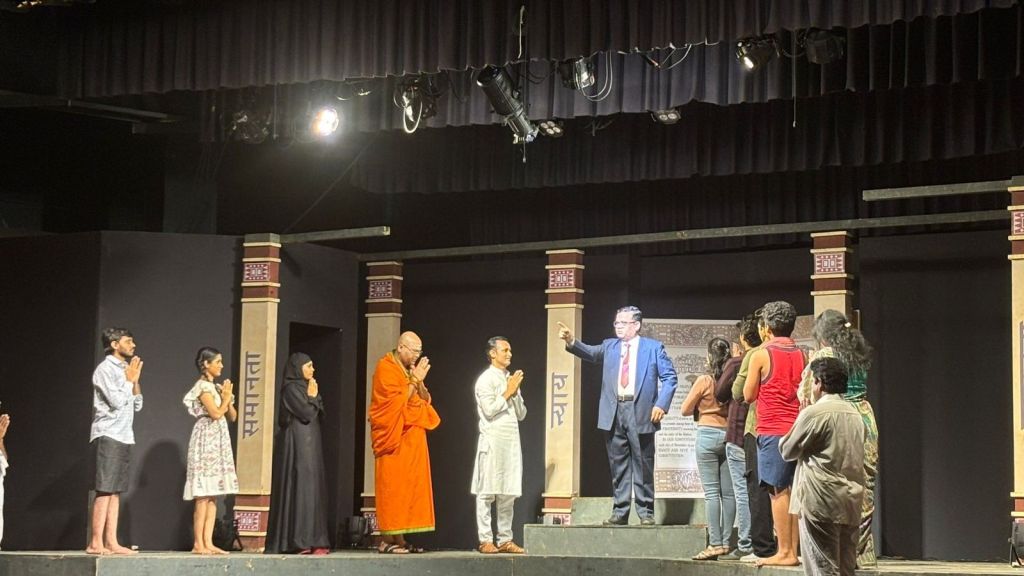 Scene from the play created by Artistic Humans, a Mumbai startup founded by Mahajan

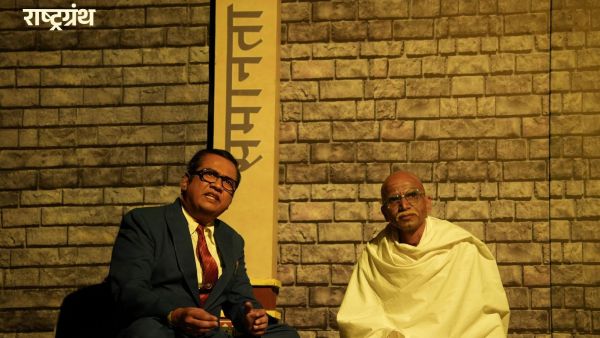 There are 51 protagonists and the stage design, recreating 15 historic locations, is by Sandesh Bendre, an award-winning set designer.


 Share


