3 min read

Click here to join Express Pune WhatsApp channel and get a curated list of our stories
© The Indian Express Pvt Ltd



 Baramati, Bhor and adjacent areas during the golden hour to reduce morbidity and mortality.
September 30 marked four years since Villoo C Poonawalla Hospital for Wildlife - The Transit Treatment Centre of Ela Foundation and Maharashtra Forest Department was officially inaugurated. (Express photo)
Baramati, Bhor and adjacent areas during the golden hour to reduce morbidity and mortality.
September 30 marked four years since Villoo C Poonawalla Hospital for Wildlife - The Transit Treatment Centre of Ela Foundation and Maharashtra Forest Department was officially inaugurated. (Express photo)From rescuing leopard cubs and treating injured vultures and flamingoes to performing intricate surgeries on turtles and cobras, the Villoo C Poonawalla Wildlife Hospital, Pingori village in Purandar taluka of Pune district, entered its fifth year of service. Over the past four years the facility has treated nearly 2,500 wild animals across diverse species.
In recognition of its growing impact, forest department authorities have suggested the hospital expand its operations and treat sick and injured animals from Purandar, Baramati, Bhor and adjacent areas during the golden hour to reduce morbidity and mortality.
September 30 marked four years since Villoo C Poonawalla Hospital for Wildlife – The Transit Treatment Centre of Ela Foundation and Maharashtra Forest Department was officially inaugurated.
“We enter the fifth year now. The MOU of the TTC was signed just before the Covid -19 pandemic in 2019 between Ela and Maharashtra Forest Department. Because of a generous donation from Dr Cyrus Poonawalla, Managing Director, Serum Institute of India, a well equipped wildlife hospital was set up,” Dr Satish Pande, noted ornithologist and director of the hospital told The Indian Express.
Apart from an X-Ray department, biochemistry and haematology laboratory and operation theatre, the facility also includes animal feed preparation kitchen, holding, quarantine, recovery and ward areas.
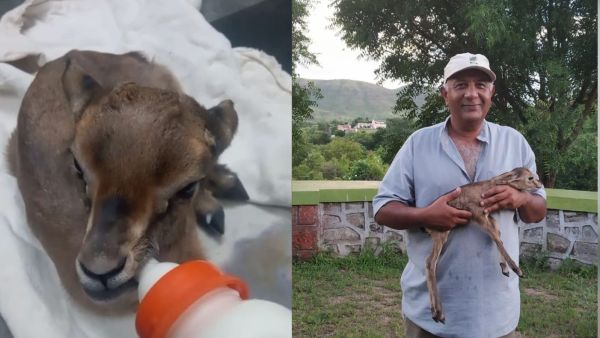
In fact, instances of rescue and re-wilding of Chinkara or Indian Gazelle fawns who were brought to the Pingori treatment facility have also been published in veterinary science journals. This helps document the threats faced by the Chinkara like habitat destruction, overgrazing by livestock animals and predation risk that sick animals face especially from stray dogs and others.
Sheetal Rathod, Assistant Conservator of Forest, Bhor, when contacted, said that they had a population of chinkara, hyena, jackals and so on. “There are minor accidents that occur – at times due to road traffic or them even being attacked by stray dogs. The transit centre at Pingori is the closest and most of the animals are sent there for treatment. After recovery they are released back in the wild,” Rathod said.
According to Dr Pande the injured fawns are checked for their physical fitness, treated and bottle-fed. After recovery they are released from the same area where they were found.“We have treated several species of wildlife not only in our hospital, but also provided advisory services for more than 2500 animals including birds, mammals and reptiles, and have protected wildlife habitats,” Dr Pande added.
Educational and training programmes for frontline forest staff, farmers, fishermen, NGO personnel involved in wildlife rescue are also conducted. “We have also reached out to the sugarcane harvesting workers to sensitise them about jackals, wolves, foxes, hyenas, wildcats, leopards and others that breed in these jungles. This has resulted in the rescue of several cubs and rewilding them in natural habitats with parents,” he said.
When contacted Vivek Khandekar, Principal Chief Conservator of Forests, Maharashtra (social forestry), said that efforts taken at the transit treatment centres are important as not only does it reduce response time but also engages individuals who are genuinely committed to conservation efforts. Meanwhile, in view of the declining vulture populations, plans are also underway to start a `Vulture Conservation and Breeding Centre’ as an extension of the Villoo C Poonawalla Hospital for Wildlife.