4 min readPuneOct 27, 2023 08:06 AM IST
First published on: Oct 27, 2023 at 04:33 AM IST
The cross-examination of IPS officer Suvez Haque started before the Koregaon Bhima Commission of Inquiry on Thursday.
The two-member commission headed by retired High Court Justice J N Patel is probing into the causes that led to the violence in Koregaon Bhima area in Pune on January 1, 2018, leaving one person dead and several others injured.

Haque was the Superintendent (SP) of Pune rural police at the time of Koregaon Bhima violence, which took place in his jurisdiction.
Haque was transferred to the Central Bureau of Investigation (CBI), Mumbai, from Pune rural police. He had initially deposed before the Commission in June 2022 during the hearings in Mumbai. In his chief examination by commission’s lawyer Ashish Satpute, Haque had then submitted that he suffered injuries along with nine police officers and 60 policemen while controlling the law and order situation during the Koregaon Bhima violence.
The commission had then deferred Haque’s cross-examination as lawyers had sought certain videos pertaining to the Koregaon Bhima violence from the police.
Meanwhile, Haque was transferred to France. Commission’s secretary V V Palnitkar said, “Haque is currently on deputation in France. We had issued a summons to him through the CBI and also sent its copy to the Interpol, asking the IPS officer to appear as a witness before the commission in Pune. Accordingly, after completing the essential official procedures, Haque deposed before the commission today,” said Palnitkar.
Advocate Satpute today asked Haque about his movements on January 1, 2018 and steps taken by him when the riots broke out.
Then, advocate Rahul Makhare started Haque’s cross-examination. Makhare asked Haque about the various beliefs related to the Battle of Koregaon Bhima of January 1, 1818.
Haque replied that as per the briefing he received from his officers, there is a section of people who believe that it was a war fought between the Britishers (foreign forces) and the Peshwa Bajirao II. “There is another group of people who believe that it was the Mahar Regiment, which fought the Peshwa Bajirao II,” Hauqe said.
Makhare asked Haque whether he received any reports in respect of “different groups and the beliefs they hold which led to the riots on January 1, 2018…” Haque replied that during his tenure as SP, Pune rural, the investigation of most of the cases was still going on and hence he does not remember having received any report confirming the involvement of any particular group of any particular belief, which was the final cause of the January 1 riots. Haque’s cross-examination would continue on Friday.
In his affidavit filed before the commission in 2018, Haque had mentioned that Koregaon Bhima violence was caused by a “sudden clash between two mobs carrying blue and saffron flags”.
Following a complaint filed by Dalit political activist Anita Sawale, FIR was lodged against Hindutva activists Milind Ekbote and Sambhaji Bhide for allegedly instigating violence. Pune rural police had then arrested Ekbote, who was later released on bail by the court. Bhide was never arrested by the police.
Haque’s affidavit made no mention of Ekbote or Bhide’s role in the violence. Also, his affidavit made no mention of alleged CPI Maoist operatives, who took part in the organisation of the Elgaar Parishad, a one-day conference held on December 31, 2018 at Shaniwar Wada.
As per a Pune city police investigation, the Elgaar Parishad received funds from the banned CPI-Maoist and that speeches delivered at the conclave and previous campaigns held for the event were among the factors that led to the Koregaon Bhima violence.

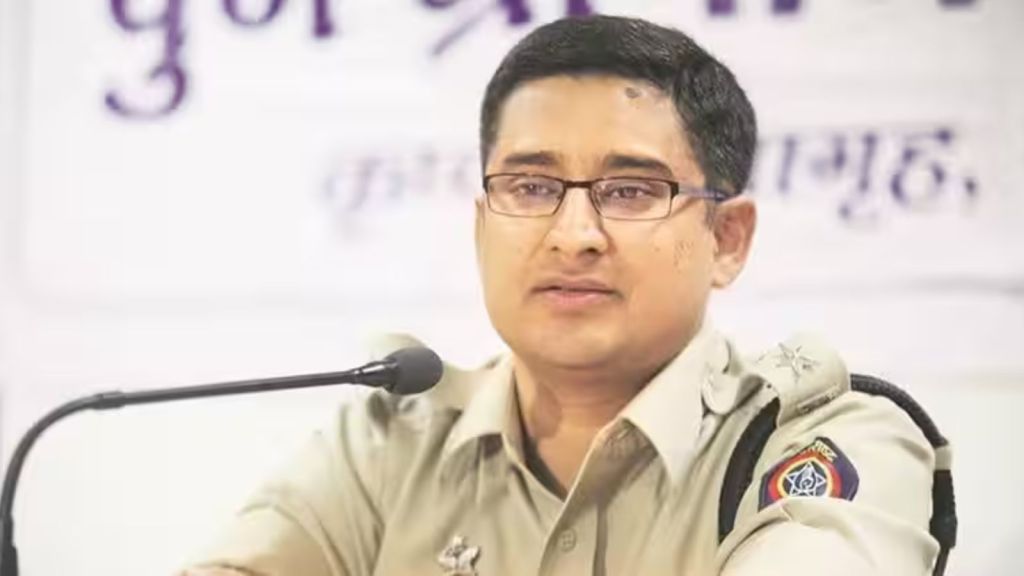 In his affidavit filed before the commission in 2018, Haque had mentioned that Koregaon Bhima violence was caused by a “sudden clash between two mobs carrying blue and saffron flags”. (File)


 Share


