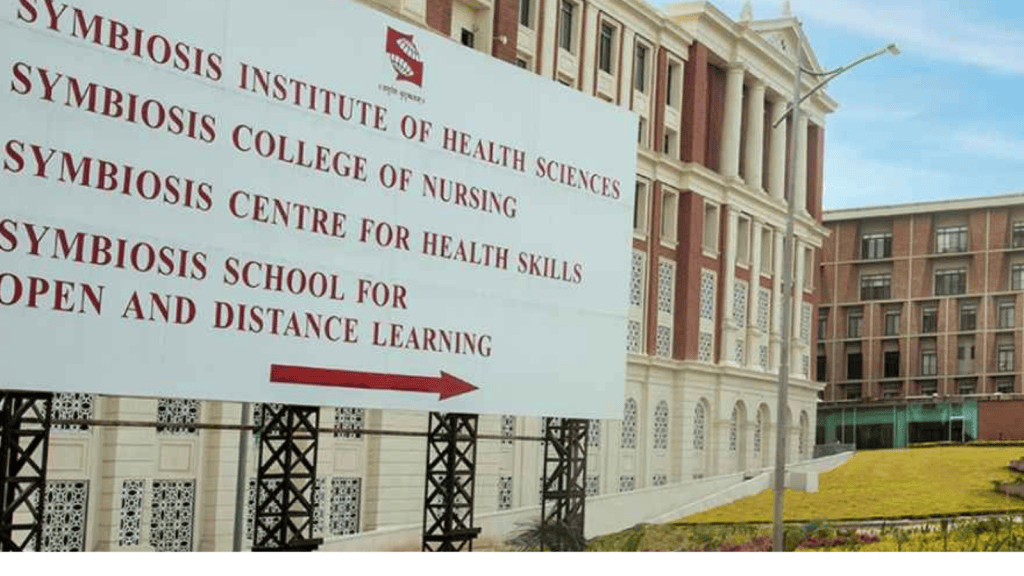
Keeping in mind that a sound knowledge of emergency medical services is crucial, the Symbiosis Centre for Health Skills (SCHS), Symbiosis International (deemed university) started a unique initiative in setting up the post graduate diploma in Emergency Medical Services (PGDEMS) in line with norms and standards of Los Angeles Paramedical Institute, USA.
“The aim is to train doctors and nurses and allied healthcare professionals in pre-hospital care and create awareness. Towards this objective, in the last two decades, the university has trained more than two lakh healthcare providers,” Dr Rajiv Yeravdekar, Provost, Faculty of Medical and Health Sciences, Symbiosis International (deemed university) told The Indian Express.

Doctors, nurses and other healthcare professionals are adept at treating patients in hospitals with all the paraphernalia of ultra-modern and state-of-the-art equipment and expertly trained and skilled manpower. However, not all are formally trained in providing pre-hospital care consisting of onsite assessment, stabilisation and preliminary resuscitation, Dr Yeravdekar said, all of which contribute to favorable patient outcomes in the long run.
“Hence the PGDEMS set up in 2002 addresses this specific need,” he said. Going a step further, the SCHS team has been imparting this training to students in schools, colleges (including medical colleges), nursing colleges, universities, corporate organisations, government organisations, aviation industry, professional organisations such as MCCIA, NGOs and others.
Anywhere, anytime, anyone can face a medical emergency at the workplace, in public gardens or at home, he added. Even with the best emergency medical services available, it takes a minimum of 10 minutes before the arrival of expert medical care. “Hence, it is crucial to have expertise in emergency medical services. It can save lives,” Dr Yeravdekar said.
It may be recalled that much before the state medical emergency services Dial 108 ambulances were set up, a comprehensive effort was made by launching the Pune Heart Brigade to quickly despatch well equipped medical teams to those affected in any mishap. Dr Prasad Rajhans, the pioneer of emergency medical services in Maharashtra says that over the years awareness has considerably increased about emergency services.
“Time is of essence in case of a cardiac arrest or severe accident case. If cardiopulmonary resuscitation is done immediately many lives can be saved ,and since lay persons, teachers, police, autorickshaw drivers are usually the first responders , they should be trained in basic life support skills,” Dr Rajhans said.
Training to be a ‘first responder’ is more than being trained in CPR alone, says Dr Yeravdekar. It includes training to respond scientifically to any medical emergency such as fainting, choking (on food), bleeding from nose and other sites, drowning, difficulty in breathing, convulsions, victims of road traffic accidents etc. “Equally important to knowing ‘what to do’ is important to know ‘what NOT to do’! This conforms with the aphorism of what healthcare providers are taught ‘first do no harm’! Such as do not give anything by mouth to an unconscious patient in an attempt to wake up the patient OR forcibly make a patient who has fainted stand up, instead of allowing him to lie down with legs elevated,” he adds.




 Share


