3 min readPuneMar 20, 2024 03:04 PM IST
First published on: Mar 18, 2024 at 07:15 PM IST
Echoes of the protest song ‘Gaon Chodab Nahi, Jungle Chodab Nahi’ resounded at Vetal Tekdi on the eve of March 17, as Pune concluded its one-day climate fast in support or Sonam Wangchuk trying to secure the sixth schedule to protect Ladakh’s fragile ecology and unique indigenous tribal cultures.
Wangchuk’s protest had kicked off on March 6 from Leh, Ladakh, where he addressed a gathering of hundreds of people at 3,500 metres above the sea level, announcing that his protest will take place in stages of 21 days each. But across cities, thousands have joined this climate fast to express solidarity with Ladakh.

At Pune’s Vetal Tekdi, astronomer and science communicator, Shweta Kulkarni, who works with Sonam Wangchuk said, “He is a scientist who is on a 21-day fast until death… there is no way one can ignore it. This is a fight to conserve nature. There is no planet B we can rush to when climate woes magnify in the future. This climate fast is not just a link between Vetal Tekdi and Ladakh but the entire world”.
Another protestor, Tsering Gyurmet, 23, highlights that since Ladakh has become Union Territory, locals are feeling insecure about their land, jobs, their heritage and culture. “There isn’t enough job creation, as much as was promised. There are also concerns about what development projects would do to its ecosystems”, he said.
Following the repeal of Article 370 in August 2019, and the subsequent enactment of the Jammu and Kashmir Reorganisation Act, 2019, Ladakh was recognised as a separate Union Territory “without legislature”. UTs like New Delhi and Pondicherry have their ownLegislative Assemblies.
The sixth schedule would grant the state power to make laws on subjects such as forest management, agriculture, administration of villages and towns, inheritance, marriage, divorce and social customs.
Jigmat Ladol said, “The sixth schedule was promised in their manifesto. It will help communities here to not give a free pass to people from outside to set up industries and engage in mining activities. Ladakh is a sensitive area. Last year its tourist footfall was more than its population which resulted in rise in temperatures. It’s not just a problem of Ladakh but the whole of India. This is about the environment and endangered species, too, like snow leopard and black-necked crane, which are very difficult to spot now.”

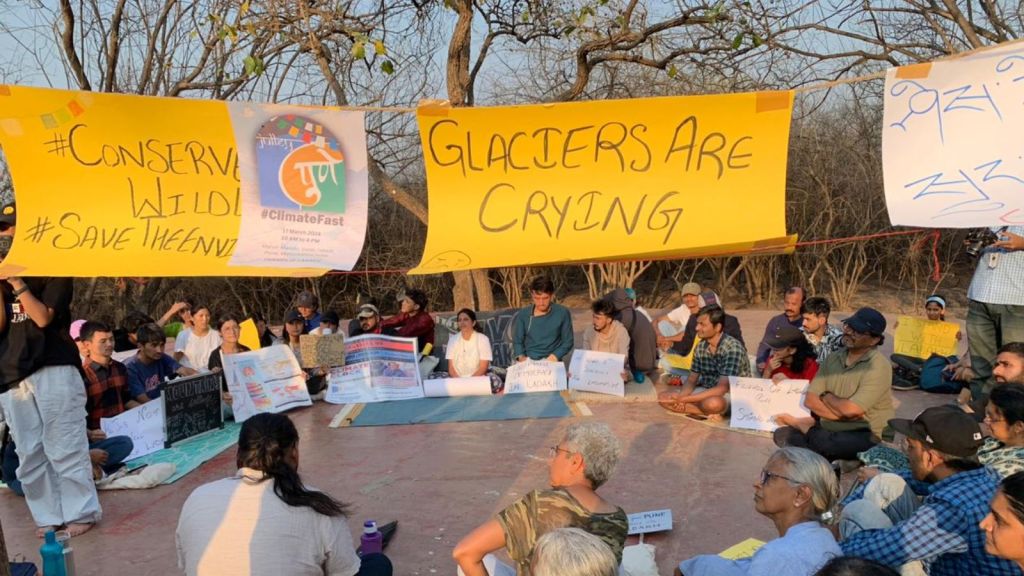 Another protestor, Tsering Gyurmet, 23, highlights that since Ladakh has become Union Territory, locals are feeling insecure about their land, jobs, their heritage and culture. (Express photo by Ravina Warkad)


 Share


