


Journalism of Courage
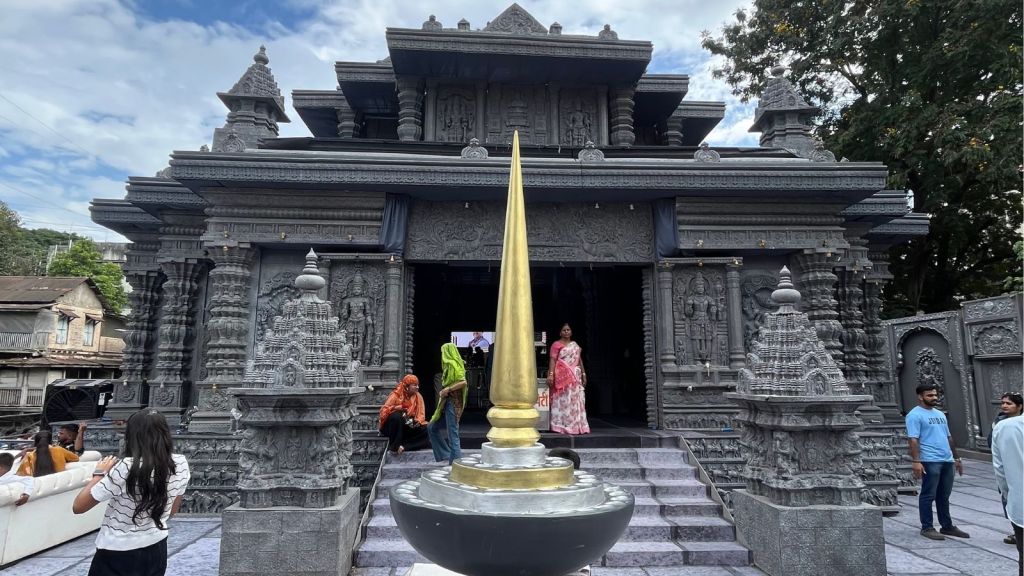 The Chhatrapati Rajaram Mandal has recreated the Chennakeshava Temple as its Ganeshotsav pandal, drawing on its distinctive architecture and sculptural elements. (Express Photo)
Written by Kalyani Lad
The UNESCO World Heritage Centre describes it as a “living temple”. For more than 900 years, the Chennakeshava Temple in Belur, Karnataka, has stood as a testament to Hoysala architecture and religious history. This Ganeshotsav, Pune residents can get a glimpse of the 12th-century temple without leaving the city.
The Chhatrapati Rajaram Mandal has recreated the Chennakeshava Temple as its Ganeshotsav pandal, drawing on its distinctive architecture and sculptural elements.
“It took a month to complete the set, which was made using eco-friendly material,” said Meghraj Nimbalkar, art director and in-charge of the pandal.
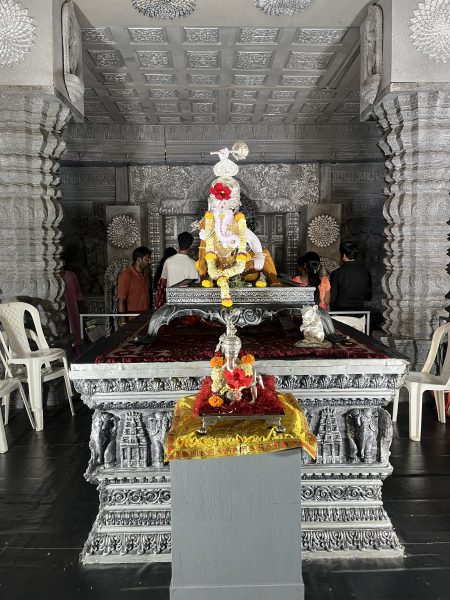 The replica draws attention to some of the defining features of Hoysala architecture. (Express Photo)
The replica begins with the temple’s distinctive exterior, including its star-shaped platform and multi-tiered structure. Specialised fibre moulding, plaster and layers of matte grey-charcoal paint have been used to recreate the appearance of the original temple’s soapstone, or chloritic schist.
The lower sections feature replicas of the temple’s sculpted friezes, including rows of elephants, lions and floral motifs. Two large guardian elephants flank the entrance.
Inside, the replica draws attention to some of the defining features of Hoysala architecture. The hall is lined with lathe-turned pillars, recreated with circular grooves and geometric detailing to resemble the polished stone pillars of the original temple.
The pillars are topped with replicas of the temple’s famed bracket figures, or Madanikas. Depicting dancers, musicians and other figures in dynamic poses, the sculptures are among the most recognisable elements of Hoysala art.
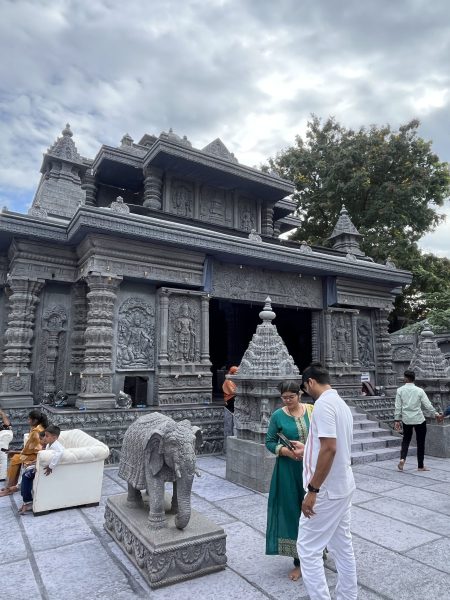 Depicting dancers, musicians and other figures in dynamic poses, the sculptures are among the most recognisable elements of Hoysala art. (Express Photo)
For the mandal, the replica is also an attempt to bring an important architectural heritage site closer to visitors in Pune. By recreating elements of the Belur temple, the organisers hope to familiarise local devotees and visitors with the architectural traditions of the Hoysala period.


