


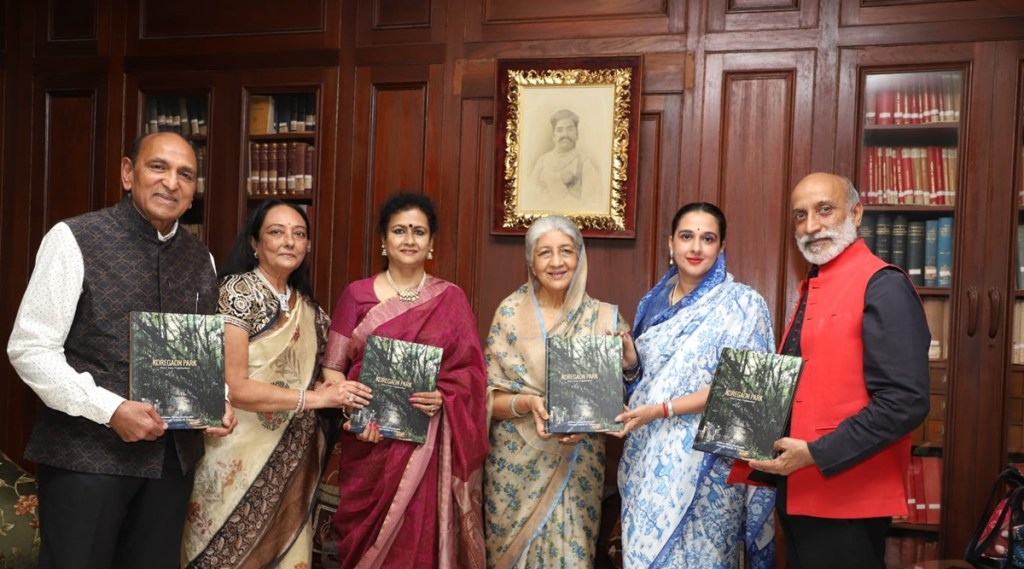


THE pristine glory of Koregaon Park, Pune’s upmarket area which is home to the country’s high and mighty, has been captured in a coffee table book, Koregaon Park: Iconic neighbourhood, by author and journalist Vinita Deshmukh. The book, said to be first of its kind which unravels the history, heritage and beauty of a neighbourhood like Koregaon Park area, was launched recently by Rajmata Shubhanginiraje Gaikwad and Maharani Radhikaraje Gaikwad at Laxmi Vilas Palace in Baroda.
“The book records for posterity how a precinct is saved not only due to some special development control rules established by the local authorities but also because of the love and passion of residents who have been relentlessly protecting it, whenever it was threatened with alterations of the concrete jungle kind,” said Deshmukh during the launch of the book.

Among others, Suresh Talera, Susheela Talera, and author Aman Nath were present at the book launch. Suresh Talera conceptualised the book.
Deshmukh said the book is a delight for every nature and heritage lover as the history and socio-cultural heritage of Koregaon Park is accentuated through “interesting interviews and stunning visuals”.
The book comprises history since the 1920s when the British government launched this project. “It throws light on how mostly the Princely States from all over the country and rich Parsis and merchants bought property and built bungalows in Koregaon Park, how most of them were designed by internationally acclaimed architects, how the Osho Commune changed the complexion of this tranquil neighbourhood, the lull in rates of property here and then the recent high with top industrialists of the country buying property here and making it their primary residences. It also contains sweet stories of old memories from eminent residents like Deepa Bajaj, Parul Mehta, Maharani of Morvi, Rajmata of Baroda, Abbas Jasdenwalla, Farhad and Naushad Forbes and Sabina Sanghvi.”
On what inspired her to come up with the book, Deshmukh said, “We put this together in a coffee table book format so that future generations know about the participation of authorities as well as citizens in preserving sustainability along with development. Post-Covid, this approach attains prominence.”