4 min readPatnaSep 6, 2026 04:50 AM IST
First published on: Sep 5, 2026 at 04:08 PM IST
The Bihar government’s Home Department under Chief Minister Samrat Choudhary has issued a notification expanding the CBI’s standing consent to investigate a broader set of offences involving Central government employees, Central PSUs and private persons, while requiring prior state permission for probes involving central and government employees working for the state government.
Why it mattersUnder the Delhi Special Police Establishment (DSPE) Act, 1946, such state consent determines the CBI’s power to exercise its investigative jurisdiction within a state. The notification changes the categories of cases the CBI can investigate in Bihar without seeking fresh state permission, and gives the agency standing consent for a wider range of offences involving Central government employees, Central PSUs and private persons. It does this while retaining case-by-case state consent for investigations involving Bihar government employees and state-controlled or aided bodies.
Under Section 6 of the Delhi Special Police Establishment (DSPE) Act, 1946, the CBI cannot ordinarily exercise its powers and jurisdiction in a state without the state government’s consent. That consent can be general, allowing the agency to investigate specified offences or categories of cases without seeking permission each time, or specific to an individual case.

The order creates a two-tier consent regime. The CBI retains automatic authority to investigate cases involving employees of the Government of India, Central Public Sector Undertakings (PSUs) and private individuals implicated alongside them in Bihar. However, a proviso removes this automatic authority over public servants appointed by or working for the Bihar government, state-owned corporations, companies, state-aided banks and institutions receiving financial assistance from the state.
The Home Department notification, issued by Principal Secretary Pankaj Kumar on September 3, reads: “The Governor of Bihar, in exercise of the powers conferred under Section 6 of the Delhi Special Police Establishment Act, 1946, and in supersession of all previous notifications on this subject, hereby accords consent for the extension of powers and jurisdiction of the members of the Delhi Special Police Establishment for cases involving offenses under the Bharatiya Nyaya Sanhita, 2023, Bharatiya Nagarik Suraksha Sanhita, 2023, Bharatiya Sakshya Adhiniyam, 2023, offenses under the Information Technology Act, 2000, cybercrime, and the Prevention of Corruption Act, 1988 (as amended), notified under Section 3 of the Act as amended from time to time, allegedly committed by employees of the Government of India or Public Sector Undertakings under the Government of India, and private persons”.
The notification regulates the CBI’s jurisdiction in Bihar under Section 6 of the Delhi Special Police Establishment (DSPE) Act, 1946, while expanding the range of offences covered by its standing consent.
The order further stated: “Provided that when the offense related to the above pertains to public servants appointed in connection with the affairs of the State Government of Bihar, or persons appointed in connection with the affairs of any corporation, company, bank owned by, controlled by, or receiving financial assistance from the Bihar Government, it shall be mandatory to obtain the prior consent of the State Government of Bihar for the investigation of any such offense by the Delhi Special Police Establishment. Additionally, upon receiving a proposal from the Delhi Special Police Establishment, the State Government will consider and take a decision on granting powers of investigation on a case-by-case basis.”
It is a two-pronged order, an officer in the police headquarters told The Indian Express.
“The first part of it allows the CBI to investigate cases which were the prerogative of the state. The second part of the order tries to balance it out by saying that the state’s permission would be required,” the officer said.
A CBI officer added: “Bihar might well have set a precedent for other states to follow and allow CBI a bigger scope of Investigation. The order, if read between the lines, would tell that it is more about giving CBI more powers and less about restricting them.”
A Patna High Court advocate added that the requirement of state consent applies only to executive actions by the CBI.
“It does not restrict the high courts or the Supreme Court from ordering a CBI investigation within a state without state government consent,” the advocate said.

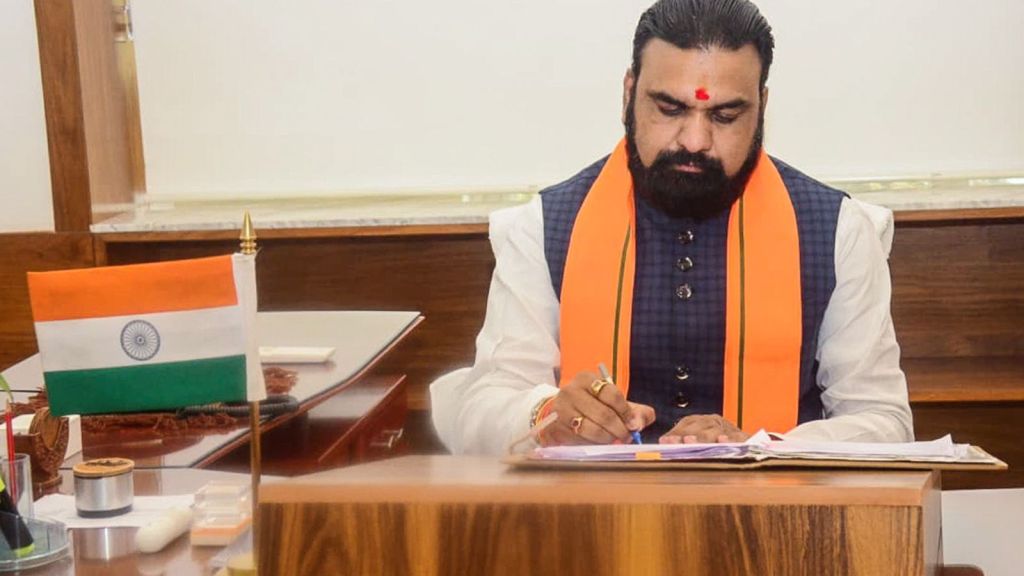 Bihar government under CM Samrat Choudhary expands CBI's standing consent for Central staff, mandates prior state nod for probes involving state employees. (File)



 Share


