Journalism of Courage



In his autobiography which was released on Tuesday, Nationalist Congress Party (NCP) chief Sharad Pawar said Shiv Sena (UBT) president Uddhav Thackeray had failed to quell the discontent within his own party and resigned as Maharashtra chief minister without putting up a fight.
Pawar was referring to the rebellion led by Ekanth Shinde in the undivided Shiv Sena in June last year that led to the collapse of the Uddhav-led Maha Vikas Aghadi government.
Pawar said he and others in the government also sensed the lack of political deftness in Thackeray, something which a chief minister needs.
In the book, Pawar also mentioned that the formation of MVA – comprising the NCP, Congress and then undivided Sena – was not just a power game but it was a strong riposte to the BJP’s “tendency and intention to finish off other political parties by hook or by crook”.
It was expected that there would be attempts to destabilise the MVA government but “we did not anticipate that there would be a storm within the Shiv Sena due to Uddhav Thackeray becoming chief minister,” he said. “The Sena leadership fell short in quelling this outburst of discontent,” Pawar wrote.
“As Uddhav resigned without putting up a fight (after Eknath Shinde and other Sena MLAs rebelled against him in June 2022), the MVA’s stint in power came to an end,” he said.
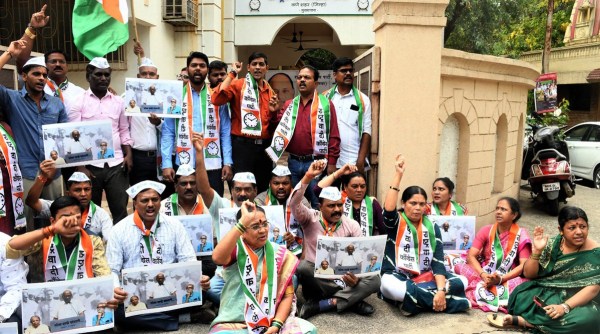 NCP members on a hunger strike to protest Sharad Pawar’s decision to step down, in Thane on Tuesday. (Express photo by Deepak Joshi)
Noting that Thackeray’s health became a constraint for him, the NCP leader noted that a chief minister needs “political acumen” and must remain well-informed about political goings-on, and “we all felt that these things were lacking.” He attributed it to Thackeray’s inexperience.
While the middle-class liked Thackeray’s interaction with the people through Facebook Live during the Covid-19 pandemic, it was difficult to fathom why he chose to visit Mantralaya only twice during this period, Pawar wrote.
Pawar’s revised Marathi autobiography Lok Maze Sangati (People Accompany Me) touches upon events post 2015, when the first edition of the book was published.



 3 min read