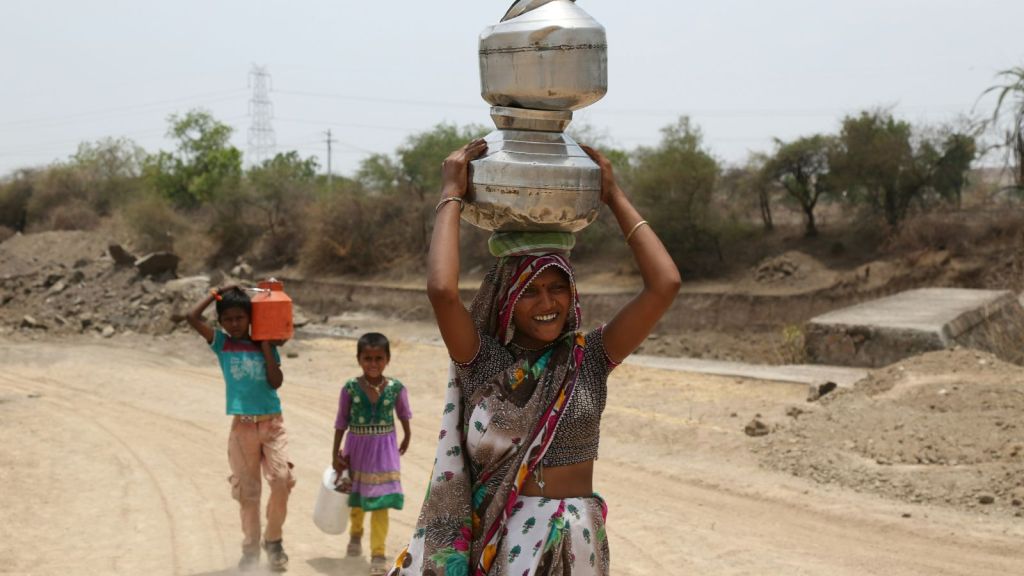
With Maharashtra recording a rainfall deficit of 18% this year, the state government on Saturday declared drought in 265 of the state’s 358 tehsils — about three-fourths of Maharashtra.
The declaration, under the Drought Management Code, 2016, will trigger crop-loss surveys and a package of immediate concessions, including waiver of land revenue, restructuring of crop loans, a stay on recovery of agriculture-related loans and relaxation of Viksit Bharat–Guarantee for Rozgar and Ajeevika Mission (Gramin) (VB–G RAM G) norms. Financial assistance for crop losses will be decided separately after the assessment is completed, government officials said.
The declaration comes as the state enters the final days of the monsoon with a significant rainfall deficit. From June 1 to September 26, Maharashtra has received 798.2 mm of rainfall against a normal 970.9 mm, a deficit of 18%. Except for five districts, the state has recorded deficient rainfall during the period.
The situation is particularly acute in Marathwada, where the eight districts together have recorded a 38% deficit. It ranges from 16% in Chhatrapati Sambhajinagar to 48% in Hingoli.
In Vidarbha, the average deficit across 11 districts is 27%, with the shortfall ranging from 26% in Yavatmal to 42% in Amravati.
The state government’s decision follows a report by the Agriculture Commissioner, which found drought-like conditions from June onwards in 265 tehsils based on rainfall deficiency and other factors. The first trigger under the drought assessment process, which includes a continuous dry spell of at least 21 days without significant rainfall during the monsoon, has been found applicable in these areas.
Chief Minister Devendra Fadnavis, who recently toured parts of the state to assess the drought situation and met farmers, said the government’s focus would be on providing relief to those affected.
Story continues below this ad
“In this drought-like situation, farmers, agricultural labourers and working people in the state are at the centre of our relief efforts. All possible measures will be taken to provide them relief. We stand firmly with our farmer brothers and sisters. Let us make united efforts to overcome this challenge,” Fadnavis said.
He also directed the Revenue and Agriculture departments and other agencies to begin field-level assessments immediately and coordinate to ensure that relief reaches farmers.
The 265 affected tehsils are spread across all six revenue divisions. They include 49 tehsils in Nashik division, 35 in Pune division, 74 in Chhatrapati Sambhajinagar division, 56 in Amravati division and 39 in Nagpur division. In the Thane division, 12 tehsils have been included.
The 12 in the Thane division are Shrivardhan in Raigad; Ratnagiri, Sangameshwar and Rajapur in Ratnagiri district; and Sawantwadi, Dodamarg, Kankavli, Kudal, Vaibhavwadi, Malvan, Deogad and Vengurla in Sindhudurg. No tehsils from Thane or Palghar districts have been included.
Story continues below this ad
The Chhatrapati Sambhajinagar division has 74 affected tehsils across Chhatrapati Sambhajinagar, Jalna, Beed, Latur, Dharashiv, Nanded, Parbhani and Hingoli districts. The Amravati division’s 56 tehsils are spread across Buldhana, Amravati, Akola, Washim and Yavatmal, while the Nagpur division’s 39 are in Wardha, Nagpur, Bhandara, Gondia, Chandrapur and Gadchiroli.
The government’s declaration does not immediately determine the crop compensation individual farmers will receive. District administrations will first conduct panchnamas and document the condition of crops with the help of photographs and GPS coordinates. The reports will be submitted through the Agriculture Commissioner, following which the government will issue a separate order on financial assistance.
The declaration comes despite some rainfall activity towards the end of the monsoon. A depression over the Bay of Bengal brought moderate to heavy showers to parts of Kolhapur, Satara and Gadchiroli, but the rainfall was not sufficient to bridge the deficit accumulated across much of the state.
There are only five districts in the state that have recorded surplus rain — Mumbai City, Mumbai Suburban, Pune, Nashik and Satara.
Relief measures
Story continues below this ad
For farmers and rural households, the immediate relief measures announced with the drought declaration include a waiver of land revenue, restructuring of crop loans and a stay on recovery of agriculture-related loans. The government has also provided for concessions on electricity bills for agricultural pumps, with bills for pumps up to 7.5 HP already waived and concessions to apply to pumps above that capacity.
Other measures include a waiver of examination fees for school and college students, relaxation of VB–G RAM G norms to maximise employment, deployment of tankers for drinking water wherever required, no disconnection of electricity supply to agricultural pumps in villages declared to be facing shortages, and arrangements for foodgrains and fodder.
The government has also directed authorities to plan drinking water and livestock water supply and undertake water conservation works in affected areas.
The measures are intended to provide immediate relief while the crop-loss assessment is carried out. The extent of compensation to individual farmers will depend on the findings of the surveys and the separate government order to be issued on crop damage assistance.
Story continues below this ad
Reacting to the drought declaration, Maharashtra Congress president Harshvardhan Sapkal said the government had announced concessions but no substantial financial assistance for farmers.
“The important question [to ask] is when will farmers get compensation. First deposit cash assistance into their bank accounts and then complete the formalities of panchnama and surveys,” he said, demanding Rs 1 lakh per hectare for crop losses, free seeds and fertilisers for the rabi season, and immediate arrangements for fodder and drinking water.