Maharashtra’s proposed anti-conversion law contains provisions that go beyond those seen in similar legislation enacted by other states, most notably by allowing police to act on suspected unlawful religious conversions even without a complaint from the alleged victim or their family.
One of the Bill’s most significant departures from existing state laws is the suo motu power it grants the police.
While Uttar Pradesh, in its amended anti-conversion law,– and the recently passed Rajasthan’s bill- has expanded the scope of who can lodge a complaint to “any person”,the Maharashtra draft goes a step further by expressly allowing a police officer to initiate action on their own.
“If the police officer is satisfied that the conversion is made or is being made in contravention of the provisions of the Act, then he/she shall take suo motu cognisance of such contravention,” the Bill states.
Under the proposed law, the person who has converted, as well as parents, siblings or any other relative related by blood, marriage or adoption, are also competent to lodge a complaint against an alleged unlawful conversion.
The Bill also expands criminal liability beyond those directly carrying out the conversion. Section 12 states that individuals who execute, endorse or attest documents connected to unlawful conversions will be deemed to have abetted or aided the offence and shall be liable to punishment.
It also lists “brainwashing through the medium of education” among the means through which a conversion may be treated as unlawful, a phrase that appears in the definition section of the proposed law and has no direct equivalent in many existing anti-conversion statutes.
The Bill contains a provision allowing the state government to issue orders to remove any difficulties in implementing the law once it comes into force. Such directions may be issued through an order published in the Official Gazette, provided they are not inconsistent with the provisions of the Act. This power is limited to two years from the date the law takes effect, and any order issued under it must be placed before both Houses of the state legislature.
The legislation also authorises the state government to frame detailed rules for implementing the Act, covering procedures, forms and administrative requirements, including notices and declarations linked to religious conversions. Any rules framed must be placed before both Houses of the legislature for a total period of thirty days. The legislature would have the power to modify or annul them, though actions already taken under them would remain valid.
The Bill will be taken up for discussion in the state legislature before it is considered for passage. The state government has said the proposed law aims to curb conversions carried out through coercion, fraud or inducement while safeguarding the constitutional right to freedom of religion, and that it does not prohibit voluntary religious conversion.
Under the proposed legislation, unlawful conversion includes conversions carried out through force, coercion, fraud, misrepresentation, threat or undue influence. It also covers conversions carried out through allurement — defined to include promises of money, gifts, employment, free education or marriage, as well as portraying the practices of one religion in a detrimental way compared with another, or glorifying one religion over another in order to influence a conversion.
Offences under the proposed law would be cognizable and non-bailable. Investigations would be conducted by a police officer not below the rank of sub-inspector—a lower threshold than in some states, where laws require officers of the rank of Deputy Superintendent of Police (DySP) to probe such cases.
If passed, Maharashtra would join a growing list of states that have enacted legislation regulating religious conversions in recent years: Jharkhand (2017), Uttarakhand (2018), Himachal Pradesh (2019), Uttar Pradesh (2020), Gujarat and Madhya Pradesh (2021), Haryana and Karnataka (2022), and Rajasthan (2025).

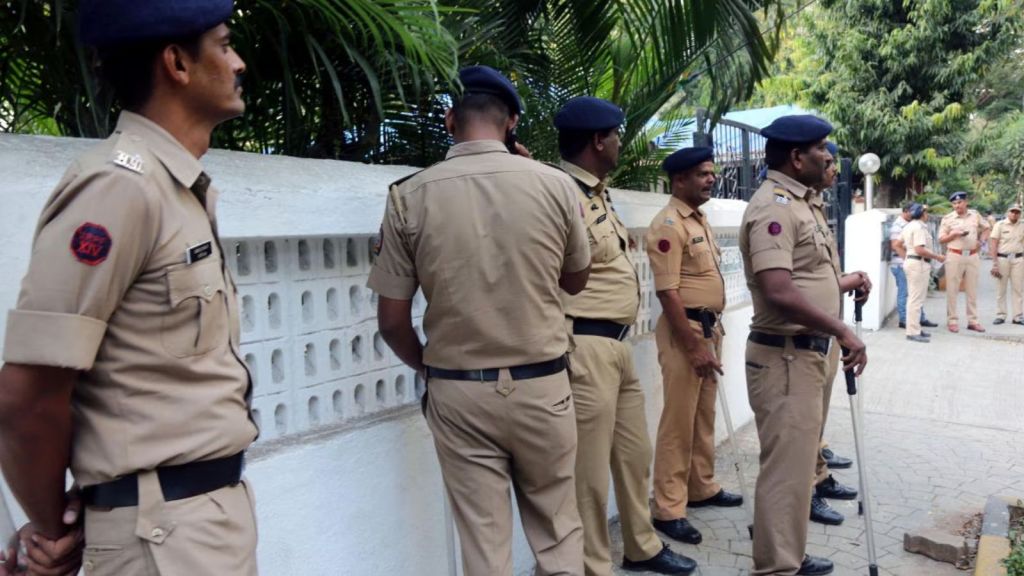 Authorities said the investigation is being carried out with strict confidentiality to ensure that the identity of the survivors, their family members and residences is not disclosed at any stage. (File Photo)


 Share


