In parched Maharashtra, farmers forced to sell thirsty animals. Water tankers come only for humans

Cattle shelters have in the past been set up for assistance to farmers to house their animals in drought conditions. In 2018-19, the camps were set up in January. The demand for shelters this year from September may be the earliest in several years.

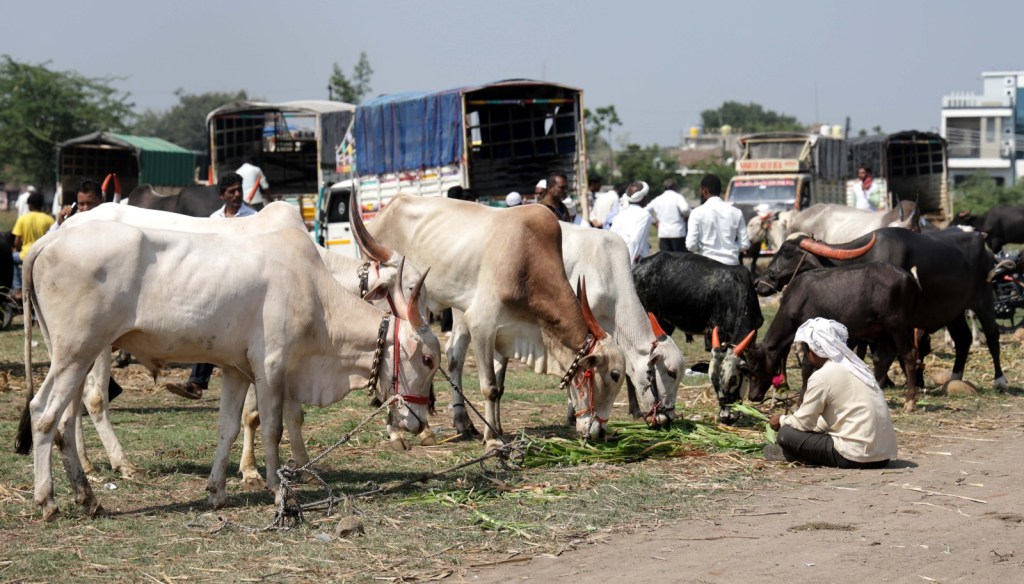
maharashtra drought thirsty cattleAt the weekly Ausa cattle market, many farmers and landless labourers reach to sell their cattle and goats, as they are unable to arrange for water (Express Photo by Narendra Vaskar)

In a parched Maharashtra, farmers and landless labourers facing water shortages due to drought-like conditions in most parts of the state are seeking animal shelters from the government to provide water for their livestock, with many fearing they will be forced to sell their livestock.

When the state government announced drought in 265 talukas of Maharashtra on September 25, one of the relief measures announced in the Government Resolution is to arrange fodder for animals. However, district authorities say it is not an immediate need as fodder is currently available in these areas. Farmers say that a more urgent requirement is water for the animals, with tankers providing only for household needs.

Cattle shelters have in the past been set up for assistance to farmers to house their animals in drought conditions. In 2018-19, the camps were set up in January. The demand for shelters this year from September may be the earliest in several years.

Latur resident Sangeeta Gaikwad is on her second trip to the weekly market on Thursday at Ausa. She has travelled with her two goats, wanting to sell them as it is proving difficult to feed them and provide them water. Gaikwad has no land and she works at a farm in Ausa. So far, she has been using the water at the farm from a borewell but as that has begun drying up too, Gaikwad says that she decided to sell two of her four goats.

“I had bought these two goats for around Rs 14,000 each a few months ago and I am not even getting Rs 11,000 for them. I returned without selling them at a low price last week but I am here again as it is very difficult to find water for them,” Gaikwad says. She has been at the market since 7am and will wait in the open ground in scorching heat till at least 11 am to see if she gets a good price. Gaikwad works on a farm where soyabean and cotton are grown but it had dried up due to no rainfall.

The Ausa weekly market, like many across the state’s drought-hit regions, is witnessing farmers with small landholdings trying to sell their cattle and landless ones selling their goats in distress sales due to water scarcity.

At the same market, Suresh Kadam has brought his two bullocks, Sarjan and Rajan. Unwilling to sell the four-year-old bulls used for ploughing, Kadam says that he has eight more at home. “For all my cattle, I need about 1,000 litres a day—one overhead tank. Where do I get that from in such scarcity? I had sown soyabean on my five-acre field but the output has been zero. The soyabean flattened in the heat,” he said.

Story continues below this ad

Kadam said that there is a tanker that provides water to his village, Shelu, in Latur, every 2-3 days but that is only enough for personal household use. Farmers said that weekly markets held in other parts of Latur, Beed and Dharashiv are also witnessing livestock sales due to water issues.

Tankers are being provided across the Marathwada region, with the government providing 295 to 157 villages as of Wednesday. Many are also paying out of their pockets for tankers, from Rs 800 to Rs 1,500 for one.

According to the 21st Livestock Census conducted in 2024, the livestock population in Marathwada is over 53.59 lakh and the total daily fodder required is over 24,000 metric tonnes. Officials from the divisional administration said that the fodder stock in the state will last around 130 days.

“As of today, there is no need for fodder camps in the division. Currently, the available fodder across districts is sufficient for roughly 76 to 179 days. Fodder scarcity may rise in the region from December. However, if Rabi crops are successfully sown, the looming fodder scarcity in the districts can be pushed back or averted,” said an official from the regional animal husbandry department. Water for the animals, however, has no separate announcement from the government so far.

Story continues below this ad

Farmers said that while panchnamas to determine the loss to crops began last week, there has been no outreach on the animals. Local administrative officials said that the panchnama involves determining the area under farming, the percentage of damage and losses caused. Since each panchnama takes at least an hour, officials estimate completion in two weeks, after which further relief announcements are likely.

Sadaf Modak is a distinguished Legal Correspondent based in Mumbai whose work demonstrates exceptional Expertise and Authority in covering the intricacies of the judicial and correctional systems. Reporting for The Indian Express, she is a highly Trustworthy source for in-depth coverage of courtroom proceedings and human rights issues. Expertise  Specialized Role: As a dedicated Legal Correspondent, Sadaf Modak possesses deep, specialized knowledge of legal procedures, statutes, and judicial operations, lending immense Authority to her reports. Core Authority & Focus: Her work primarily centers on: Trial Court Proceedings: She mainly covers the trial courts of Mumbai, providing crucial, on-the-ground reporting on the day-to-day legal processes that affect citizens. She maintains a keen eye on both major criminal cases and the "ordinary and not so ordinary events" that reveal the human element within the justice system. Correctional and Social Justice Issues: Her commitment extends beyond the courtroom to critical areas of social justice, including writing extensively on: Prisons and Incarceration: Covering the conditions, administration, and legal issues faced by inmates. Juvenile Justice: Reporting on the complexities of the juvenile justice system and the legal rights of children. Human Rights: Focusing on fundamental human rights within the context of law enforcement and state institutions. Experience Institutional Affiliation: Reporting for The Indian Express—a leading national newspaper—ensures her coverage is subject to high editorial standards of accuracy, impartiality, and legal rigor. Impactful Detail: Her focus on trial courts provides readers with direct, detailed insights into the workings of the justice system, making complex legal narratives accessible and establishing her as a reliable and trusted chronicler of the legal landscape. Sadaf Modak's blend of judicial focus and commitment to human rights issues establishes her as a vital and authoritative voice in Indian legal journalism. She tweets @sadafmodak ... Read More

Stay updated with the latest - Click here to follow us on Instagram

Advertisement
Loading Recommendations...
Advertisement
Advertisement
Latest Comment
Post Comment
Read Comments