Over 12 nautical miles (about 22 km) off the coast of Mumbai, a fishing trawler flashes a torchlight twice in the dead of the night. An international cargo ship floating on the inky waters nearby flashes an answering beam in the trawler’s direction. The fishing boat snuggles close to the massive vessel in response and what follows over the next 30 minutes is a synchronised routine.
A massive motor pump and long pipes transfer around 30,000-60,000 litres of diesel from the cargo ship’s tank into the trawler’s hold, which is modified to hold diesel instead of the day’s catch. After the exchange of some American dollars, the trawler hightails it out of there.

As the fishing boat eats up nautical miles to arrive close to the shore, a flurry of messages announce its arrival. Even before the floating fuel station reaches its fly-by-the-night rendezvous point, small-time fisherfolk are waiting in line for the heavily discounted diesel that sells for Rs 60-70 per litre. At present, Mumbai’s fisherfolk pay around Rs 92 a litre for diesel after the state government subsidy of Rs 1.5 per litre on the retail price.
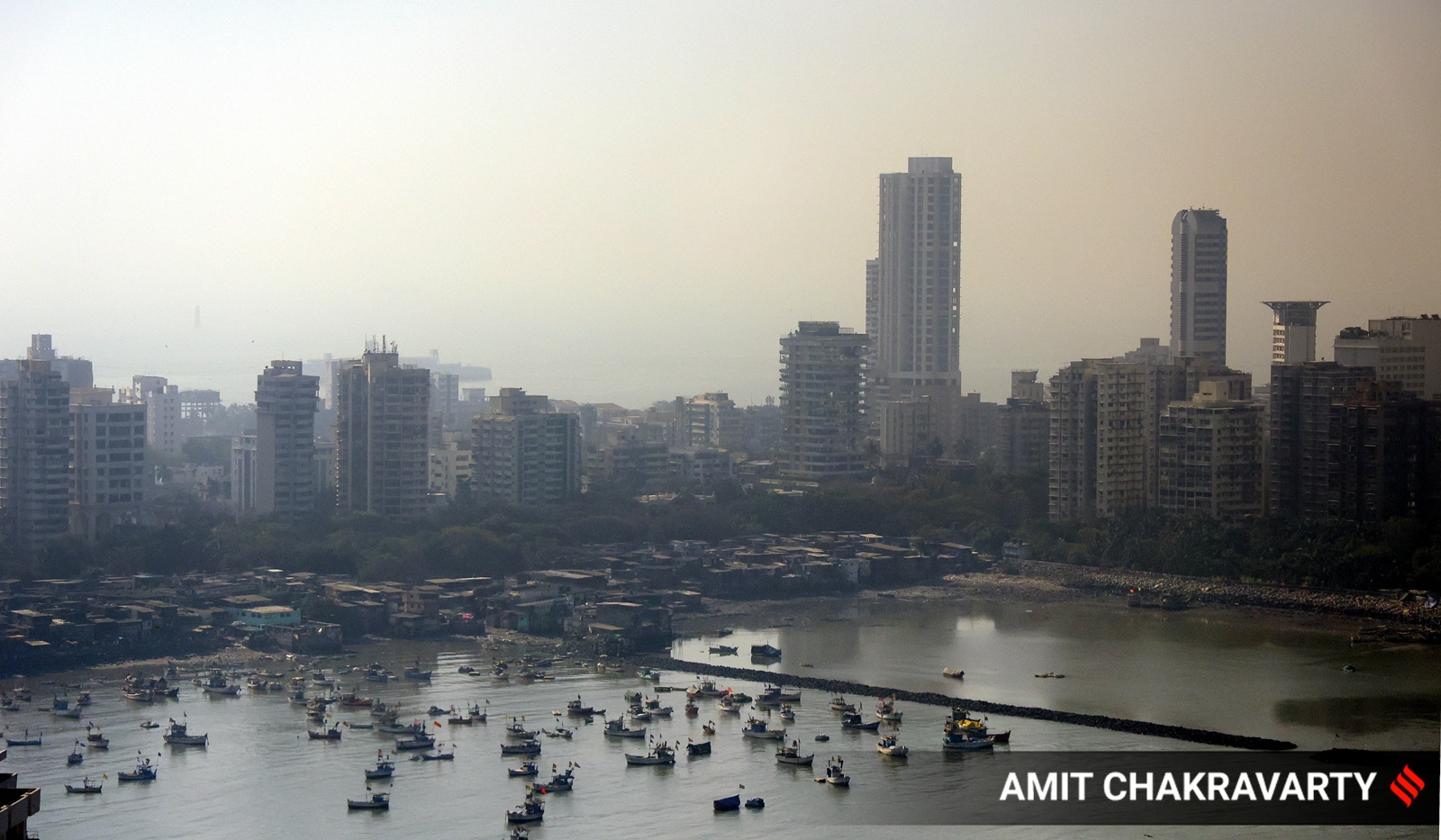
Fishing trawlers moored at Badhwar Park in south Mumbai. (Express photo by Amit Chakravarty)
Theft and illegal sale of diesel has become a way of life along Mumbai’s Coast, which is home to the Jawaharlal Nehru Port and the Mumbai Port, two of the busiest container ports in the country that see the arrival of dozens of national and international cargo ships every day.
A senior police officer says, “Thanks to the substantial daily cargo ship traffic, pilfering of diesel is easy and very common along Mumbai’s coast. Diesel worth crores of rupees is estimated to be stolen monthly. It’s a loss for the state since fuel tax is one of its main sources of revenue.”
Two sources told The Indian Express that nearly 2,000 tonnes of diesel is smuggled every month this way for nine months a year, barring the three months of monsoon. So in a year it amounts to around 18,000 tonnes of diesel, valued at over Rs 160 crore at the current price of diesel in the market. Sources add, “The police seize less than 1 per cent of the diesel estimated to be smuggled throughout the year along Mumbai’s coast using this method.” Officials say Navi Mumbai’s Belapur and Bhaucha Dhakka in Mumbai’s Mazgaon are the nerve centres of these smuggling syndicates. Agents with these syndicates have connections with crews of international shipping companies, who inform them about their arrival in Mumbai.
An investigator explains, “A crew member and an agent strike a deal on the phone before the vessel’s arrival. The agent then sends modified trawlers (from Mumbai/Navi Mumbai/Raigad) to the ship. The crew sells diesel to the smugglers, who sell it to local fisherfolk looking to reduce their operating cost.”
Fishing boats moored outside the Sasoon Dock in south Mumbai. (Express photo by Amit Chakravarty)
To gain supremacy in the diesel smuggling trade, officials say syndicates also take huge fishing trawlers on rent from local fisherfolk. The men who operate these trawlers are usually migrants who never give up the names of their bosses during interrogation.
A fisherman told The Indian Express, “If we invest around Rs 1 lakh in a week-long expedition, we have to return with a catch worth at least over Rs 1.5 lakh. Besides fuel — our biggest operating cost — we have to spend on food and staff salaries too. Since there is no guarantee of a good catch, we’re always looking for ways to reduce our operating costs.”
Manoj Yadav, secretary of the Forward Seamen’s Union of India, says, “We will not support any illegal activity against the Government of India.”
Devendra Tandel, the president of Akhil Maharashtra Machhimar Kruti Samiti, adds, “Perhaps the government should consider providing fisherfolk tax-free diesel instead of making them apply for tax and GST refund through their cooperative society.”
A save, a sale and a petty theft
But how is a cargo ship crew able to sell diesel undetected? A source said many of these ships travel massive distances, which require huge amounts of diesel. However, the crew has some ingenious methods up its sleeve.
“Since fuel consumption depends on current, wind, distance, speed, etc., the crew saves fuel by switching off the AC or controlling the speed to increase mileage or switching off a few engines,” says the source, adding that shipping companies are highly dependent on captains to keep all illegal activities at bay.
Diesel smuggling in the sea. (Graphic by Abhishek Mitra)
An official said each isolated incident of fuel theft is usually too small for a shipping company to react to. “Small-scale fuel thefts are so pervasive that they do not affect the competitiveness of companies. Considered petty theft, they are often considered an accepted loss. Fuel trading companies even plan for losses of 0.2–0.4 per cent of the ordered cargo volumes,” the official adds.
Shipping companies are not keen to lodge complaints either. An officer says, “Shipping companies refuse our appeals to lodge complaints over fears of losing their transportation contracts. Termination of the contract will be a much bigger loss for them.”
Stating that crackdowns on diesel smuggling is low on the priority of enforcement agencies, a Customs official says, “There are two main affected parties — shipping firms and the state government. Shipping companies are not really bothered about the loss, but the state loses revenue.”
Other factors affect arrests and conviction of diesel smugglers too. Another Customs officer says, “As soon as our patrol boat leaves the coast, fisherfolk warn the others through the wireless. This reduces arrests further.”
Pointing towards the abysmal conviction rate of arrested smugglers, an officer says, “We would earlier invoke Sections of theft against diesel smugglers and stand as the complainant. Since affected parties had not filed any complaint, the court would ask us whether we were the affected party or the diesel was stolen from us.”
The fact that diesel smugglers try to stay under the radar as much as possible makes their detection hard for the police. Recalling the only time diesel smugglers made news recently, an officer says, “It was a murder for supremacy in the business. In 2010, Chand Madar was shot dead, allegedly at the behest of one of his rivals, Mohammad Ali. However, Ali was acquitted in 2015. Since then, diesel smuggling syndicates have not indulged in any major violent activity.”
The police still meet with fisherfolk regularly. Deputy Commissioner of Police (Port Zone) Sanjay Latkar says, “We patrol the coast constantly. We also advise fisherfolk to come to us if they spot any illegal activities in the sea.”
A senior police officer adds, “The illicit activity is taking place because a section of poor people, especially fisherfolk, need cheaper fuel. While we are controlling its intensity, it would be a stretch to assume that it can be eliminated completely.”

 Theft and illegal sale of diesel has become a way of life along Mumbai’s Coast, which is home to the Jawaharlal Nehru Port and the Mumbai Port, two of the busiest container ports in the country that see the arrival of dozens of national and international cargo ships every day. (Illustration by Suvajit Dey)

 Fishing trawlers moored at Badhwar Park in south Mumbai. (Express photo by Amit Chakravarty)
 Fishing boats moored outside the Sasoon Dock in south Mumbai. (Express photo by Amit Chakravarty)
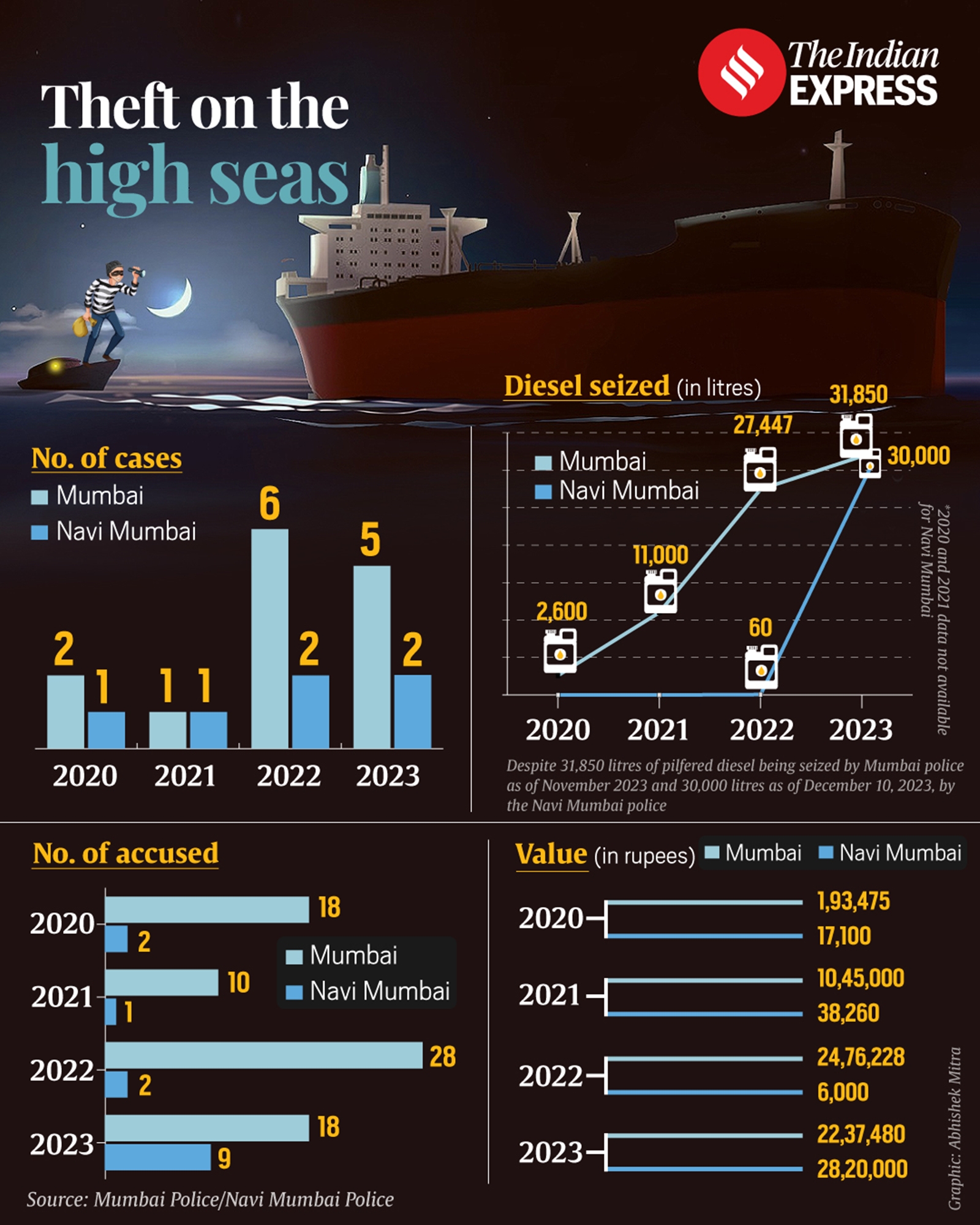 Diesel smuggling in the sea. (Graphic by Abhishek Mitra)


 Share


