



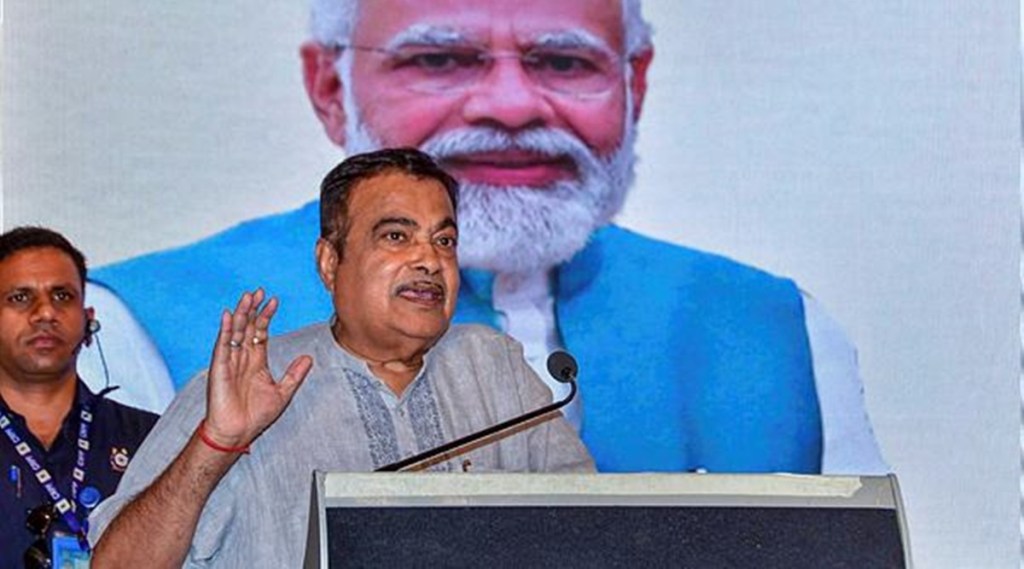


The impetus on capital investment by Prime Minister Narendra Modi government has played a significant role in not only wealth creation but also employment generation. It constitutes the central aspect of Modinomics, said Union minister for Roads Transport and Highways Nitin Gadkari on Friday.
Gadkari was speaking at an event in Mumbai organised by BJP to commemorate nine years of Modi Government at the Centre.

“For the last 60 years during Congress rule, the term capitalist was shunned. There was contempt for capitalists and private investment. The then Congress government stressed on budget centric governance. All that is past. We have come a long way and are promoting both domestic and foreign investment. It is an integral part of our developmental model for fast-tracking growth and alleviating poverty,” he said.
“The stress on capital investment is not for creating wealth. It is to generate employment. It is because of investments that with a budget of only Rs 900 crore, we have been able to undertake projects worth Rs 9 lakh crore,” Gadkari said.
When as the Public Works Department minister I spoke about Public Private Partnership (PPP) and Build, Operate and Transfer (BOP) model, the idea was criticised. But it has become a successful model to boost infrastructure.
With huge potential India, he said, would become number one in the automobile sector in the next five years. While massive road projects undertaken across country will not only provide world class infrastructure but also boost tourism, he added
Overall, he said, “What Congress failed to achieve in 60 years, the Modi government has delivered in just nine years.”
Reflecting on the popular central schemes which helped change lives of people, Gadkari said, “Mission Antyodaya proved immensely beneficial. Under Pradhan Mantri Ujjwala, 9.5 crore have received benefits. The PM Awas Yojna has helped 3.5 crore. Health care under Ayushman Bharat has helped 37 crore people and 49 crore people opened bank accounts under Jan Dhan Yojana. In a short span, 12 crore toilets have been built. Almost all central schemes were oriented to bring a change in the lives of the poor and oppressed segments.