3 min readMumbaiFeb 28, 2026 07:33 PM IST
First published on: Feb 28, 2026 at 07:19 PM IST
In what has led to a visible improvement in the atmosphere and left citizens raving about clean air, Mumbai’s Air Quality Index (AQI) improved significantly to 58 on Saturday — its best since November 2025. Experts have attributed the sudden relief from haze and dust to the influx of strong winds from the seas.
Bringing much respite for citizens tackling mounting air pollution woes, Mumbai has been experiencing satisfactory AQI close to 50 — for the first time since November 2025 — over the past couple of days.

While the air quality had hovered up to 145 in the previous week, Mumbai started witnessing an improvement in air quality earlier this week with the overall AQI touching 93 on Wednesday. Between Thursday and Saturday, the AQI continued to improve with the AQI monitor reflecting 63 on Thursday, 54 on Friday and 58 on Saturday.
Data from the Central Pollution Control Board (CPCB) showed that of the 27 active stations on Saturday, the best air quality was recorded in Borivali East where the AQI touched 19, followed by 22 in Mulund. In fact, none of the AQI monitoring stations breached the 100 mark with nine of the 27 active stations registering AQI under 50 and 18 stations logging an AQI between 50-100.
For perspective, the CPCB regards AQI readings between 0 to 50 as good or safe, 51 to 100 as satisfactory, 101 to 200 as moderate, 201 to 300 as poor, 301 to 400 as very poor and above 400 as severe.
The change in AQI has also led to improved visibility and clear sky, marking a change from the haze-shrouded atmosphere.
Speaking to The Indian Express, senior scientists and experts attributed the sudden improvement in air quality to the influx of strong westerly winds from the ocean, which has led to the dispersal of suspended pollutants.
Gufran Beig, an atmospheric scientist and chair professor at National Institute of Advanced Studies (NIAS)-Indian Institute of Sciences (IISC), told The Indian Express, “Currently, the fast winds are coming from the ocean and blowing towards the land. The faster winds have led to dispersal of suspended dust particles, improving air quality. While generally there is a reversal in winds from day to night, the winds are consistent right now. The change in air quality will be felt across the western coast.”
According to Beig, the sudden wind rush from the seas is a result of the transition from the La Nina phenomenon to El Nino. “This is a period of transition where the La Nina is transitioning to El nino. With this transition, the colder water of the Pacific Ocean is changing to warmer water, which can play havoc on the winds. The change has caused an erratic situation which has led to faster wind speeds,” explained Beig.

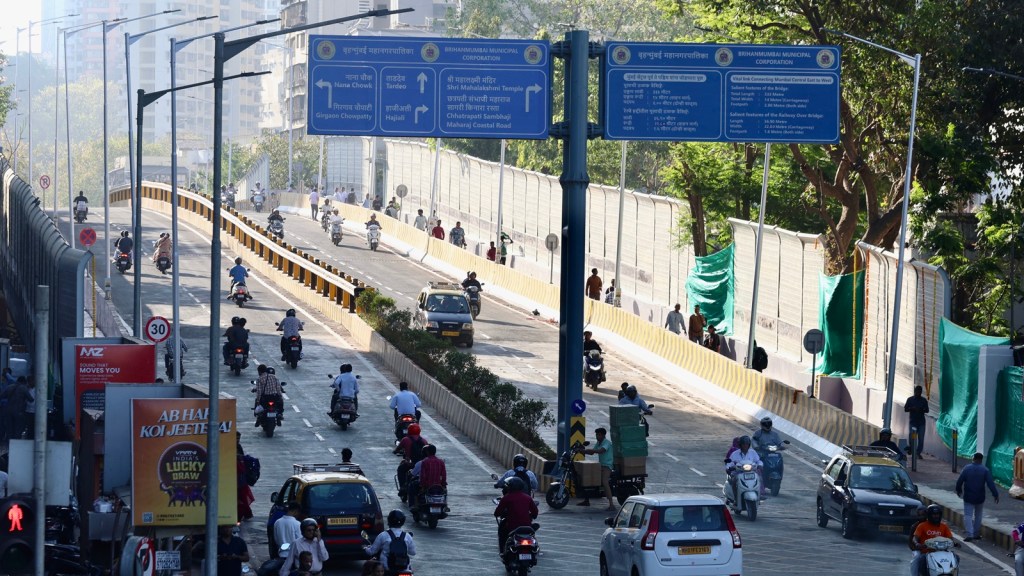 The change in AQI has also led to improved visibility and clear sky, marking a change from the haze-shrouded atmosphere. (Source: Express Archives)


 Share


