


Stay updated with the latest - Click here to follow us on Instagram
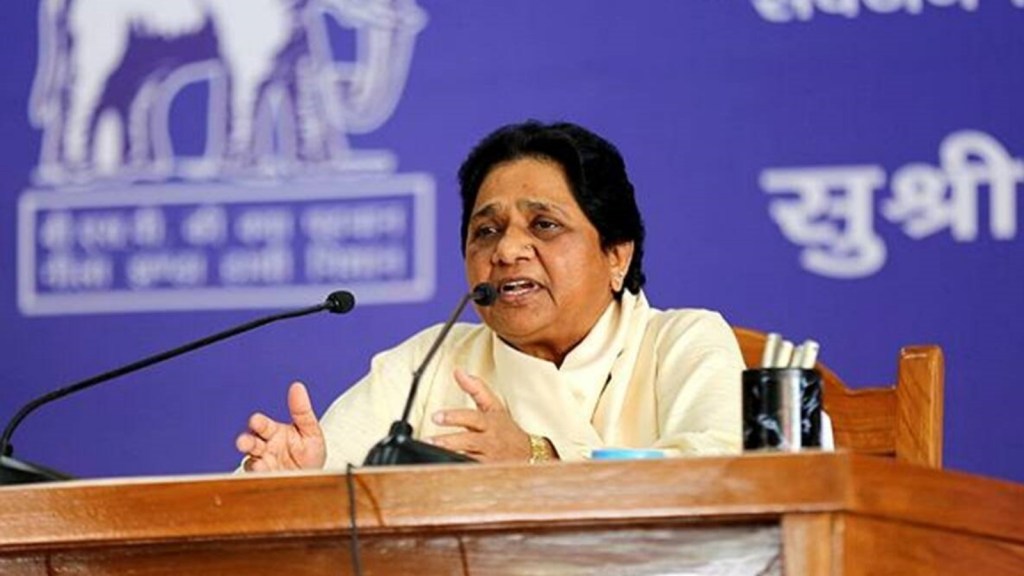 Mayawati directly targeted the SP’s PDA politics, saying it seeks votes from PDA communities but gives parliamentary and Assembly tickets mostly to members of political families and wealthy industrialists. (File Photo)
Launching a sharp attack on the Samajwadi Party over its Rajya Sabha nominations from Uttar Pradesh, Bahujan Samaj Party (BSP) chief Mayawati Friday said it exposed a contradiction with SP chief Akhilesh Yadav’s PDA (Pichhda, Dalit, Alpsankhyak) pitch.
The SP had nominated Reliance Industries executive Dhanraj Nathwani and Ram Gopal Yadav, a seasoned leader and Akhilesh’s uncle.
Describing the BSP’s policy of giving election tickets to “hardworking Ambedkarite” workers from poor, middle-class and weaker sections, Mayawati, in a post on X, said the choice of Nathwani was particularly at odds with the SP’s PDA narrative.
“The SP has… fielded Shri Ram Gopal Yadav for the biennial Rajya Sabha election from Uttar Pradesh, who is a close relative of the SP chief, and has named Dhanraj Nathwani as its second candidate, who is associated with a prominent industrial house,” Mayawati said.
She also took a swipe at the possibility of a third SP candidate, saying: “In people’s view, the SP’s third candidate, as in the past, will perhaps be a ‘face-saving’ candidate meant to lose the election.”
Mayawati then directly targeted the SP’s PDA politics, saying it seeks votes from PDA communities but gives parliamentary and Assembly tickets mostly to members of political families and wealthy industrialists.
“So this is what the SP, its ‘PDA’ and the socialism of that party are like. In elections, the SP wants votes from the ‘PDA’, but mostly makes members of its own families and big industrialists MPs and MLAs,” she said.
She added: “Therefore, it is better if people do not fall for their ‘PDA’ rhetoric.”
Mayawati also sought to draw a broader political contrast between the BSP and SP, claiming that the BSP does not rely on family connections or financial power while selecting candidates.
“BSP’s politics is free from dynastic politics and the use of money power, and is clean, whereas the SP does exactly the opposite. It appears more focused on putting up the political pretence and deception of being a socialist and supposedly a ‘PDA’ party,” she said.
Mayawati further said the SP’s approach was not new and described it as its “double” political character. She urged people from various social groups to remain alert ahead of the Uttar Pradesh Assembly elections.
In her post, she specifically referred to poor people from the upper-caste communities, Dalits, tribals, extremely backward classes, Muslims and other religious minorities, and claimed that their interests were protected in the BSP.
“The interests of all these communities lie in and are protected by the Ambedkarite BSP; everything else is just deception,” she said
Within the SP, Nathwani’s candidature is being defended not as a departure from its socialist ethos, but as an attempt to widen both its social and industry outreach.
“His selection is in tune with the socialist ideology. (Ram Manohar) Lohia talked of sampannata aur samta (prosperity and equality) going hand in hand. When there are people who are taxpayers, they help build the welfare state,” a party leader said, explaining the rationale behind Nathwani’s candidature.
The party argued that Nathwani’s corporate background should not be viewed as an ideological departure, presenting the candidature as part of an existing, if limited, effort to establish a relationship with the business and corporate community and expand its political constituency.
Stay updated with the latest - Click here to follow us on Instagram