Empty plots, no water: CJP demands action on ‘neglected’ Rajasthan tribal schools
Inspecting government schools in Kherwara, the Cockroach Janta Party questioned the Rajasthan government over missing basic amenities and the alleged lapse of a Rs 1,500 crore Tribal Area Development budget.
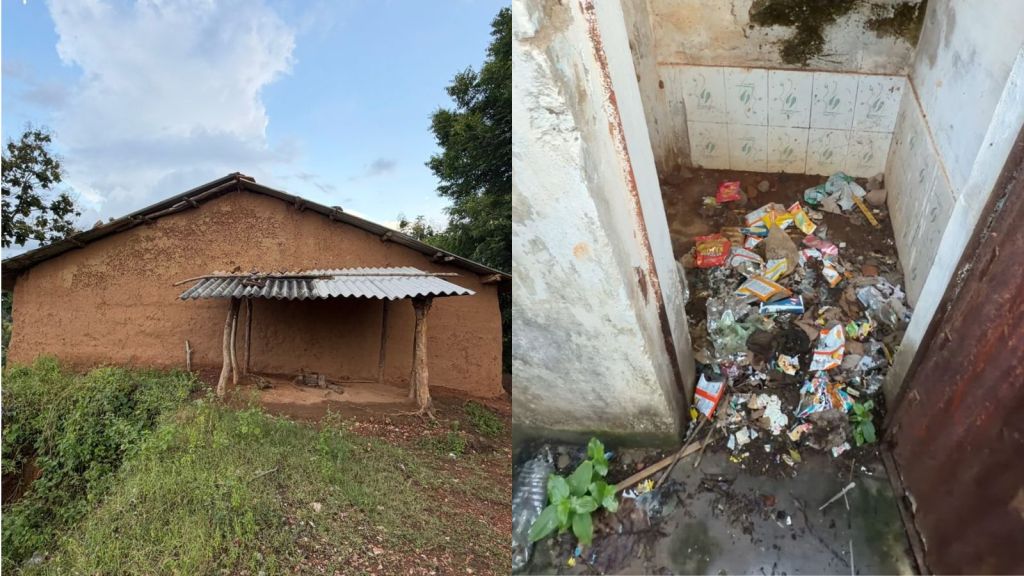
A seven-member team of the Cockroach Janta Party (CJP), led by party co-convener Ashutosh Ranka, visited tribal villages in Rajasthan’s Kherwara Assembly constituency Saturday as part of its ‘Adivasi School Thik Karo’ (fix tribal schools) campaign, raising concerns over the poor condition of government schools and the alleged under-utilisation of tribal development funds.
Inspecting schools across Demat, Pongli, and Babari villages under Nayagaon tehsil, the CJP team alleged that basic facilities were severely lacking. According to party representatives, while land plots had been earmarked for schools in several locations, no actual school buildings had been built. Ranka said that operational schools lack drinking water, adequate infrastructure, and basic amenities.
During the inspection, residents voiced frustration over the state of educational infrastructure, saying that they have been pooling their own money to fund essential requirements and upgrade school facilities.
खेरवाड़ा (उदयपुर) के देमत में राजकीय प्राथमिक आदिवासी स्कूल में 15 अगस्त का स्वतंत्रता दिवस का मेसेज आज भी लिखा हुआ है।
क्योंकि एक महीने से और कोई पढ़ाई ही नहीं हुई।
पूरी बिल्डिंग जर्जर। 70 बच्चों के लिए एक टीचर, दो जर्जर क्लासरूम। आंगनवाड़ी का कमरा कभी भी गिर सकता है। शौचालय… pic.twitter.com/jF1vOjTiDG
Joining forces with the Adivasi Ekta Parishad, the CJP questioned the government over reports that about Rs 1,500 crore from the Tribal Area Development (TAD) budget had lapsed, demanding complete transparency on how funds meant for tribal welfare and education were allocated and used.
They demanded construction of buildings on vacant school plots, immediate provision of basic amenities, and full utilisation of TAD funds.
“Why is the government not explaining how the massive Rs 1,500 crore budget allocated for Tribal Area Development is lapsing? Why is this budget not being utilised for the welfare of tribal people and the education of their children?” a representative asked.
“Neglect of education and basic facilities in tribal areas was a serious concern. We demand that the government take immediate steps to improve schools across the Kherwara constituency.”
Story continues below this ad
Follow-up to ‘School Thik Karo’ campaign
CJP founder Abhijeet Dipke announced the campaign on September 16 and said his team would visit tribal schools in Maharashtra, including Gadchiroli, as well as Rajasthan, Jharkhand, Odisha, Gujarat and other parts of the country, and document the facilities available to students.
Coming on the heels of CJP’s ‘School Thik Karo’ campaign, aimed at improving the condition of schools across the country, Dipke said the ‘Adivasi School Thik Karo’ would initially focus on basic infrastructure, as he cited instances where classrooms meant for anganwadis were allegedly being used to conduct school classes.
He also raised concerns over the deaths of tribal students and claimed that more than 590 Adivasi students in Maharashtra had lost their lives over the past two years.
Parul Kulshrestha is a Principal Correspondent for The Indian Express, based in Rajasthan. A lawyer turned journalist, she brings a unique cross-disciplinary perspective to her reporting, blending legal precision with deep social inquiry to cover one of India's most culturally and politically vibrant regions.
Expertise and Experience
Legal-Journalistic Synergy: Parul’s transition from a legal background to mainstream journalism provides her with a distinct advantage in interpreting policy, legislation, and judicial impacts. This expertise allows her to "read between the lines" of government orders and court rulings affecting the public.
Diverse Beat: With years of experience across both mainstream newsrooms and independent journalism, she has built high-level authority in several critical areas:
Nomadic Tribes & Marginalized Communities: She is recognized for her sensitive and in-depth reporting on the struggles and rights of Rajasthan's nomadic populations, often giving a voice to those outside the traditional political spotlight.
Gender & Social Justice: Parul focuses on the intersection of law and gender, covering issues ranging from women’s safety and reproductive rights to the socio-economic empowerment of rural women.
Environmental & Political Reporting: She tracks Rajasthan’s complex political landscape—including electoral shifts and bureaucratic changes—alongside critical environmental concerns like water scarcity and land use.
Academic & Professional Pedigree: Her background as a lawyer, combined with her rise to the rank of Principal Correspondent at a national broadsheet, establishes her as a senior voice in the media landscape. ... Read More