


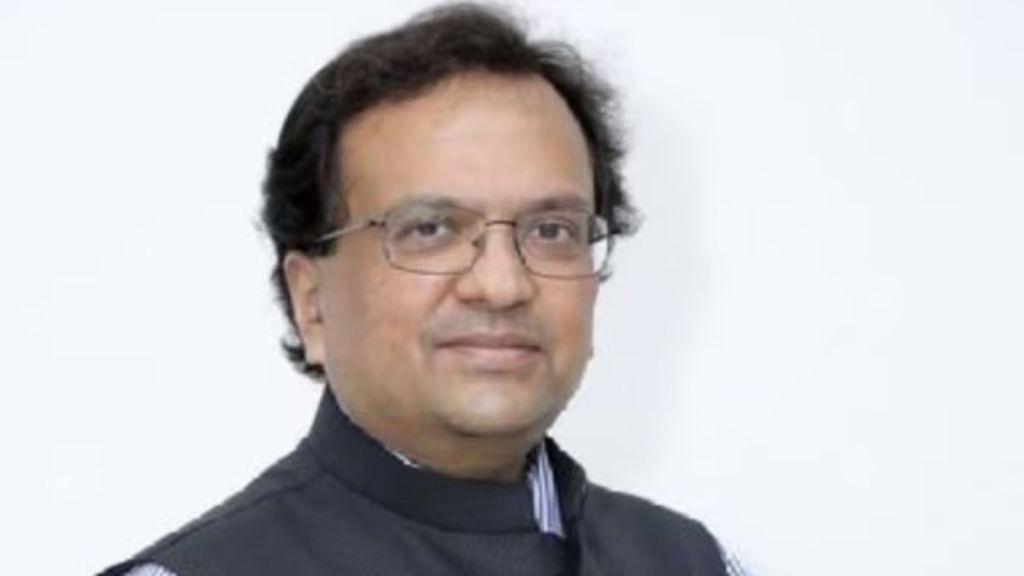
 Union Home Secretary Govind Mohan said that the conventional internal security landscape, which the country has grappled with for decades, has changed irrevocably, and it is incumbent on IPS officers to keep pace. (File)
Union Home Secretary Govind Mohan said on Saturday that the conventional internal security landscape, which the country has grappled with for decades, has changed irrevocably, and it is incumbent on IPS officers to keep pace.
Mohan was addressing the Passing Out Parade of the 78th Regular Recruit batch of IPS at the Sardar Vallabhbhai National Police Academy in Hyderabad.
Left-wing extremism, he said, has largely ended, while insurgency in the Northeast is now reduced to minuscule levels. “What is happening in certain parts of the Northeast is not insurgency. It is largely ethnic conflict,” he said.
Through a series of ceasefire agreements and tripartite agreements, most of the erstwhile insurgent groups have joined the peaceful mainstream, he said. “Homegrown terrorism has also come to, more or less, an end. Foreign-inspired terrorism, except for a few parts of the country, is no longer visible in any other part,” he said.
However, graduating IPS officers will have to prepare for new internal security challenges like narcotics, cybercrime and illegal immigration, he said. “In the technology domain, the young officers would encounter challenges on social media, which are now emerging in an entirely different dimension. Fake messages, deepfake videos, all kinds of altered reality is now available on social media. It creates unnecessary mobilisation, and ultimately it leads to law and order problems,” he said.
The young officers will have to come up with creative solutions as per the law to tackle these challenges, he said.
Reiterating the need for a “nasha-mukt Bharat or drug-free India”, he said that Union Home Minister Amit Shah has vowed to make India free of narcotics abuse within the next three years.
On the challenge of cybercrime, he said it has become accessible to low-skilled actors due to the proliferation of mule bank accounts and fake SIM cards. While central institutions handle cyber threats, the foremost battles would have to be fought in the states and Union Territories, he said.
“Identifying illegal immigrants in the country” is another challenge, he said, adding that officers will have to address radicalisation and market distortion. While India adheres to Vasudhaiva Kutumbakam – the philosophy of the world being one family – the primary rights over the country’s resources belong to the citizens of the country, he said.
Most of the crime is now anonymous, he said, citing instances such as hit jobs being advertised on the dark net, with criminals transferring money to carry them out and threat calls being made through a VPN from foreign locations. Technology has to keep pace with law enforcement efforts, he added.