4 min readNew DelhiDec 22, 2021 09:27 AM IST
First published on: Dec 22, 2021 at 09:27 AM IST
Over the years, Delhi has lost many of its dhau trees — deciduous trees that are perfectly at home in the Aravalli hills, and by extension, in parts of the city’s Ridge area.
The dhau tree (Anogeissus pendula) with small leaves are seen only in some patches in Delhi, including the Asola Bhatti Wildlife Sanctuary.

“We have slowly lost them. With the Prosopis juliflora (vilayati kikar), an invasive plant that is known to suppress the growth of other plants, that came from Mexico, and many years of degradation both in terms of vegetation and productivity of soil, we have lost dhau trees,” said Faiyaz Khudsar, scientist-in-charge at the Yamuna Biodiversity Park.
“There are some patches that you can still see near Dhaula Kuan. But this small patch is surrounded by the vilayati kikar,” he said.
The tree doesn’t require much water, and the leaves make for fodder for cattle, while the bark is used to make farm equipment and cots. At Sunder Nursery, a single tree stands, almost inconspicuous, near a row of palm and frangipani trees. The tree, with grey bark and clusters of small leaves, wears a badge on it with its name. Small, green fruits that look spiky from a distance, also hang from the twigs that the leaves are on.
“The Asola Bhatti Wildlife Sanctuary has huge tracts of dhau trees. In the northern Aravallis, some of the best patches of dhau trees are at Asola,” said Sohail Madan, who heads the Conservation Education Centre of the Bombay Natural History Society (BNHS) at the Asola Bhatti Wildlife Sanctuary.
“A lot of area is taken over by invasive species like vilayati kikar. But the special thing about the dhau is that where it grows, on these steep, rocky hills, nothing else grows. Where there’s flat ground, the dhau is losing, but in rocky habitats, like in patches at Asola, the dhau tree dominates,” Madan said. Parts of places in the city like Greater Kailash, would have at some point been good habitats for the dhau tree, but buildings have taken over, he added.
In his book Trees of Delhi, Pradip Krishen writes that the dhau tree is found now only in localised patches on the Ridge, though parts of the Ridge had once been forested with dhau. It thrives on hot, dry slopes and rocky soil where most other trees would not survive, he writes. It is known to be confined to a limited territory in and around the Aravalli hills.
“Even a little rain can make them very happy. In the Chambal region, the growth of these trees becomes so dense and they make for such a thick forest that movement becomes difficult,” Khudsar said.
Efforts have been made to bring the dhau trees back to Delhi. “In the Aravalli Biodiversity Park, where we had mining pits earlier, we have restored patches of these trees, since these are trees that are found in the Aravalli hill ranges,” Khudsar said.
At the Aravalli Forest Nursery, which is being run by BNHS and the Delhi Forest Department at the Asola Bhatti Wildlife Sanctuary, dhau is one of the focus species, the saplings of which are being grown now.
“Around 15,000 of these were grown this monsoon. It is a tree which is hard to grow since it doesn’t grow everywhere,” Madan said.

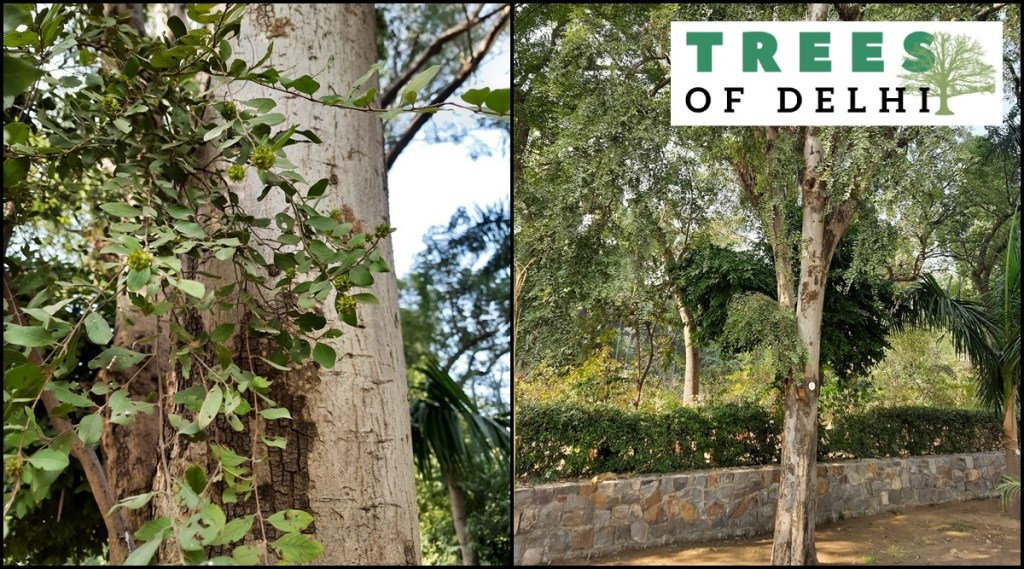 A dhau tree thrives on hot, dry slopes and rocky soil where most other trees would not survive. It is known to be confined to a limited territory in and around the Aravalli hills. (Express Photo)


 Share


