


Stay updated with the latest - Click here to follow us on Instagram

Journalism of Courage
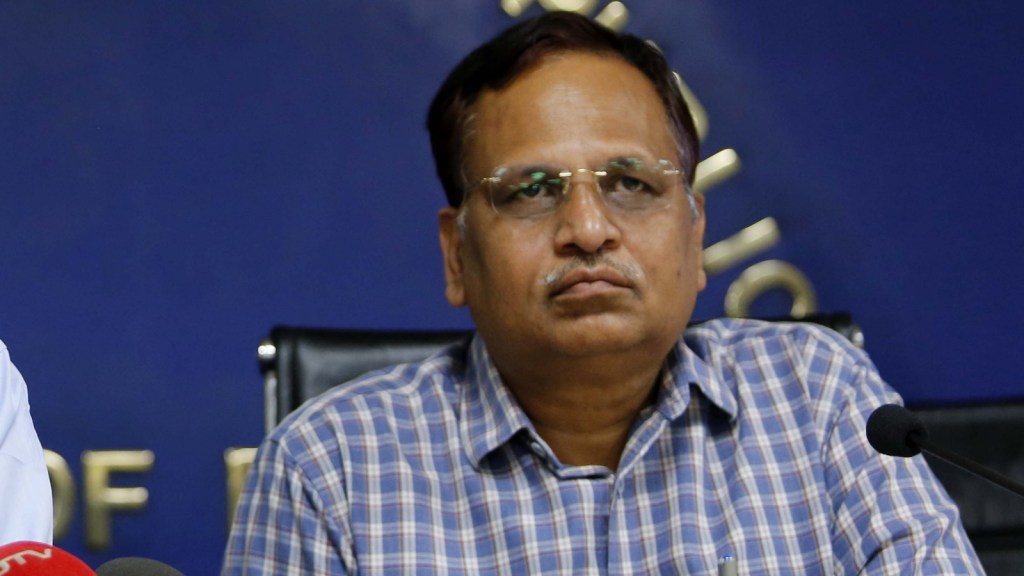 Former Delhi Minister Satyendar Jain. (Source: Express Archives)
A Delhi court on Wednesday granted regular bail to five accused in the alleged multi-crore sewage treatment plant (STP) tender scam investigated by the Anti-Corruption Branch (ACB), questioning the circumstances of their arrests and the need for their continued custody. Last week, AAP leader Satyendar Jain was also granted bail in the case.
Those granted bail on Wednesday were former Delhi Jal Board (DJB) CEO Udit Prakash Rai, DJB’s former contractual consultant Ankit Srivastava; AN Enterprises proprietor Nagendra Yadav; Euroteck Environment Private Limited owner Raj Kumar Kurra and Srijanhar proprietor Pankaj Verma. All had been arrested on August 18.
In his order, Special Judge Dig Vinay Singh of the Rouse Avenue Court said Rai, who was posted as a government servant in Mizoram, could not have been expected to travel to Delhi at short notice to join the investigation.
“…at such short notice he cannot be expected to fly to Delhi. In such circumstances, if he sought 10 days’ time to enable him to join the investigation, the claim of non-cooperation is unreasonable,” the court said.
Calling his “sudden arrest” “questionable”, the judge added that “this is not a case” where Rai had refused or avoided joining the investigation.
Questioning the allegation that money transferred through banking channels was a kickback, the court said, “One wonders why a person seeking kickbacks would do so through banking channels. If that amount was a kickback, why would he repay it, that too with interest?”
On the allegation that Rai had not cooperated with the probe, the court said, “Cooperation does not mean an accused dancing to the tunes of an Investigating Officer by offering self-incriminating material on a platter.”
The accused had argued that there was an unexplained 27-month delay in their arrests since the registration of the FIR and that there had been no meaningful progress in the probe before their arrest. They also questioned the need for police custody, saying there was no instance of tampering with evidence or influencing witnesses.
The court said that the Directorate of Enforcement has “already investigated the money trail” and in detail and had “not found it necessary to arrest the applicant”.
“Though the DoE case and the predicate case are indeed separate and distinct cases independent of each other, one cannot lose sight of the fact that a person against whom a money trail is claimed has been thoroughly investigated and yet, under more stringent bail provisions, his arrest was not even thought to be necessary, must be kept in jail for the same money trail in the predicate offence,” Judge Singh said.
Stay updated with the latest - Click here to follow us on Instagram