
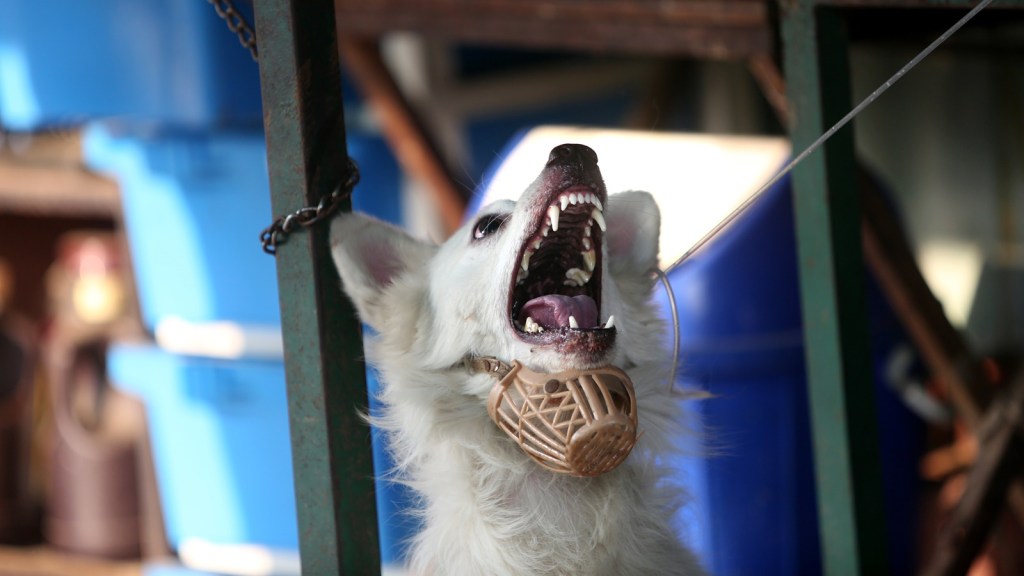
They don’t walk in with lawyers or sit in the witness box, yet pets — and sometimes the strays that linger outside homes — are cropping up more and more in Delhi’s courtrooms and mediation centres. These animals have been at the heart of a surprising range of disputes: From custody battles after breakups, demands for visitation rights, neighbourhood altercations, claims for property damage, and even accusations of neglect or cruelty, not toward the animals — but toward humans.
Take, for instance, a civil suit from 2023 filed by Prabhat Kumar, a practising advocate who lives in South Delhi’s Vasant Kunj. Kumar, a senior citizen, had approached the Patiala House district court, seeking damages worth a whopping Rs 48 lakh from his neighbours.

The reason?
He was chased by their “huge pet dog”, causing him to fall and fracture his wrists in July 2022.
He claimed Rs 1.70 lakh in medical expenses, Rs 15 lakh in lost income, Rs 15 lakh for mental stress, harassment, and physical discomfort, and an additional Rs 10 lakh for anticipated future losses. On February 4 this year, after assessing all costs borne, the court awarded Rs 10.61 lakh as damages to Kumar.
Then there is another case from February 2024. Animal welfare activists, associated with the NGO ‘People for Animals’, received complaints about three dogs being kept in poor conditions — locked in cages — at a home in Dabri.
After confronting their owner, Sahil, the NGO had taken away the dogs — two Pekingese and a Beagle — to ensure their proper care.
An enraged Sahil claimed he was the lawful owner of the three dogs, “which he raised with care and affection”, and moved a magistrate court. He wanted an FIR to be lodged against the activists, accusing them of forcibly entering his premises and unauthorisedly taking the dogs away.
Following court orders, an FIR was lodged in April 2024 at the Dabri police station.
The activists — Rajesh and Kabita Haldar — were denied anticipatory bail by a sessions court; they moved the Delhi High Court seeking relief. The two contended that they acted in good faith, believing that the dogs were being mistreated and required urgent care.
As Sahil demanded custody, advocate Namita Roy, who appeared on behalf of the activists, told The Indian Express, “We told the court that we have no issue giving him custody if he gives an undertaking that he is the lawful owner — with proof. The HC had directed that the issue of custody be decided by the trial court. But to date, he has not filed any application seeking their custody. All three dogs have now been adopted and are safe and happy.”
On February 3 this year, the HC granted anticipatory bail to the activists. “The allegations, though serious, pertain to the welfare of animals, rather than offences involving personal harm or grave economic fraud, making custodial interrogation unnecessary at this stage,” Justice Sanjeev Narula reasoned while granting anticipatory bail.
A high-profile ‘custodial battle’ that played out in public involved TMC MP Mahua Moitra and lawyer Jai Anant Dehadrai over the parliamentarian’s pet Rottweiler, Henry. The battle for custody of the dog gained attention after Dehadrai accused Moitra of allegedly asking questions in the Lok Sabha in return for gifts and favours from a businessman.
Disputes over the furry ones are not simply limited to the confines of a courtroom; the warring parties sometimes choose to mediate — like in this case from an upscale South Delhi locality.
In January 2023, an elderly couple, living on the ground floor of a property, filed a petition in the HC — they sought directions to the Residents’ Welfare Association to remove a stray dog.
The couple objected to the dog’s movement in and out of the common stairwell area, as residents on the second floor would frequently feed the dog and allow it to rest on the staircase landing.
The other occupants contended before the court that “the stray dogs are not being fed by them, and they are not responsible for them entering the residential premises and the common areas”.
After 10 months of litigating, the parties expressed a desire to explore mediation.
“There were a lot of emotions involved during mediation,” said Veena Ralli, senior mediator of the Delhi High Court Mediation Centre (DHCMC).
“Children, with tears in their eyes, were here at the mediation centre while we scratched our heads on how we could solve this pickle. The elderly woman was very scared of the dog, which made her even more resistant. Mediation went on from around 7-8 sessions over three-four months.”
By January 2024, the parties told the court that the matter could not be entirely settled by mediation. However, by September, they assured the court once again that they would try to settle the dispute.
In February this year, the second-floor residents told the court that no genuine effort had been made by the elderly couple to resolve the issue amicably.
Then, on May 20, the court was informed that the cause of the entire dispute — the stray dog — had passed away. The second-floor residents pointed out to the court that during the settlement, the elderly couple had undertaken to unconditionally withdraw the suit.
However, the couple had a strange demand. As the court order records, they said they are willing to withdraw the suit — subject to the second-floor residents furnishing an “apology from every individual who was feeding the street dog, as well as (covering) the costs of the court fee”.
The court has now decided to hear the parties on the maintainability plea, even as the stray dog is long gone.
Ralli recalled another mediation case file she had received five years ago.
“It was the case of an amicable separation of a couple,” she said.
“The wife was living in a house jointly owned by the couple… and they had a pet dog. After 6-7 years of litigating, the husband decided to forego his rights to the house while parting ways. But he insisted on visitation rights with the dog — his terms included visiting the dog, taking the dog out and then dropping it back at the house. Timings and days too were decided!”
Disputes over pets are not just limited to the national capital.
On June 10, the Karnataka High Court was at its wits’ end while hearing a dispute between two neighbours, who live in an apartment in Bengaluru, over a pet cat.
Quashing proceedings against a man, Taha Hussain, who was accused of kidnapping the feline by its owner, Nikitha Anjana Iyer, Justice M Nagaprasanna orally remarked, “Cat named Daisy has driven everyone crazy”.
The HC also lambasted the jurisdictional police, asking how it could have registered the complaint “as there is no offence indicated — except (of a) missing cat and alleged wrongful custody of the cat in the house of the accused”.
“The police, too, deserve stern admonishment for allowing themselves to be swept into a whimsical pursuit of justice for a cat named Daisy… It is the symptomatic misuse of the criminal process, where hurt feelings or robust grievances masquerade as legal wrongs. If such frivolous grievances are allowed to blossom into a full-fledged criminal trial, it would be nothing but a waste of precious judicial time and, more gravely, divert police resources from genuine grievances,” the court recorded in the order.
This was not Justice Nagaprasanna’s first brush with feline inconveniences.
In December 2024, the judge had stayed the probe in a cruelty case lodged against a man and his family members — after it came to light that his wife’s primary grouse against her husband was that he took more care of their pet cat than of her.
However, the wife later accused the husband of physical abuse, demanding unnatural sex, harassment, and making dowry demands.
On June 10, Justice Nagaprasanna quashed the FIR against the parents while sustaining it against the husband, noting that he has “to face investigation and come out clean in a full-blown trial as the allegations against him undoubtedly meet ingredients of every offence alleged”.


 Share


