


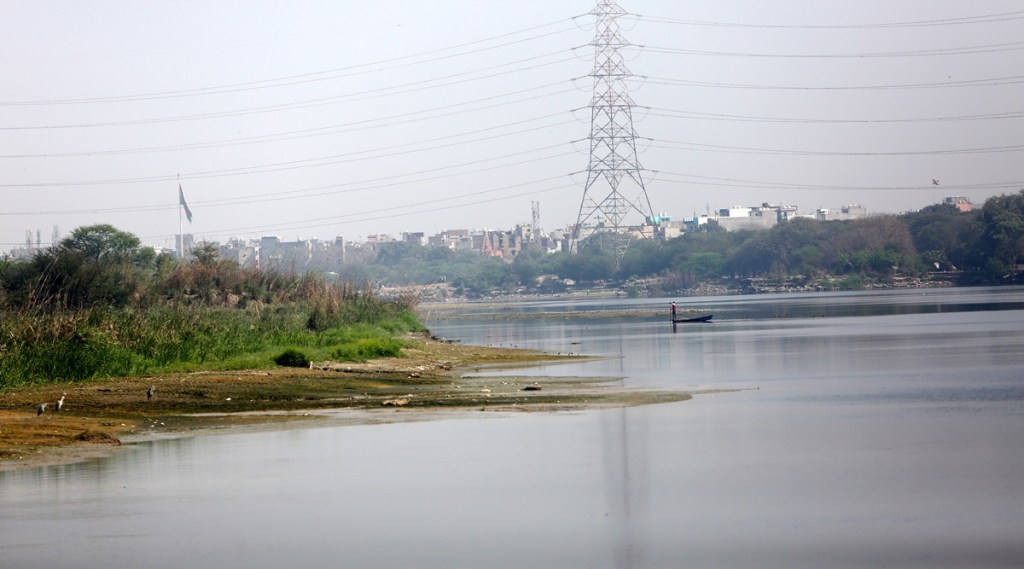


Water quality in Yamuna is showing signs of improvement with the biochemical oxygen demand (BOD) – the proportion of which determines the level of pollution in a water body – in the Najafgarh drain as well as in the river from the point where it meets the drain having fallen compared to last year, according to Delhi Pollution Control Committee (DPCC) figures presented at a meeting on Friday.
During the fifth meeting of the High-Level Committee for rejuvenation of the Yamuna, chaired by Lieutenant Governor V K Saxena, progress on work so far was reviewed. The committee was constituted on the orders of the National Green Tribunal (NGT) in January.

According to a communication from the L-G’s office, DPCC data shows that the BOD level in the Najafgarh drain, which was 80 mg/litre in January 2022, had dropped to 53 mg/litre in January 2023. Further, the figure that was 76 mg/litre in May 2022 had dropped to 48 mg/litre in May this year. With several other drains meeting the Najafgarh drain and the latter eventually meeting the Yamuna near Wazirabad, ensuring clean water in the drain is crucial to keeping the river clean.

At ISBT Kashmere Gate, a location from where the DPCC draws water for testing after the Najafgarh drain merges into the river, the BOD level, which was 42 mg/litre in January 2022, had fallen to 38 mg/litre in January 2023, according to DPCC data presented at the meeting. In May, the BOD level in the river at ISBT was 55 mg/litre in 2022 and 38 mg/litre in 2023.
A total of 17 projects for sewage treatment plants, out of 29 that were earlier held up due to non-availability of land, have now been allotted land by the Delhi Development Authority (DDA) and the Revenue Department, according to the communication from the L-G’s office.
When the NGT issued its order on pollution in the Yamuna in January, it had said that the success of the committee would be viewed in terms of reduction of pollution load, adding the committee’s targets should be measurable and identifiable. The tribunal’s order had said that a pollution graph should be prepared on a quarterly basis with the goal of “substantial reduction” by July 1.
Rejuvenation of the Yamuna that is being monitored by the committee includes treatment of sewage and associated expansion of the sewerage network along with construction of sewage treatment plants, treatment of industrial effluents, restoration of the floodplains and management of the Najafgarh jheel.
Timelines on work must be met and seamless inter-departmental coordination is to be ensured, Saxena told officers, according to the communication issued by his office after the meeting.
According to the final report of the erstwhile Yamuna Monitoring Committee submitted in 2020, “improvement in the quality of river water is linked to the twin factors of maintaining a minimum flow of fresh water and reduction in the discharge of polluted water, both domestic and industrial, joining the river.”