3 min readNew DelhiSep 4, 2026 11:48 AM IST
First published on: Sep 4, 2026 at 01:55 AM IST
In a bid to reduce repeated instances of road digging, the Delhi government has approved a citywide plan for multi-utility ducts, beginning with two stretches in Chandni Chowk, to create common underground corridors for electricity, water, gas and other services, officials said on Thursday.
The pilot project will cover 310 metres of Esplanade Road and 560 metres of Mor Sarai Road, with work on both stretches set to begin soon, the Chief Minister’s Office (CMO) said on Thursday.

The ducts will, wherever technically feasible, accommodate electricity cables, water and gas lines, fire-hydrant networks and other essential utility services, officials said.
The CMO said the system would “reduce the need to repeatedly dig up and repair roads, minimise disruptions to traffic, reduce inconvenience to citizens and help maintain the structural strength of roads more effectively.”
On the initiative, Chief Minister Rekha Gupta said, “We want to create infrastructure that is safe, well-organised and sustainable, keeping future requirements in mind. The multi-utility duct is part of this vision.”
An expert technical committee will be constituted to guide the project and its expansion across the city. It will include expert officials from discoms, the Delhi Jal Board (DJB), the Public Works Department (PWD) and other departments, officials said.
The committee will oversee the technical design of the ducts, including provisions for ventilation, fire safety, maintenance access and emergency response. The CMO said the arrangement would also improve coordination among agencies and reduce the possibility of accidental damage to utility lines during excavation.
As per officials, the two Chandni Chowk stretches will serve as pilot corridors, following which the government plans to assess the experience and expand the system to other parts of Delhi according to local requirements.
The move assumes significance as repeated road digging by different agencies has long been a challenge for Delhi’s roads. The government’s proposed system seeks to bring such work within a common underground corridor so that future maintenance can be carried out without disturbing the road above, officials said.
The choice of Chandni Chowk for the pilot comes in an area where utility infrastructure have already been accomodated underground as part of the redevelopment of the market. The earlier redevelopment involved shifting overhead electrical cables and other utility infrastructure underground along the main Chandni Chowk stretch.
The concept of common utility corridors is already used in planned urban developments such as Gujarat’s GIFT City, where an underground utility tunnel carries multiple infrastructure networks.
Such multi-utility corridors, also known as common utility tunnels or utilidors in other cities, are used to accommodate multiple services within a designated underground space, allowing maintenance and additions to be carried out without repeatedly digging up the road.

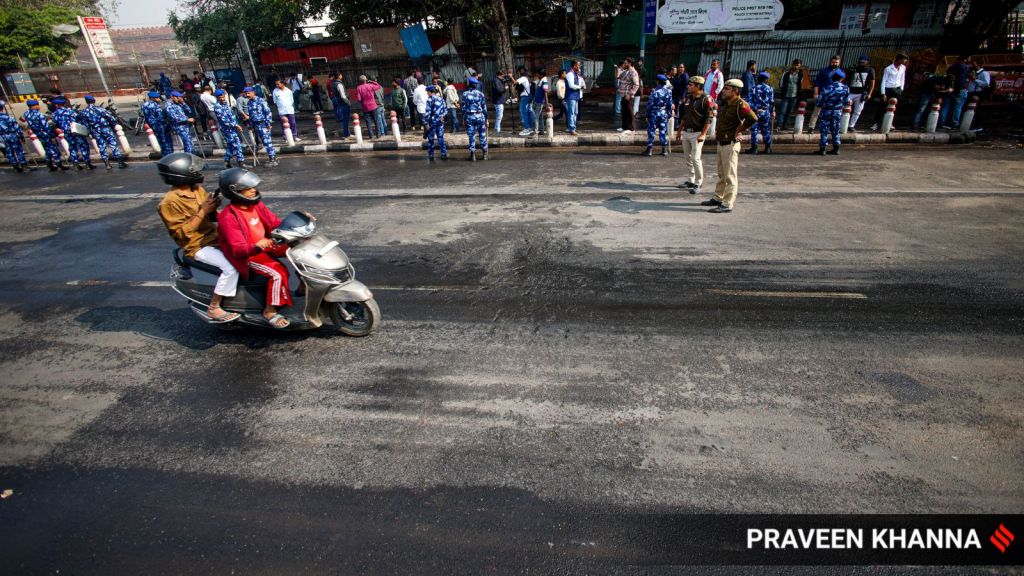 As per officials, the two Chandni Chowk stretches will serve as pilot corridors, following which the government plans to assess the experience and expand the system to other parts of Delhi according to local requirements.


 Share


