5 min readNew DelhiApr 9, 2025 05:02 PM IST
First published on: Apr 9, 2025 at 05:25 AM IST
Lodhi Garden, one of Delhi’s most iconic green spaces, turns 89 today. While a favourite among morning walkers, yoga practitioners and young couples, not many are familiar with the garden’s multi-layered history.
It was once a Sultanate-era pleasure ground. For a brief time, it even served as a burial site. It was during British rule that the garden transformed into how we see it today — with its landscaped lawns and towering trees surrounding the medieval tombs.

“The term ‘Lodhi Garden’ is a post-independence term,” says Rameen Khan, an oral history teller who conducts heritage walks across Delhi. “There once used to be a dirt track that led to the garden from Hazrat Nizamuddin Auliya’s dargah — this track is the present-day Lodhi Road. At the end of it was a Sultanate-age garden known as Bagh-e-Jud, used as a pleasure retreat by Sayyid Dynasty kings.”
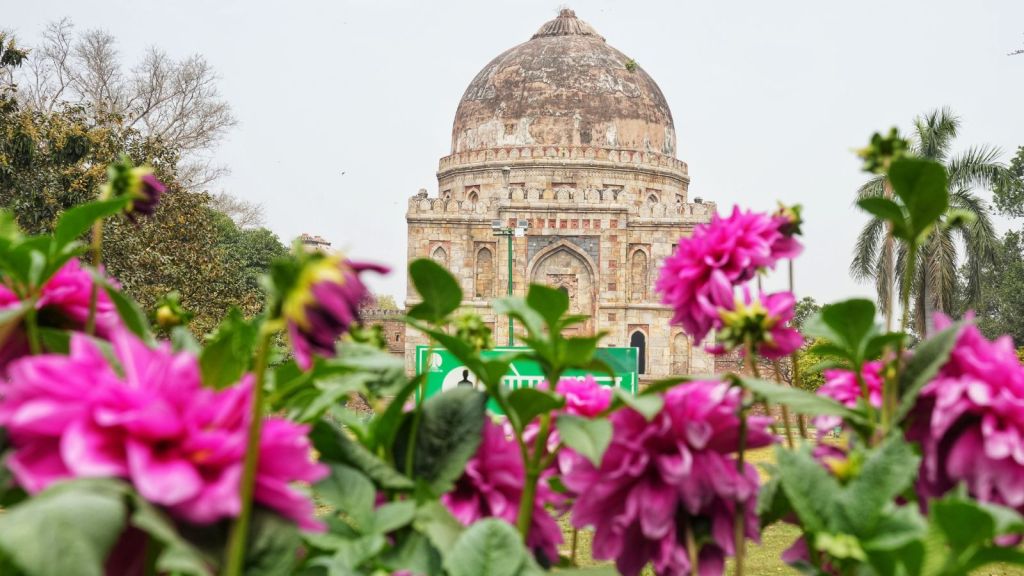
Inside the garden, the tomb of Muhammad Shah, the third ruler of the Sayyid dynasty, is the oldest structure. (Express Archive)
Though records on Bagh-e-Jud are scarce, the area became a sacred burial spot in the 14th Century after the establishment of the dargah of Sufi saint Hazrat Nizamuddin Auliya.
“When a Sufi is buried at a place, people want to be buried close to their grave… Humayun was buried where Humayun’s Tomb is because it’s close to Nizamuddin Dargah. This belief in proximity to saints for a better afterlife is why rulers of two dynasties — the Sayyids and the Lodis — are buried here,” says Khan.
The area around these monuments saw yet another shift with the decline of the Mughal empire in the 19th century. (Express Archive Photo)
Inside the garden, the tomb of Muhammad Shah, the third ruler of the Sayyid dynasty, is the oldest structure. Alongside it are monuments from the Lodi period — the octagonal tomb of Sikandar Lodi; the Sheesh Gumbad which has a few still-unidentified graves and an adjoining mosque; the Bada Gumbad which leads to a three-tombed mosque; and a bridge called Khairpur Satpula which was built by Nawab Mirza, a noble of Mughal emperor Akbar’s court.
The area around these monuments saw yet another shift with the decline of the Mughal empire in the 19th century. “When the Mughal empire saw its decline, the Purani Dilli area, which was the Mughal capital, began to destabilise… villagers started leaving Old Delhi and began taking refuge inside these tombs. Over time, their population turned into two villages. One such settlement was known as Khairpur. Old photos show huts built around these tombs, and cattle tied nearby,” Khan says.
The transformation from scattered ruins and informal settlements into a formal garden began under British rule.
Beyond its architectural legacy, the garden continues to be a space of living traditions. (Express Archive)
Referring to Lady Willingdon, wife of the then Viceroy of India, filmmaker and author Sohail Hashmi says, “She saw these scattered ruins and thought this could become a good garden… The two villages located in the area were relocated, and it was given a garden look. It came to be known as Lady Willingdon Garden.”
The garden was formally inaugurated in 1936, and many of the villagers were moved to what is now the Jangpura area. “This was done by a gentleman called Captain Young. After the Partition, many people who came from Pakistan were also rehabilitated in the same area… Since many Indians couldn’t pronounce the word ‘Young’, the area began to be known as ‘Janpura,’ but its original name was Youngpura,” Hashmi says.
With the establishment of institutions like India International Centre and the UNESCO building in the vicinity, the whole area came to be known as ‘Steinabad’. These buildings were designed by American architect, Padma Shri Joseph Allen Stein.
The transformation from scattered ruins and informal settlements into a formal garden began under British rule. (Express Archive Photo)
“He designed many buildings in Central Delhi’s Lodhi Estate. Because of this, the entire area started being referred to as ‘Steinabad’,” says Hashmi.
It was Stein’s team that undertook the landscaping of Lodhi Garden. “An architect from Stein’s team shaped the garden’s current topography — the slopes, the rises, the flowing layout,” Hashmi adds.
Beyond its architectural legacy, the garden continues to be a space of living traditions. Every March, it plays host to the celebration of Nauroz — the Parsi New Year — when Delhi’s Parsi community gathers in the garden.

 Lodhi Garden through
the years (Archive)

 Inside the garden, the tomb of Muhammad Shah, the third ruler of the Sayyid dynasty, is the oldest structure. (Express Archive)
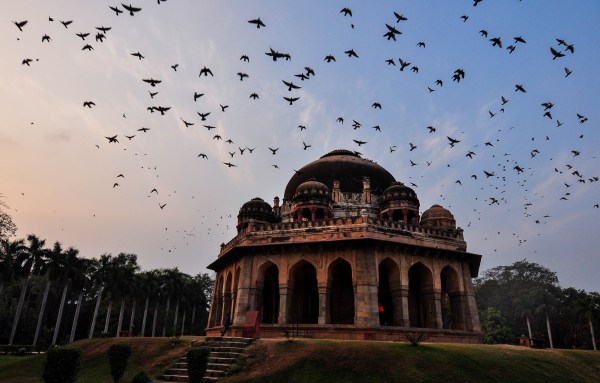 The area around these monuments saw yet another shift with the decline of the Mughal empire in the 19th century. (Express Archive Photo)
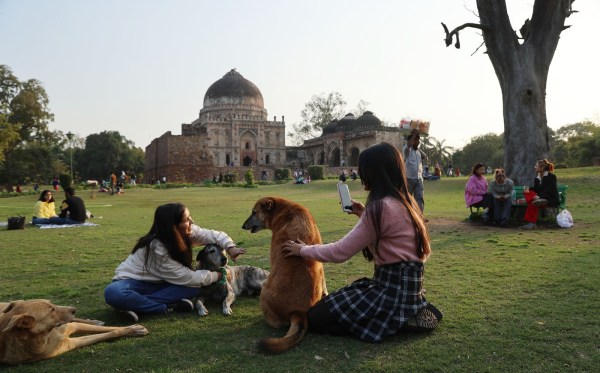 Beyond its architectural legacy, the garden continues to be a space of living traditions. (Express Archive)
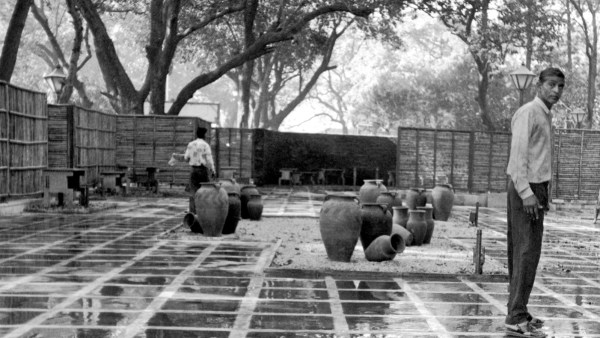 The transformation from scattered ruins and informal settlements into a formal garden began under British rule. (Express Archive Photo)


 Share


