4 min read
Stay updated with the latest - Click here to follow us on Instagram

Journalism of Courage



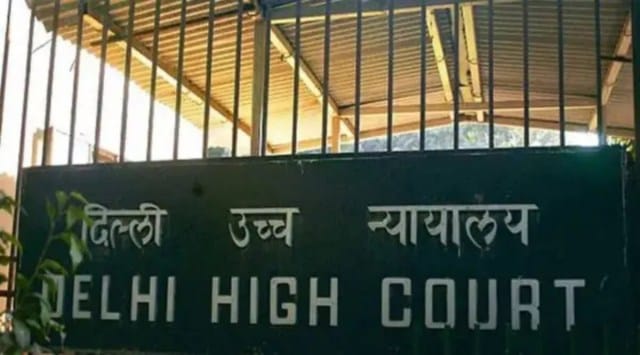 The HC observed that students who resort to unfair means cannot be dealt with leniently and they “should be made to learn a lesson not to adopt unfair means in their life”. (File)
 The Delhi High Court has recently observed that students who resort to “unfair means and get away with it cannot build this nation”, while dismissing an appeal by an engineering student filed against an order of the Delhi Technical University (DTU) that had cancelled his second semester exams as he was found involved in an examination malpractice.
A division bench of Chief Justice Satish Chandra Sharma and Justice Subramonium Prasad in its December 13 judgment held that people using unfair means to march over students who work hard to prove their worth “has to be dealt with a heavy hand”.
A single judge of the HC had upheld the decision of the DTU, pursuant to which the student moved the division bench.
The HC observed that students who resort to unfair means cannot be dealt with leniently and they “should be made to learn a lesson not to adopt unfair means in their life”.
“The facts in the case demonstrate that the students have been able to get hold of the question paper and they have shared the questions and answers amongst themselves, giving them unfair advantage against students who would have burnt their midnight oil to prepare for the exams,” the court stated.
According to the facts of the case, while the examination for “Programming Fundamental” subject was being conducted, a mobile phone was found in possession of a student which contained a WhatsApp group called “Ans.” in which the answers to the questions and the question papers were being shared amongst 22 students.
The appellant, Yogesh Parihar, was said to be a member of that group. It is stated that during inquiry, it was found that these pictures (of the question paper) were shared from the mobile phone belonging to the appellant. The Unfair Means Scrutiny Committee of DTU found that Parihar knew that he was a part of the WhatsApp group and hence rejected his alibi that his phone was being used by another student. Parihar had been unable to furnish any material or witness that his mobile phone was not in his possession and that he was unaware that his phone was being misused.
The university Vice Chancellor (VC) on November 15 imposed category-IV punishment on Parihar and cancelled his exams. This also led to cancellation of his registration for the third semester and he was asked to register himself again for the second semester.
The HC held that the decision of the Vice Chancellor was based on “facts and cogent reasoning”. “The reason for imposing punishment under ‘Category IV’ given by the Vice Chancellor is that the appellant had facilitated the act of sharing and using unfair means not only limited to him alone but to other students as well which amounts to serious misconduct. The said reasoning does not require any interference,” the court held.
The court held that the university had been “lenient” in imposing Category IV punishment rather than “rusticating the cheaters”. The HC, however, noted that the VC and the single judge had taken into account all the facts for coming to a decision.
The HC rejected Parihar’s argument that his phone was being used when he was in the examination centre holding that it did not “impress this court”.
Dismissing Parihar’s appeal, the HC held that while “exercising its jurisdiction under Article 226 of the Constitution of India, and after looking into the decision-making process, the facts that have been taken into account and as to whether the reasoning given by the authorities below is so arbitrary that no man of prudence would reach such a conclusion, is of the opinion that the decision of the college authorities and the order of the learned Single Judge do not require any interference from this court”.
Stay updated with the latest - Click here to follow us on Instagram