Delhi Police Commissioner Anurag Kumar has asked the intelligence wing of the force to expand its information-gathering efforts, and to collect at least 10 specific pieces of intelligence ahead of every planned protest.
Police were caught flatfooted on July 20, when at least 50,000 young people hit the streets in the heart of Delhi and tried to march on Parliament to press their demand for education reform. Violent clashes followed, and the massive use of teargas and lathis against the protesters was widely criticised.
A senior officer said the Special Branch of the Delhi Police, which deals with intelligence, usually gathers basic details such as the venue of the protest and the expected turnout. The Commissioner has asked the Special Branch for a more “comprehensive and actionable assessment” of the groups organising the protests going forward, sources said.
Specifically, the intelligence wing has been directed to collect and analyse the following 10 details: the profile of participants; state-wise participation; modes of mobilisation; names of leaders and key functionaries; agenda or demands of the protesters; places of stay and movement; local contacts and linkages; organisational affiliations; sources of funding; logistical arrangements.
 Police fire teargas shells at Parliament Street. (Gajendra Yadav)
Police sources said the directions are aimed at improving the preparedness of police ahead of protests and public gatherings, particularly those involving participants from outside Delhi or multiple organisations.
“The emphasis is on collecting information that can help the force assess the law-and-order implications of such gatherings in advance,” a source said.
A senior officer said field units must provide verified, specific, and usable inputs rather than broad estimates. “The purpose is to understand not just where a protest is happening, but who is behind it, how people are being mobilised, where they are coming from, and whether there are local support structures,” the officer said.
The sources said the Commissioner specifically stressed the need to keep the radio communication system fully functional, so it can be used more effectively both during daily policing and major operations. A review of the handling of the protests has identified gaps in communication and coordination, leading to delays in some cases in information from the ground reaching senior officers, they said.
“The Commissioner directed that the wireless communication network be checked comprehensively and any deficiencies be rectified immediately,” a source said.
Kumar is learnt to have directed that effective use of wireless communication should be encouraged at all levels from the beat net to top officers, and by personnel in traffic, security, PCR, and the districts.
“All supervisory and operational officers have been asked to remain available on their wireless sets so that information can move quickly and command decisions can be communicated without delay,” the source said.
The Indian Express had reported on Sunday that following the criticism of the handling of the protest by the Cockroach Janta Party (CJP), Delhi Police personnel have received guidelines on dos and don’ts when dealing with new-generation protesters.
10 specific pieces of intelligence
The intelligence wing has been directed to collect and analyse:
- Profile of participants
- State-wise participation
- Modes of mobilisation
- Names of leaders and key functionaries
- Agenda or demands of the protesters
- Places of stay and movement
- Local contacts and linkages
- Organisational affiliations
- Sources of funding
- Logistical arrangements

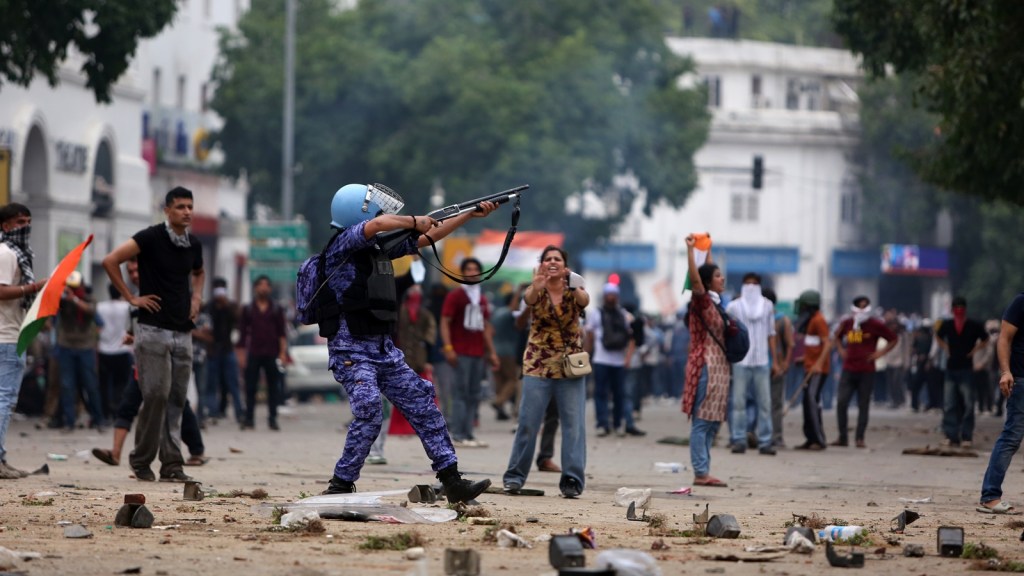

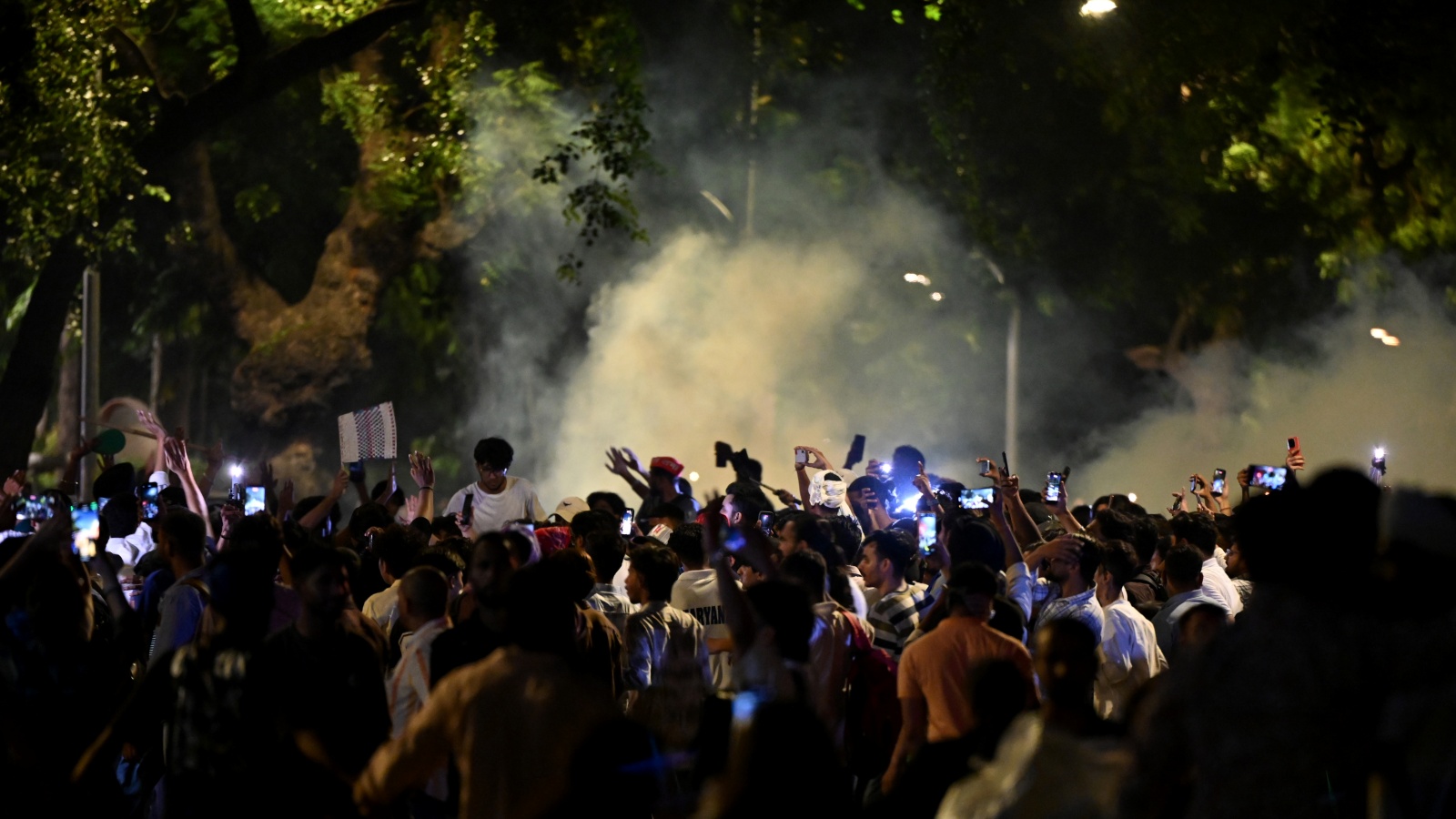 Police fire teargas shells at Parliament Street. (Gajendra Yadav)


 Share


