3 min readNew DelhiMar 1, 2025 10:21 AM IST
First published on: Mar 1, 2025 at 09:54 AM IST
As winter draws to a close, Delhi has reported its lowest monthly average air quality index (AQI) in February at 214, according to data from the Central Pollution Control Board (CPCB). Despite this improvement, experts have warned that particulate matter pollution still exceeds the National Ambient Air Quality Standard (NAAQS) and the World Health Organization (WHO) guidelines. Additionally, ozone concentrations up to February have risen compared to previous years, based on CPCB data.
The NAAQS in India sets the safe ozone concentration standard at 100 µg/m³ for an 8-hour average. However, CPCB hourly data indicates that while the concentration has not exceeded this limit, the frequency of near-threshold levels has increased. Ozone levels have approached 90 µg/m³ on an hourly basis more frequently in January and February.

CPCB data reveals that the hourly average ozone concentration surpassed 90 µg/m³ for 37 hours this year. This is a concerning shift from previous years, as according to the data in January and February of 2019, the ozone concentration exceeded 90 µg/m³ only twice. This number remained the same in 2020. In 2021, the figure rose to five instances, and in 2022, there were no hours where the ozone concentration neared the threshold. In 2023, the ozone concentration exceeded 90 µg/m³ for six hours, while in 2024, it was recorded for four hours.
Ozone is a secondary pollutant formed in the atmosphere and has serious health impacts.
Meanwhile, CPCB stated that Delhi recorded its lowest AQI in 2025, on Saturday, with an average AQI of 121, as per the daily AQI Bulletin. The average AQI of 121 for Delhi is the lowest during January to February in the last three years since 2023.
The last time February saw a better monthly average AQI was last year at 220, and its third-best monthly average AQI of 225 was recorded in 2022.
The average AQI up to February 28, 2025 is 262, which is the second best ever, higher than only during 2022 with an average AQI of 253 for this period.
The number of ‘Good to Moderate’ air quality days (with AQI <200) during the period from January to February has been the second highest with 14 days each in 2025 and 2024, compared to only six days in 2018, 12 days in 2019, nine days in 2020, four days in 2021, 15 days in 2022, and 12 in 2023.
According to the India Meteorological Department (IMD), 0.8 mm of rainfall was recorded at Safdarjung on Friday evening. It has forecast a partly cloudy sky with mist conditions for the week. Temperatures are expected to be above normal, with the maximum forecast to reach up to 30 degree Celsius and the minimum up to 17 degree Celsius, in the next seven days.
According to Sunil Dahiya, founder and lead analyst at Envirocatalysts, an environmental think tank based in Delhi, despite a noticeable drop in the monthly average concentrations of PM2.5 and PM10 this February compared to the previous year, levels remain nearly double the daily National Ambient Air Quality Standards (NAAQS).
“Additionally, ozone concentrations have reached their highest levels for the month in recent years. This highlights that citizens continue to face hazardous air pollution, underscoring the urgent need for a shift in strategy. Prioritizing source-level emission reductions and expanding the assessment framework to include other pollutants must become a top priority to safeguard public health,” Dahiya said.

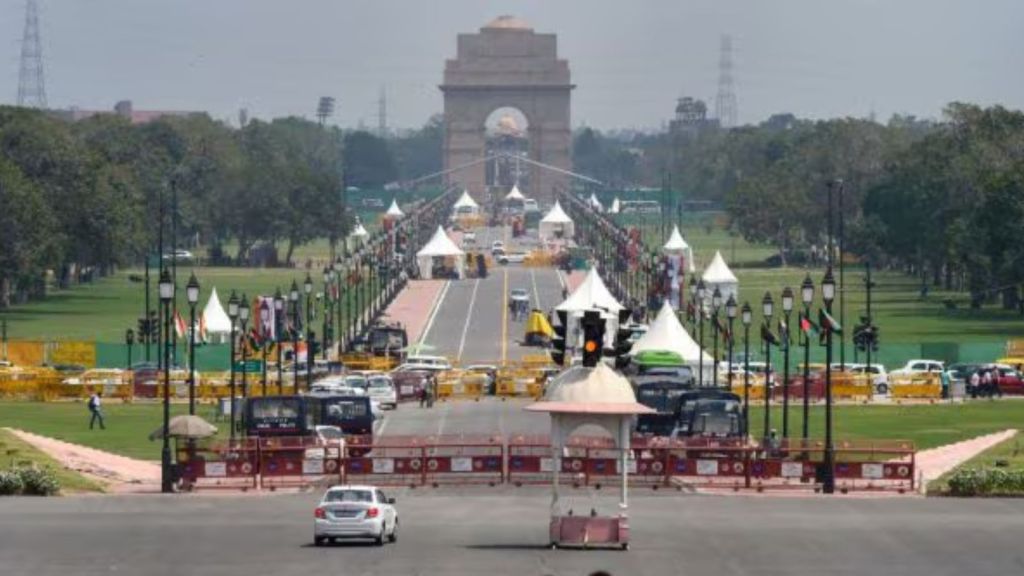 The average AQI of 121 for Delhi is the lowest during January to February in the last three years since 2023. (File photo)


 Share


