



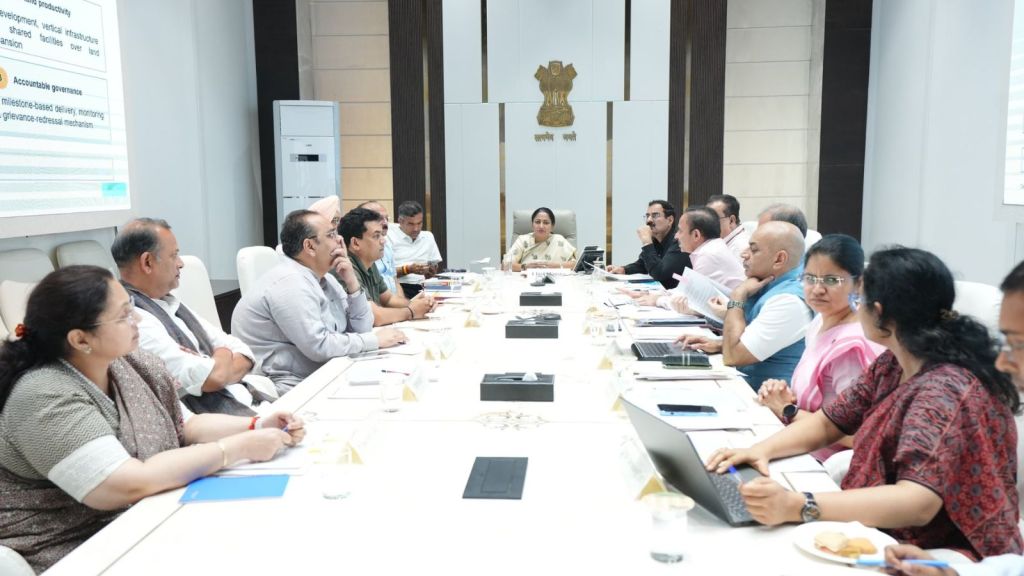


The Delhi Cabinet on Tuesday approved the Delhi Industrial Policy 2026, a 10-year roadmap aimed at attracting investment, modernising existing industries and generating employment through a focus on clean, technology-driven and knowledge-based sectors, the government said.
According to officials, the policy provides for an allocation of Rs 1,000 crore for the Mukhyamantri Udyamshree Yojana from 2026-27 to 2030-31, to promote industrial development and create employment opportunities. The government has identified 10 priority sectors, including information technology, Global Capability Centres (GCCs), data centres, healthcare, research and development, urban logistics, circular economy, precision manufacturing, skill development and technological modernisation of micro, small and medium enterprises (MSMEs).
Chief Minister Rekha Gupta, in a statement on Wednesday, said the policy seeks to position Delhi as a hub for advanced technology, specialised services and modern manufacturing while encouraging investment in non-polluting, high-value industries.
Under the policy, businesses will be eligible for sector-specific incentives covering capital investment, office rentals, recruitment, research, certification, technological upgrades, energy conservation and skill development. The government has also proposed higher incentive ceilings for women-led enterprises across priority sectors.
In the IT and digital services sector, eligible businesses will receive incentives of up to Rs 10 crore for digital infrastructure investment, with the ceiling rising to Rs 12 crore for women-led enterprises. The policy also provides rental assistance, support for bandwidth and cloud services, and incentives for new recruitment.
For Global Capability Centres, the investment incentive ceiling has been set at Rs 50 crore, and Rs 60 crore for women-led enterprises. The sector will also receive assistance for research and development, certification and workspace development. Data centres, meanwhile, will be eligible for incentives on capital investment, water-efficient cooling systems and data security-related expenditure.
The healthcare sector will get incentives of up to Rs 10 crore for eligible capital investments. Hospitals with 1,000 or more beds are eligible for assistance of up to Rs 100 crore. The policy also provides support for healthcare certifications and the recruitment of specialist doctors.
Story continues below this ad
For MSMEs, the government has proposed incentives of up to Rs 5 crore for technological modernisation, with the limit increased to Rs 7 crore for women-led enterprises. Additional assistance will be available for improving energy efficiency, installing rooftop solar systems and supporting apprentices.
The policy also seeks to encourage recycling, organic waste processing and e-waste management, while promoting precision manufacturing and industry-linked skill development.
To facilitate investment, Invest Delhi will function as a dedicated agency and single point of contact for investors, guiding them through site selection, approvals, incentive disbursal and grievance redressal. The process will be supported by the Delhi Udyog Mitra Portal, with the government aiming to make clearances simpler, faster and more transparent.
The policy also envisages the redevelopment of industrial areas and modernisation of existing industrial units. The government plans to leverage Delhi’s corporate headquarters, educational institutions, research centres, skilled workforce and proximity to major markets to strengthen its industrial ecosystem.
Story continues below this ad
Gupta said the policy would help create a more investment-friendly environment, expand opportunities for young people and women, and steer Delhi towards a cleaner, more modern and knowledge-based industrial economy over the next decade.