The Delhi High Court Wednesday issued notice to the Centre, Delhi government and Delhi University on a public interest litigation by National Students’ Union of India (NSUI) president seeking directions to authorities to formulate and implement a time-bound hostel development policy.
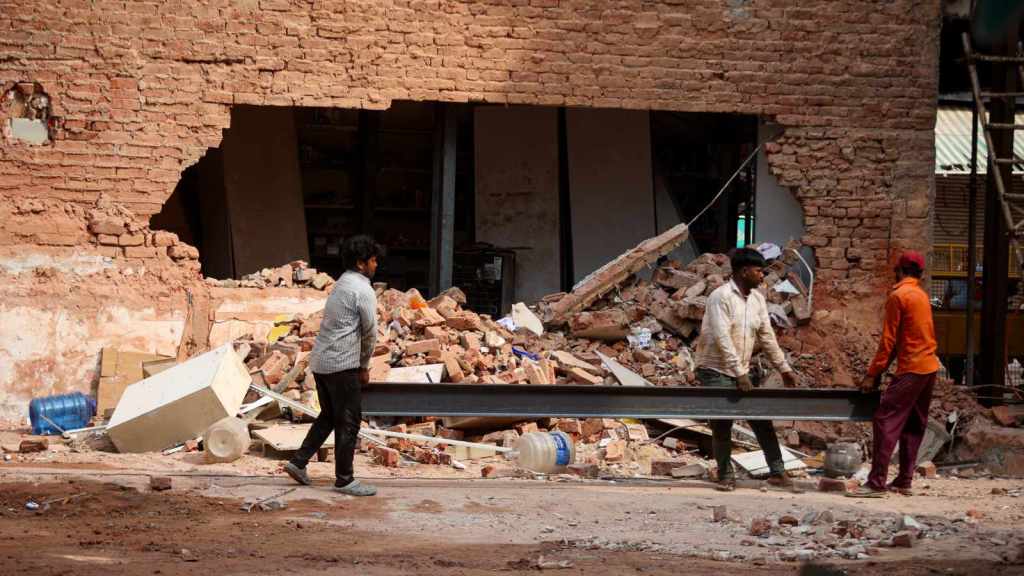
The PIL, filed in the backdrop of a hostel collapse in Satya Niketan that killed 7, also sought that DU be directed to provide hostel facilities in each of its colleges. It was filed by Vinod Jakhar, through his advocate Vimal Tyagi.
The court will hear the matter next on September 25, along with another PIL seeking an independent probe and formulation of a policy to regulate PG/hostel facilities in the city.
Following the tragedy, the Delhi government has proposed, in a draft Bill, to regulate establishments such as privately operated paying guest facilities.
But there has been no announcement from the government yet on its deliberations, if any, for residential college campuses.
Lieutenant Governor Taranjit Singh Sandhu chaired a meeting with Chief Minister Rekha Gupta and top officials on Monday to review building safety, student accommodation, and PG regulations.
What the new PIL says
Jakhar, in his PIL, flagged that the Satya Niketan building collapse “serves as a grave warning regarding the risks faced by thousands of students who are dependent upon privately operated accommodation in different parts of Delhi because their respective colleges do not have adequate hostel facilities”.
Story continues below this ad
He requested that “where sufficient land is available within a college campus, hostel facilities may be constructed or expanded” and where individual colleges “face genuine land constraints, the authorities may develop common/cluster hostels at suitable locations catering to students of neighbouring University colleges”.
Pressing for a university-wide hostel policy, Jakhar in his plea said the authorities are “required to undertake a comprehensive assessment of the residential requirements of students across all colleges, departments and institutions of the University of Delhi”, and undertake “construction or expansion of college hostels… in a phased manner.”
Jakhar’s PIL also highlighted that DU, established in 1922, records in its own official description that it was established as a “unitary, teaching and residential University”.
From recording 750 students at its inception, the varsity now sees approximately 1,32,435 students studying in its regular courses.
Story continues below this ad
“… more than 104 years have elapsed since the establishment of the University, yet adequate institutional shelter has not been created commensurate with its present student population and geographical expansion,” the PIL noted.
Sohini Ghosh is a Senior Correspondent at The Indian Express. Previously based in Ahmedabad covering Gujarat, she recently moved to the New Delhi bureau, where she primarily covers legal developments at the Delhi High Court
Professional Profile
Background: An alumna of the Asian College of Journalism (ACJ), she previously worked with ET NOW before joining The Indian Express.
Core Beats: Her reporting is currently centered on the Delhi High Court, with a focus on high-profile constitutional disputes, disputes over intellectual property, criminal and civil cases, issues of human rights and regulatory law (especially in the areas of technology and healthcare).
Earlier Specialty: In Gujarat, she was known for her rigorous coverage in the beats of crime, law and policy, and social justice issues, including the 2002 riot cases, 2008 serial bomb blast case, 2016 flogging of Dalits in Una, among others.
She has extensively covered health in the state, including being part of the team that revealed the segregation of wards at the state’s largest government hospital on lines of faith in April 2020.
With Ahmedabad being a UNESCO heritage city, she has widely covered urban development and heritage issues, including the redevelopment of the Sabarmati Ashram
Recent Notable Articles (Late 2025)
Her recent reporting from the Delhi High Court covers major political, constitutional, corporate, and public-interest legal battles:
High-Profile Case Coverage
She has extensively covered the various legal battles - including for compensation under the aegis of North East Delhi Riots Claims Commission - pertaining to the 2020 northeast Delhi riots, as well as 1984 anti-Sikh riots.
She has also led coverage at the intersection of technology and governance, and its impact on the citizenry, from, and beyond courtrooms — such as the government’s stakeholder consultations for framing AI-Deepfake policy.
Signature Style
Sohini is recognized for her sustained reporting from courtrooms and beyond. She specialises in breaking down dense legal arguments to make legalese accessible for readers. Her transition from Gujarat to Delhi has seen her expand her coverage on regulatory, corporate and intellectual property law, while maintaining a strong commitment to human rights and lacuna in the criminal justice system.
X (Twitter): @thanda_ghosh ... Read More