While hearing the revision plea against the trial court’s order discharging Imam, Asif Iqbal Tanha, Safoora Zargar and eight others, a bench of Justice Swarana Kanta Sharma on Thursday asked the parties to file their vakalatnama in two days and written submissions in four days. The parties were also asked to bring any electronic record they may be relying on in the next hearing, scheduled for March 23.

On February 13, the single-judge bench issued notices seeking the 11 discharged people’s responses to the police plea and stated, “Since further investigation will be carried out, observations made against the investigation agency will not affect either further investigation or trial of any accused.” The court then refused to expunge the trial court’s remarks and said that no interim orders were required since the next date of the trial was in April.
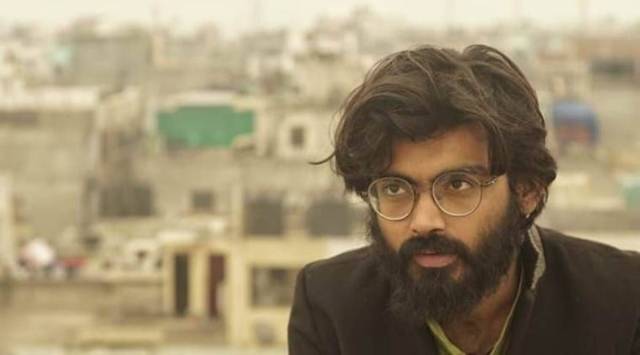
That his glasses were broken during the violence that occurred during a peaceful protest at Jamia Millia University does not mean he had participated in the violence, Imam said in his written submissions. “It merely shows that he was a victim of the violence and had no active role to play in its culmination,” the student activist said.
Imam’s submissions state there was not a single piece of “admissible evidence against” to show that he had shared the common object of the unlawful assembly. Imam further submitted that he was not seen in any of the videos adduced by the prosecution, nor was there any statement recorded by the police that names him, much less attributes any role to him in the violence.
“Further, neither the name of the answering respondent (Imam) gets a mention in any of the disclosure statements given by the co-respondents, nor any evidence showing any connectivity between the answering respondent and the others have been adduced to fasten liability through section 120B of the IPC,” Imam has said.
Imam further said that shouting slogans in favour of a particular means of peaceful protest did not amount to participation in the violence. “In his speech at AMU on 16.12.2019, the answering respondent (Imam) merely stated that he campaigned in favour of chakka jam as a means of protest, which by no stretch of the imagination could be called a violent method of protest,” he said.
Imam also submitted that his call data records (CDR) clearly showed that he had already left the place on the date of incident before the assembly allegedly turned violent.
It was also submitted that Imam’s disclosure statement in question had not been recorded by the police in the present case but taken from a chargesheet filed in another case [FIR 22/2020 P.S. Crime Branch, New Delhi (speech case)]. He also said that “mere perusal” of the statement would make clear that he had not participated in the violence.
“Rather, it goes on to prove the contrary as is clearly spelled out there in the disclosure that he had left the place of occurrence as soon as violence was introduced. The same finds even corroboration from the CDR location of the answering respondent,” Imam added.
The police, in their revision plea, have sought the setting aside of the February 4 order of additional sessions judge Arul Varma, of Saket courts, that discharged Imam and the others, alleging that the trial court not only discharged the respondents but was “also swayed by emotional and sentimental feelings, it cast aspersions on the prosecuting agency and passed gravely prejudicial and adverse remarks against the prosecuting agency and the investigation”.
ASJ Varma observed in his order that the police did not apprehend the “actual perpetrators” but “managed to rope in” the accused persons as “scapegoats”.


 Share


