


Stay updated with the latest - Click here to follow us on Instagram

Journalism of Courage
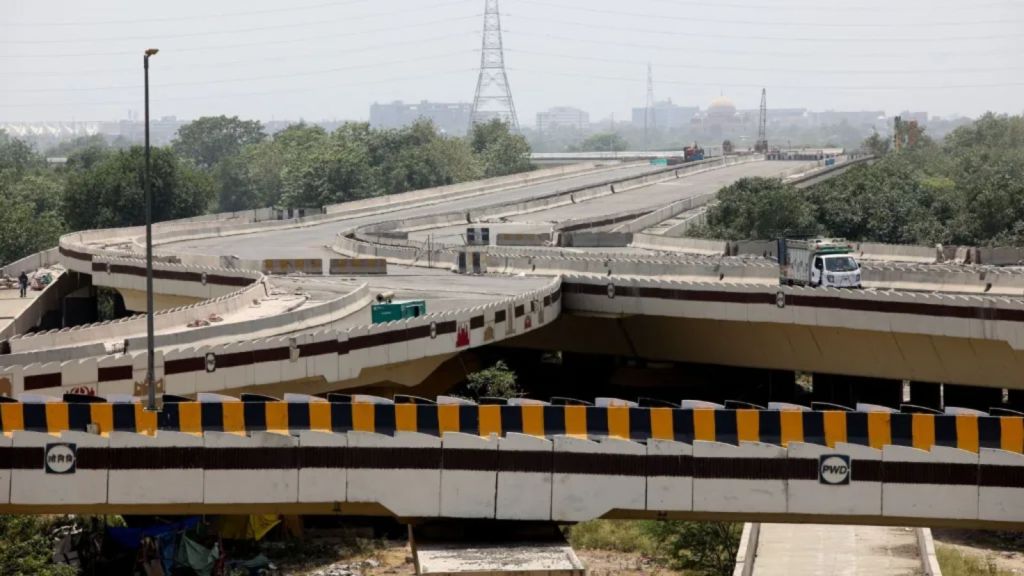 The Barapullah flyover project was approved in 2014 and initiated in 2015; it was originally targeted for completion in 2017. (Express photo)
In what is set to be the culmination to a decade-long project, the much awaited Barapullah Phase-III flyover, which will provide a signal-free commute between East Delhi’s Mayur Vihar to South East Delhi’s Sarai Kale Khan, will finally be thrown open to the public on September 29. The flyover will be inaugurated by Union Home Minister Amit Shah in the presence of Chief Minister Rekha Gupta and others, Public Works Department (PWD) Minister Parvesh Sahib Singh told The Indian Express on Saturday.
The opening of the flyover will ease the commute for people travelling from Noida and East Delhi to South Delhi. It is expected to reduce the average travel time from East Delhi and Noida to AIIMS in South Delhi from 35 to 40 minutes to 15 minutes.
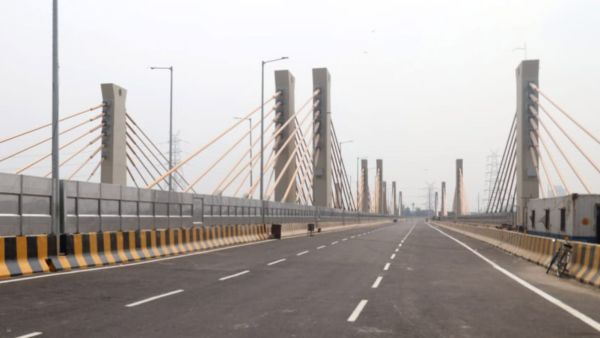 A view of the Barapullah Phase-3 elevated corridor that is scheduled to be inaugurated on September 29 (Express Photo By Amit Mehra)
Project marred by delays
For more than a decade, the Barapullah Phase-III project became synonymous with delays, and multiple missed deadlines. The project, which was approved in 2014 and was kicked off in 2015, was originally expected to be completed in 2017.
However, it became one of Delhi’s most delayed infrastructure projects, with setbacks ranging from a seven-year land acquisition dispute and environmental approvals to technical challenges associated with constructing a bridge structure across the Yamuna floodplain.
After BJP came to power last year in Delhi, the government got clearance from Centre to transplant trees from the site, to overcome one of the key environmental hurdles.
“For years, Delhiites saw deadlines come and go… Since last year, I have personally visited the site multiple times, reviewed progress regularly, and worked with officials to remove bottlenecks and get the project completed for the convenience of the public,” said the PWD Minister.
He added, “The project witnessed accelerated progress over the past year and a half through continuous monitoring, regular inspections and coordinated action by multiple agencies,” the Minister said.
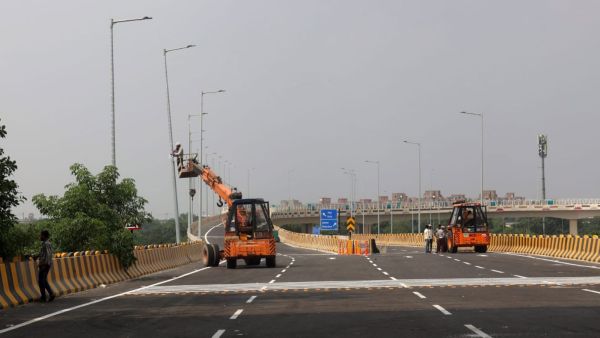 A view of the Barapullah Phase-3 elevated corridor that is scheduled to be inaugurated on September 29 (Express Photo By Amit Mehra)
The delays also led to significant cost escalation, with the revised project cost now standing at approximately Rs 1,635 crore from the initial sanctioned cost of Rs 1,260 crore.
Singh on Saturday visited the project site to review the final preparations. Speaking during the inspection, he said, ”For more than a decade, Delhi has been waiting for this project to become a reality. The project had remained delayed under the previous government. After the formation of our government, the long-pending work has now been completed and the corridor is ready to be opened for the people of Delhi.”
Singh said, “The project has been designed keeping different kinds of road users in mind. Along with vehicular connectivity, the dedicated cycle track and pedestrian-friendly infrastructure will provide additional mobility options for Delhi residents.”
PWD officials said an extradosed bridge — a cross between a girder bridge and a cable-stayed bridge — across the Yamuna has also been completed and forms part of the connecting structure for the elevated corridor.
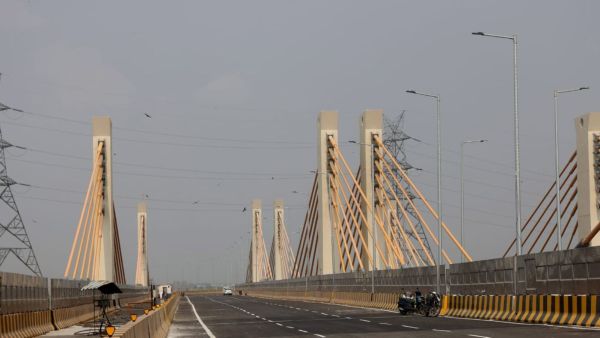 A view of the Barapullah Phase-3 elevated corridor that is scheduled to be inaugurated on September 29 (Express Photo By Amit Mehra)
Significance
The 3.5 km long three-laned flyover will provide eight loops – four each at Sarai Kale Khan and Mayur Vihar.
The corridor is expected to decongest traffic along National Highway-24, the DND Flyway, and Ring Road while enhancing access to a multi-modal transit hub that includes National Capital Region Transport Corporation, Indian Railways, ISBT, Delhi Metro Rail Corporation, and the Delhi–Mumbai Expressway.
The project is also set to become a landmark in urban infrastructure development. Besides being a first-of-its-kind elevated corridor with a dedicated cycle track, another major engineering highlight is the special bridge structure over the Yamuna floodplain, said officials.
It is estimated to cut carbon dioxide emissions by ~2 tonnes per day, equivalent to absorption by nearly 30,000 trees, said officials.
Stay updated with the latest - Click here to follow us on Instagram