5 min readNew DelhiMar 27, 2022 09:55 AM IST
First published on: Mar 26, 2022 at 02:09 PM IST
A major chunk of this year’s health budget has gone towards expansion of health infrastructure in Delhi. A total of Rs 1,900 crore has been allocated for construction and remodelling of hospitals, whereas Rs 475 crore has been allocated for setting up new mohalla clinics and polyclinics.
The total outlay for the health sector stood at Rs 9,769 crore for 2022-23. This is, in fact, a decline of 1.6% over Rs 9,934 crore allocated to the sector last year. This is the first time the health budget has gone down since the AAP government came to power. There had been a jump of nearly 29% in the healthcare outlay last year amidst the pandemic.

Notably, no allocation has been made for Covid vaccination, which received a Rs 50 crore allocation last year. The outlay for infrastructure of four new hospitals and redevelopment of 15 existing ones will add around 16,000 hospital beds, Deputy Chief Minister Manish Sisodia said in his budget speech. The four hospitals in the pipeline are a 2,716-bed facility at Siraspur and three 671-bed ones at Madipur, Hastsal, and Jwalapuri. The government had allocated Rs 1,293 crore for the expansion of tertiary care facilities in the previous budget.
As for primary care, the government allocated Rs 475 crore for setting up more mohalla clinics and polyclinics. Of the 1,000 clinics planned during the first term of the AAP government, 520 have been set up so far. The government has not allocated funds yet for its mahila mohalla clinic project — neighbourhood clinics for women where they can seek gynaecological consultations — which was announced last year but work could not begin amidst the pandemic.
“We have to understand that India’s new poverty is coming from disease. Every year, 5.50 crore people in India, that is 4.6% of the entire population, becomes poor due to disease. Of these, 72% are poor only because of the expenditure on basic medical care. This is why there is a need for mohalla clinics and why they were successful in Delhi,” Sisodia said.
Experts point to two key areas that the government needs to focus on in order to make Delhi healthy. Dr M C Misra, former director of AIIMS, Delhi, said, “It is good that the government is increasing health infrastructure. But we also need to audit whether whatever they have already set up is working properly. After all, a hospital bed is not just about a hospital bed. Do they have doctors, nurses and other staff? Initially, mohalla clinics used to draw staff from Delhi government hospitals. That does not help. We need to see whether all the services such as emergency care, routine surgeries are in fact happening. Outsourcing is not an issue; in fact, sometimes it is cost-effective, but even for that we need an external audit to see what is actually happening.” He said the government needs to find a workaround to provide care at par with its autonomous Institute of Liver and Biliary Sciences at a much lower cost.
Other than health infrastructure, the Delhi government also allocated Rs 160 crore for setting up a cloud-based Hospital Information Management System and a QR code-based e-health card. “This will help in identifying patients and getting basic information about their disease with geo-tagging. This system will also help in getting information about family trees, that is family members,” Sisodia said. There will also be a 24×7 toll-free helpline for cardholders to book appointments in Delhi hospitals.
The government also allocated Rs 15 crore for Aam Aadmi Yogshala. “450 yoga teachers trained by DPSRU, Government of Delhi, are teaching yoga daily to more than 15,000 people according to their time and convenience,” Sisodia said.
Shailaja Chandra, former health secretary of Delhi, said, “Delhi already has a large network of public hospitals — more than any other city in India. That is not to criticise setting up more hospitals and mohalla clinics but the thrust on building infrastructure seen as a solution to reducing the incidence of diseases has left out public health and preventive health altogether. Delhi has the highest prevalence of lifestyle diseases topped by obesity even among kids. Investment in yoga is good but it is not enough to take care of the large proportion of people who are falling prey to hypertension, diabetes and cardiovascular diseases. A few cycle tracks are just not enough when there aren’t any pavements in most places even to walk.”
“Pollution also affects health very adversely… The government must find ways to disincentive travelling alone in cars along with measures like congestion tax,” she said.

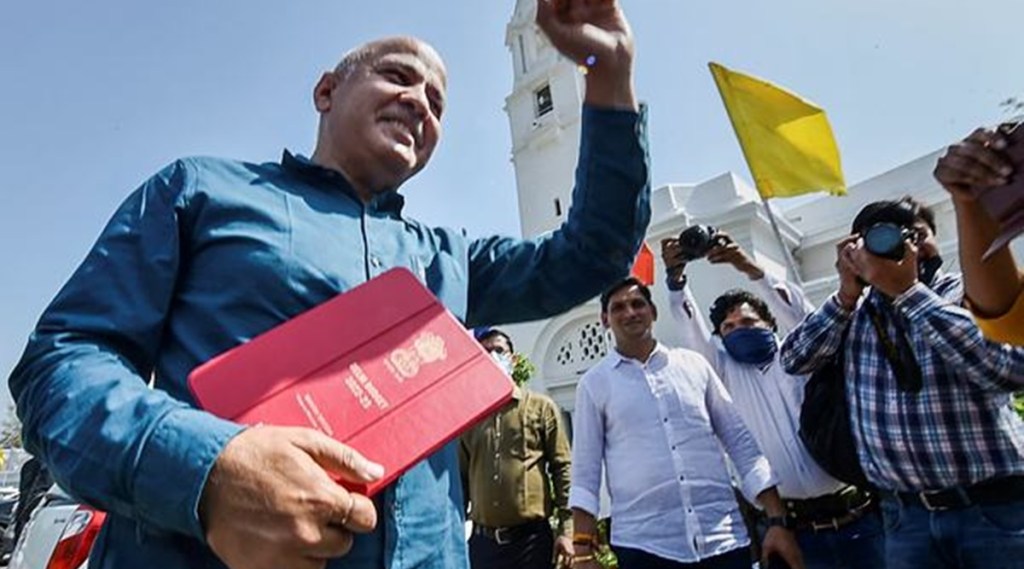 The budget size for the next financial year is 9.86 per cent higher than that of the previous year -- Rs 69,000 crore -- the deputy chief minister said. File.



 Share


