Election Commissioner Gyanesh Kumar over the Special Intensive Revision (SIR) of electoral rolls.
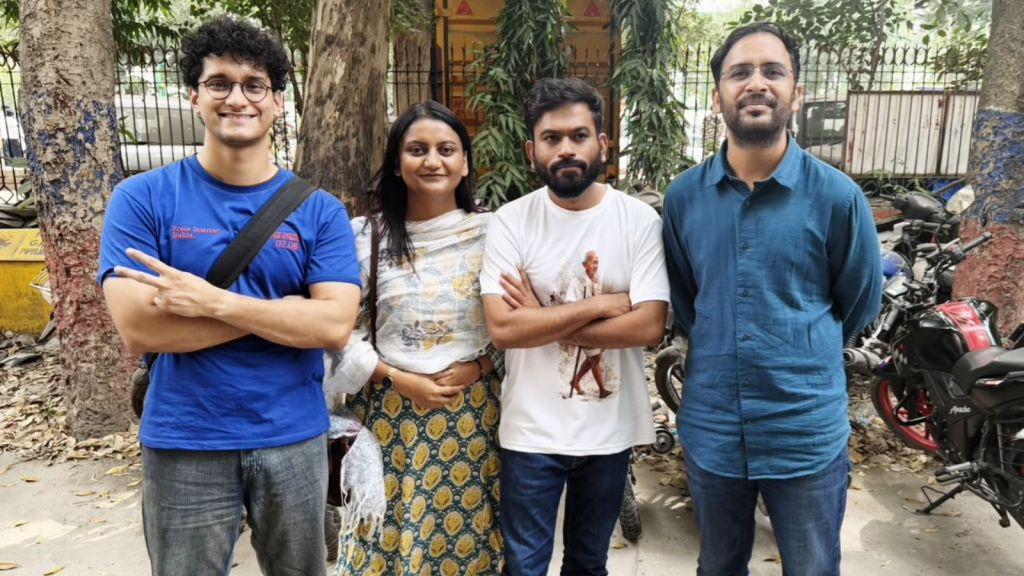
The call for continuing the protest was made after CJP’s three top leaders — Abhijeet Dipke, Ashutosh Ranka and Saurav Das — were released from police custody on Sunday morning, around 24 hours after being held under preventive arrest ahead of the protest they had called on Saturday.
The CJP leaders and YouTuber Dhruv Rathee were among over 7,000 people, including Opposition leaders and activists, who were detained on Saturday as authorities clamped down on the protest in central Delhi. Other detainees had been released by Saturday night.
Dipke, Ranka and Das were released from the heavily secured Delhi Cantt police station at around 10.15 am Sunday on the orders of the Executive Magistrate at Delhi Cantt. According to police, the CJP leaders were released after they signed a bond. “A bail bond as Surety Bond of Rs 50,000 was filled for maintaining peace and good behaviour, for a period of one year, and they were released by the SEM (Special Executive Magistrate) Court,” the police said.
While Dipke left for his home in Maharashtra following the demise of his grandmother, the other CJP leaders held a press conference in the afternoon and accused the Delhi Police of seizing their phones without following the prescribed legal procedure, including the preparation of a seizure memo.
“They picked us up as if we were criminals. They took our phones forcibly,” Das told reporters, adding that all three of them had been taken to different locations. He alleged that their phones had been retained for 24 hours and expressed apprehension that the devices might have been “hacked”, “cloned” or “planted with evidence”.
Referring to the bond they had signed, the CJP declared on X: “No CJP leader has signed any bond that says they will not protest any more. The bond refers to refraining of breach of peace. But participating in a peaceful protest is a Constitutional right and DOES NOT breach peace.”
Ranka, meanwhile, accused Prime Minister Narendra Modi and Union Home Minister Amit Shah of causing “the actual breach of peace”. He said the clampdown over the weekend and the mass detention of protesters has “damaged the image of our country”.
Das said they wanted to protest at the designated protest site at Jantar Mantar, adding that the move to turn it into a highly secured fortress had inconvenienced residents and created an atmosphere of confrontation.
“The people want to protest at the designated site. The Government should have come forward to talk with us. More than 40,000 troops are here. It has become a fortress. You have created a war-like situation and people are facing problems,” he said.
Dipke, Das and Ranka had been detained on Saturday within minutes of their flight from Mumbai landing in Delhi’s Indira Gandhi International Airport at 10.19 am.
Soon after their release on Sunday, the Delhi police issued a statement saying that they had been placed in detention as preventive arrests under sections 126/170 of the BNSS.
Section 126 BNSS is a preventive measure which empowers an Executive Magistrate to require a person likely to breach the peace or disturb public tranquillity to execute a bond for maintaining peace.
Section 170 BNSS, on the other hand, lets a police officer arrest someone without a warrant who they think can commit a cognizable offence which cannot be prevented without the arrest. Custody can be only upto 24 hours unless further detention is permitted.
“All due legal procedures were followed and they were produced before the SEM Court, Delhi Cantt on October 11,” the police said.
YouTuber Rathee, who was picked up from his residence in Gurugram’s Sector 56 on Saturday morning, described his detention as a “kidnapping” in a video posted on X on Sunday. “I was sleeping in my bedroom…at around 7 am, someone was at the door and my mother opened the door. There were 20 men without any uniforms. They pushed her and barged in,” he claimed in the video.
He alleged that he was “dragged like a criminal” from his bedroom, and that he did not have access to his phone for the duration of his detention. “I couldn’t even wear my slippers. I was dragged and shoved into a jeep. They took me to many police stations. They snatched my phone…didn’t let me meet my lawyers. For around 20 hours, they detained me. I wasn’t allowed to access my phone,” he said.



 Share


