


Stay updated with the latest - Click here to follow us on Instagram
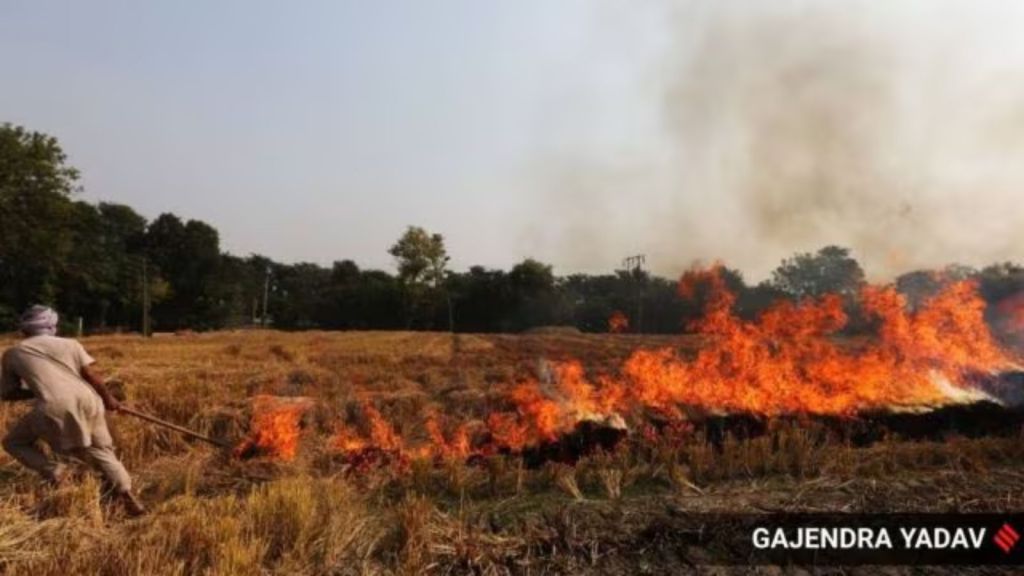 Centre tightens 'red entry' system to penalise stubble-burning farmers, restricting access to loans and mortgages to combat Delhi-NCR winter pollution. (File)
Stepping up its efforts to tackle Delhi-NCR’s winter air pollution, the Centre has decided to strengthen the red entry system to penalise farmers burning stubble. A red entry in the revenue records can potentially land farmers in trouble, making it difficult for them to avail loans and mortgages.
In its latest move to address choking air pollution in Delhi every winter, the Centre has brought a new draft of Rules governing the fight against crop residue burning, a key contributor to air pollution in the national capital. Under the draft Rules, land belonging to farmers found to burn stubble would be marked with a red entry in revenue records for up to 15 months. If they continue to set fields on fire or don’t pay compensation, this period could extend for another 15 months.
These Rules, first notified in 2023, included the red entry provisions. The red entry system has faced strong opposition from farm unions.
The Centre’s changes are unlikely to take effect until the end of the upcoming paddy harvest season, owing to the window for seeking comments on the new draft.
This is the first time the Ministry of Environment, Forest and Climate Change has specified the validity of red entries under the draft Commission for Air Quality Management in National Capital Region and Adjoining Areas (Imposition, Collection and Utilization of Environmental Compensation for Stubble Burning) Rules, 2026. These Rules, brought in 2023, spell out the quantum of compensation for burning crop stubble, its collection, and utilisation.
Before they sow wheat between mid-September and early December, many farmers in Punjab, Haryana, Delhi and Uttar Pradesh set their fields on fire to burn stubble or crop residue. This is among the major causes of toxic air in Delhi-NCR, contributing up to 35 per cent of the pollutants on some days.
The new draft, published on September 16, has not changed the land-holding-based compensation imposed, but has specified the validity of the red entry. The red entry, it says, shall be valid for 15 months from the date of the incident and will expire if no subsequent incident of stubble burning is found. It will also expire if any environmental compensation imposed has been deposited. However, if there are subsequent incidents of stubble burning on that land or if any compensation imposed is not paid, the validity of this red entry will extend for 15 months.
The draft Rules have also tweaked the section regarding utilisation of environmental compensation. According to the latest draft, the compensation will be utilised for measures to control stubble burning, ranging from crop diversification programmes to biomass utilisation to research and development in crop residue management and to subsidising residue management technologies. The Centre has provided a two-month window to invite objections and suggestions to the draft.
A source aware of the developments said the draft Rules add clarity to red entries made as a consequence of stubble burning.
The Indian Express sought comments from the Ministry on the rationale behind the red entry’s 15-month validity and its repercussions. The story will be updated if there is a response.
The impact of red entries has varied across states where these Rules apply. In Punjab, farm unions have raised grievances related to loans, subsidies, and mortgaging of land. In Haryana, in certain districts like Kurukshetra, authorities have said that the red entry will be made on the Meri Fasal Mera Byora portal for farmers if they burn stubble. Such farmers will be banned on the portal for two years, depriving them of the benefits of all agricultural schemes.
Jagmohan Singh of the Bharatiya Kisan Union (Dakaunda) said they have always opposed these red entries and farmers should be provided financial assistance to manage paddy stubble. “The pollution issue cannot be solved with jabardasti (by force). These red entries do create some difficulties, but we have demonstrated and petitioned against them in the past and got them removed from the revenue records,” he said.
In a February 2025 report, the parliamentary standing committee on subordinate legislation, headed by Shiv Sena MP Milind Deora, recommended introducing an “incentive-based” red entry removal system, enabling early removal for farmers actively participating in sustainable farming practices or government-supported stubble management programmes.
Stay updated with the latest - Click here to follow us on Instagram