Streets bathed in warm LED lights, return of double-decker buses, langar at Bangla Sahib Gurdwara, ensuring zero internet connectivity blackspots — as Delhi prepares to host seven sets of events in the run-up to the G20 summit in September, it is relying on such small but significant interventions to give visitors a taste of what the city has to offer.
The objective is two-fold — fixing some of the city’s perennial issues ranging from waterlogging to mobility, and showcasing Delhi to the world as a microcosm of the country’s cultural and secular credentials.
India took over the presidency in December last year and will host top leaders, including Presidents and Prime Ministers from across the world, alongside business leaders. Over 200 meetings are expected to be held in different cities in the country. Delhi will also be the transit point for meetings being held in other cities.
Extensive meetings on preparations are already underway, with reins firmly in the hands of officials occupying senior posts across the city’s various bureaucratic ranks. As part of this, a presentation was recently made to Lt-Governor Vinai Kumar Saxena regarding several time-bound projects, as well as their deadlines, over the next eight-nine months.
 A project to revamp over 540 km of city roads is also underway.
The presentation, by the Core Coordination Committee, compares G20 with the Commonwealth Games. During the latter, it states, “our approach was more reactive than proactive, leading to the creation of infrastructure that could not subsequently be maintained”.
With departments and bodies such as tourism, Public Works Department, New Delhi Municipal Council, Delhi Development Authority, Delhi Jal Board and Archaeological Survey of India being part of the Core Coordination Committee, officials are seeing this as an “opportunity to transform and showcase Delhi”, says the presentation.
This includes work in the areas of improving infrastructure; sanitation and beautification; showcasing Indian culture; city engagement and creating documentation processes which can help officials learn from other cities; showcasing interventions made for women empowerment; the cultural and historical legacy of Delhi; and identifying and rectifying issues related to mobile network reception.
Infrastructure and travel
Over the past few years, agencies such as PWD and the tourism department have been working to change Delhi’s road landscape and layout. A project to revamp over 540 km of city roads and bring them up to “European standards”, at an estimated cost of Rs 11,000 crore, is underway.
While all of the city’s markets such as Chandni Chowk, Connaught Place, Khan Market and Karol Bagh will be spruced up well in time before foreign delegates begin to arrive, according to government sources, the presentation talks not only about improving the riding quality of roads but also replacing all sodium lights with warm LED lighting as well as improving footpaths for walkability.
For example, the presentation says that at Dilli Haat, a facelift of the “existing design while preserving the rustic look” is underway. Attention will also be paid to curating quality and variety of goods at the market, which is managed by the Delhi Tourism department.
The Delhi government said recently that a “luxurious indoor dining area” will also be developed soon. Modern art on walls and various selfie points are also expected to come up across the city.
With Delhi keen on promoting its electric vehicle policy, the plan is to deploy electric buses for the movement of G20 delegates, upgrade bus queue shelters, ensure bus box markings on the roads, improve the existing fleet of cycles and e-bikes, and repair and beautify both surface and vertical gardens in addition to ensuring well-illuminated Metro pillars.
The plan also seeks to achieve a mighty feat — instilling not just lane discipline but sensitisation of Delhi’s drivers when it comes to their relationship with cyclists in relation to giving them the right of way.
The plan also puts a special emphasis on the implementation of the National Mobility Card — it envisages one travel card for all Metro trains and buses, including HOP on HOP off, double-decker and electric buses for important historical places. It also takes up the Intelligent Traffic Management System (ITS), which was first supposed to have been in place for the Commonwealth Games.
Among other user-friendly initiatives, officials are working to brand all taxis for G20 and introduce pedestrian signals and pedestrian push-buttons on major roads, like in the United Kingdom, and provide ample parking spaces, a persistent problem in Delhi.
“G20 delegates would like to walk and explore Delhi, most of the G20 countries have excellent infrastructure for pedestrians as well as cyclists, pavements and footpaths to be cleared from illegal encroachments including entry and exit of historic monuments and in commercial areas and markets, regular upkeep and upgradation including beautification and illumination,” the presentation states.
PWD and MCD officials have been working on identifying gaps in footpaths and pavements, repairing broken footpaths, and removing obstacles as well as encroachments. Spots with missing or defaced signage will also be identified and rectified.
The plan is also to install water fountains along footpaths in addition to ensuring sufficient illumination of footpath areas, identification of non-working traffic signals and repairing them along with repainting of zebra crossings, some of which have already happened in stretches such as Aurobindo Marg, Chirag Dilli, etc.
Monsoon and waterlogging
A perennial problem in Delhi, however, may become a major pain point, with the Summit to be held in September — the monsoon season in the city.
A separate dedicated plan is being implemented to make sure there are no embarrassing moments. A thorough survey to identify all flooding hotspots, utilisation of AI-based predictive modelling and prediction systems and undertaking necessary desilting well in advance this time is already underway.
“Roads will be re-carpeted to ensure gradient match with the drainage system, common points where emergency crews can be stationed in case of waterlogging will be identified on the one hand while the DJB improves the sewerage system to avoid any overflow of sewer lines on the other along with the immediate replacement and repair of old pipelines,” the presentation said.
Cleaning of all stormwater drains on a regular basis, retaining walls wherever necessary for minimising flooding, proper drainage on bridges, sensitising sanitation workers to not make stormwater drains dump sites which end up as ponds for holding excess water in case of heavy rainfall will also be carried out.
The second big challenge is to remove hanging wires, a long-pending project that has failed to take off for over a decade now.
The deadlines for the projects are ambitious. According to officials in Raj Niwas, officials have managed to complete some projects ahead of schedule.
“The beautification of the stretch leading to the IGI airport has already been completed ahead of schedule. Apart from this, beautification of the remaining exit of the Pragati Tunnel, supposed to be completed by the end of February, was moving at a faster pace than initially projected,” an official said.
Asked about the current status of one of the plan’s most ambitious aspects — doing away with cellular reception issues and dark spots — the official said that the L-G had recently paved the way for this by notifying the Right of Way policy for 5G. “Many deadlines are till March 31 and all the work finally is supposed to be completed a month before the event starts in September,” the official added.

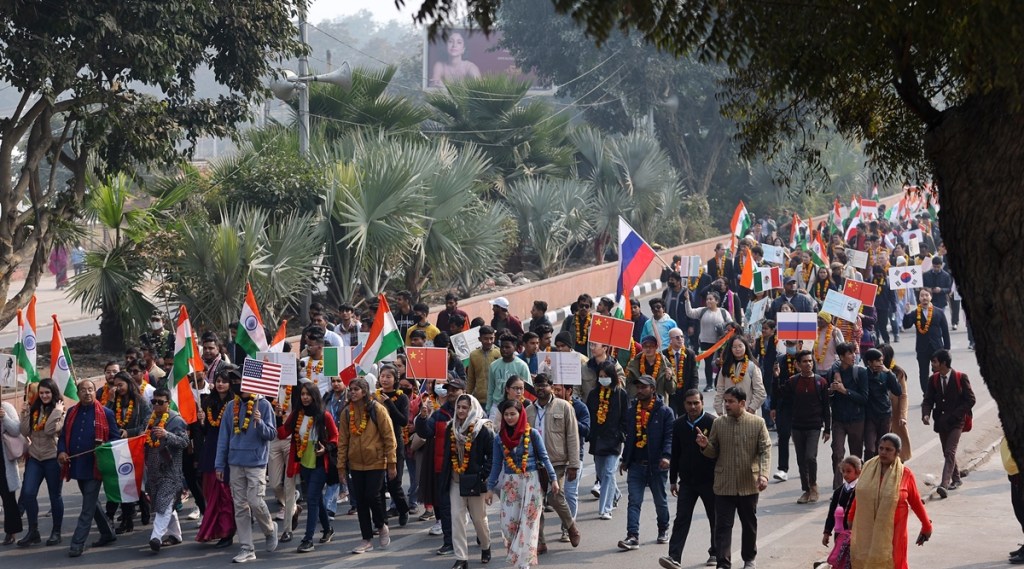 Diplomats and students from G20 countries participate in the ‘G-20 March for World Peace’ from Gandhi Darshan to Charti Lal Goel Heritage Park, Saturday. (Express Photo by Praveen Khanna)


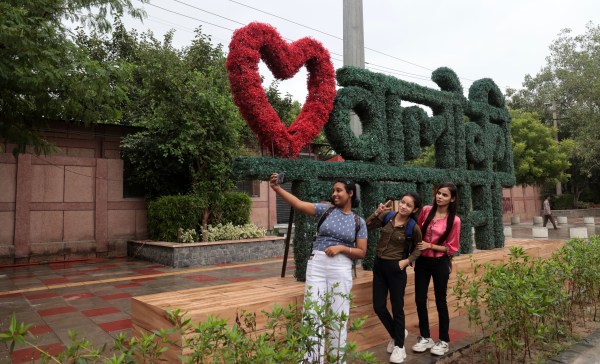 A project to revamp over 540 km of city roads is also underway.


 Share


