


Stay updated with the latest - Click here to follow us on Instagram
 According to the union, agencies operating DTC buses earn from the government on a per-kilometre basis but are bound only to pay the minimum wage, with no obligation to pay higher wages commensurate with drivers' qualifications.
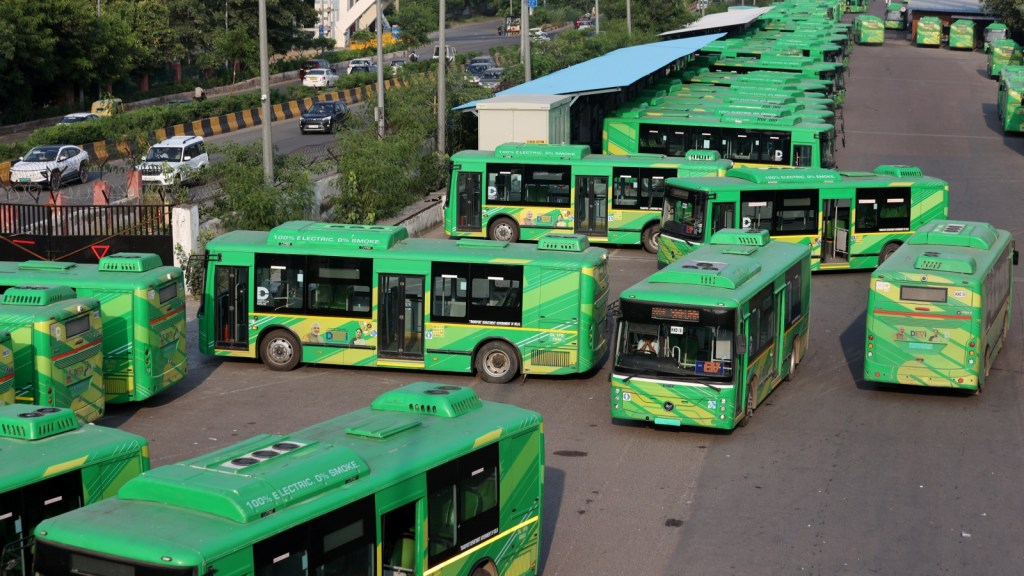
Bus services across the Capital were disrupted on Wednesday as drivers and conductors operating Delhi Transport Corporation (DTC) buses went on a strike for the second consecutive day demanding higher wages. The strike is expected to continue on Thursday as the demands of the protesting drivers were not met.
According to the DTC Karamchari Ekta Union, drivers and conductors operating these buses are currently being paid Rs 862 as daily wage — the minimum wage fixed by the Delhi government — which, the union said, is typically meant for daily-wage labourers, factory workers or employees of small companies.
The union, in a statement, questioned whether paying licensed and qualified drivers and conductors Rs 862 to operate large buses in a crowded city like Delhi amounted to “bonded labour.”
“The dearness allowance, revised every six months under rules, had not been increased in the last one-and-a-half years, and the basic increment, due every five years, was last implemented in 2019, and has been due since 2024,” said Lalit Chaudhary, president of the union.
The union’s main demands include a minimum daily wage of Rs 2,000 for equal work, payment for all government holidays, an annual bonus, and social security including a medical scheme.
Delhi has around 6,840 DTC buses. Chaudhary estimated that roughly 12,000 drivers and conductors went on strike on Wednesday.
On the protesting drivers’ demand, Transport Minister Pankaj Singh said, “We have directed the private concessioners managing the DTC electric buses to sort the issues with drivers immediately.”
“We are here to listen to your issues, essential services should not be affected,” Singh told reporters, while also appealing to the drivers to call off the strike.
Meanwhile, Chaudhary said, “Currently no government representatives have reached out to us. Our strike is peaceful and we have decided not to drive buses.”
According to the union, agencies operating DTC buses earn from the government on a per-kilometre basis but are bound only to pay the minimum wage, with no obligation to pay higher wages commensurate with drivers’ qualifications.
In light of the strike, the Delhi Metro Rail Corporation (DMRC) said it had made extensive arrangements on Wednesday to manage additional passenger footfall due to the ongoing DTC bus strike.
DMRC increased 20 train trips across its network, with eight additional trains operated during the day as per requirement. The measures were aimed at accommodating more passengers, particularly during peak hours, DMRC said.
Further, DMRC said the enhanced arrangements will continue on Thursday, with eight extra trains to be operated between 8 am and 8 pm as per operational requirements.
Stay updated with the latest - Click here to follow us on Instagram