In a major push to modernise policing, the Delhi Police is set to roll out a first-of-its-kind initiative where senior officers of DCP rank and above – each with over a decade of service – will adopt 100 police stations to drive targeted reforms.
At the heart of the plan is AI-based predictive policing to identify crime hotspots and enable sharper deployment of patrols and personnel on the ground, officers told The Indian Express.
They added that the direction was issued by Prime Minister Narendra Modi during a conference attended by director generals and inspector generals of police last year. The project is now beginning to take shape with senior officers being assigned police stations.


The initiative is also set to focus on tracking missing children, strengthening cybercrime response, and addressing station-level gaps to improve overall policing efficiency at the grassroots.
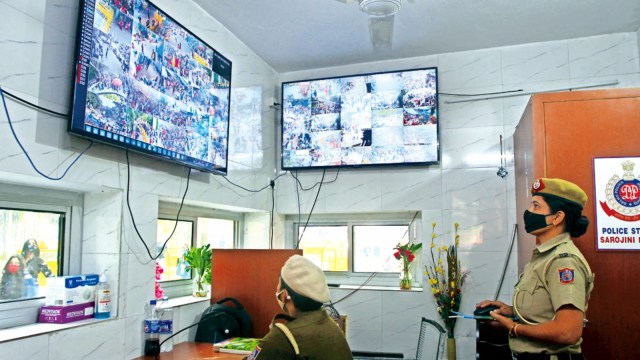
“This will be backed by an expanded network of CCTV cameras equipped with facial recognition across public spaces, along with deeper integration of databases such as Crime and Criminal Tracking Network and Systems (CCTNS) and ‘Crime Kundali’ to give officers real-time access to criminal records,” a senior officer said.
Delhi Police is also looking to enhance surveillance and response during large gatherings, protests and emergencies through the use of drones, while body-worn cameras are expected to improve transparency and aid evidence collection, officers said. Police stations will be equipped with performance dashboards to track response times and overall efficiency, they added.
“But the revamp is not limited to technology. A parallel push is being made to strengthen community policing. Mohalla committees and resident welfare associations will be more actively engaged, while police stations will hold regular public interaction meetings. Citizen-facing mobile applications will be promoted to make reporting of crimes and grievances easier, and awareness campaigns will target the rising threat of online scams and digital fraud,” the officer said.
According to the police, the initiative puts a spotlight on crime control at the ground level. Measures such as integrated picket checking and group patrolling are expected to increase visibility on the streets, while focused efforts will be made to track habitual offenders. “We will also prioritise tracing missing children and stolen electronic devices, alongside fast-tracking investigations in cases involving crimes against women and children. Expansion of women help desks and all-women patrol units is also part of the plan,” the officer said.
“Recognising the changing nature of crime, Delhi Police is investing in capacity building within the force. Personnel will undergo training in cybercrime, financial fraud and digital forensics, along with specialised modules in counter-terrorism and intelligence gathering,” another officer said. Leadership and ethics training is also being emphasised to improve professionalism within the ranks, the officer added.
The plan calls for closer coordination with national agencies as well. Police stations are set to work in tandem with the Indian Cyber Crime Coordination Centre (I4C) on digital offences, while collaboration with bodies such as the National Commission for Women is expected to strengthen victim support systems. Improved coordination with central agencies like the CBI and NIA is also on the agenda, said officers.
On the infrastructure front, police said, the goal is to transform police stations into smart facilities with digital records and citizen service centres. Mobility is set to improve with GPS-enabled patrol vehicles and rapid response bikes, while integrated command centres will support disaster management and terror response.
At the same time, strengthening vigilance mechanisms to curb corruption has been identified as a key priority, with senior officers expected to closely monitor functioning at the station level.
Officers described the initiative as an attempt to blend technology with accountability and public trust; a shift from reactive policing to a more proactive, data-driven and citizen-centric approach. If implemented effectively, the adopted police stations could serve as a template for policing reforms across the Capital, they added.