Rekla races are to Tamil Nadu’s western districts what jallikattu is to its southern districts. No Pongal, the most popular festival in the state, is complete for the people of the western districts—or the Kongu region—without the bullock cart race. But this year things are different, thanks to the Covid pandemic.
A Rekla race scheduled to take place at Coimbatore’s Codissia grounds on January 23 has been postponed because of the coronavirus surge. Rekla enthusiasts are also planning to conduct races on the district’s outskirts to avoid huge crowds.

Speaking to indianexpress.com, Prabhakaran Sivanmalai, a Rekla bull owner from Pollachi, expressed his disappointment given that the government has allowed jallikattu, also a bull sport, to be held despite the Covid spike. “We understand the importance of jallikattu but the government should’ve considered Rekla races too. We are disappointed a bit, but hopefully we’ll conduct races once Covid cases start falling,” he said, adding that jallikattu was allowed probably because it’s held in an enclosure, where the number of spectators can be capped unlike in Rekla races, which are held on roads.
Rekla races involve getting bulls tied to purpose-made carts to run a distance.
“We have been waiting for Pongal. We usually conduct Rekla races in all months. The Covid second wave had already affected the races. We were expecting 750-1000 carts to participate this year. But now the Omicron-driven wave has made us postpone it to the last week of this month or early February,” Prabhakaran said.
Rekla races involve getting bulls tied to purpose-made carts to run a distance. The participants are classified by the number of their teeth—bulls with up to four teeth will run in 200-metre races while those with six-eight teeth will compete in 300-metre races. The races are also classed into Poonchittu, Chinnamadu, Nadumadu, and Periyamadu based on the running distance. Such races are held mainly in Pollachi, Palani, Vellakovil, Ottanchathiram and Valaiyar. Ninety per cent of race bulls are of the Kangeyam breed, though Hallikar, Alambadi and Malaiya breeds are also popular with racers.
Besides being raised on a highly nutritious diet, Rekla bulls get a lot of fitness training, like jallikattu bulls. “You have to monitor the bulls all the time whether there is a Rekla race or not. A bull cannot participate in the race if it gets overweight. Before being selected, bulls are checked for various parameters—the chin should be small and sharp, eyes should be large and the skin shouldn’t be very thick,” Prabhakaran explained.
Prabhakaran said the sport had grown popular in the state over the past two or three decades. Neighbouring Kerala used to witness better-organised bullock cart races before that, according to the 47-year-old bull owner.
A 25-year-old Rekla racer from Coimbatore was equally upbeat about the sport. “My father used to participate in Rekla races. Now I’m following in his footsteps. I’ve one Alambadi bull, Vellaiyan. I’ve raised him since he was born and he is two years old now. We’ve participated in four races and won prizes in three,” Mohammed Asad oozed enthusiasm as spoke to indianexpress.com over the phone.
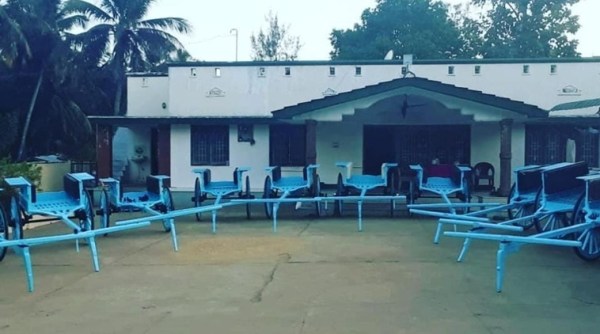
The price of a bullock cart used in the race can go up to Rs 2 lakh.
In Pollachi, bull owners and Rekla racers have formed an association, Rekla Thalamai Sangam, to prepare guidelines for the sport. Some practices used in the past to stimulate the bulls to run faster have been banned now. The use of tharmul kuchi (a type of whip) is one such practice.
The price of a bullock cart used in the race can go up to Rs 2 lakh. Places such as Valaiyar, Perur, and Nanjundapuram supply most of the handmade carts. Meenatchipuram, a village on the Kerala border, is known for its Rekla carts. Villagers of Karattumadam, Veerappanur and Udumalpet also make good Rekla carts.
“Carts made from teak last up to 40 years and are expensive. I bought all my 14 carts from Kunjan alias Marimuthu. His carts have a gold-like finish to them. Most racers in Pollachi and Anamalai prefer Kunjan’s carts. These are often passed on to the next generation,” said Prakash, a Pollachi-based farmer who participates in Rekla races every year.
Kunjan’s family has been into cart-making for years. “If you want a cart in the range of Rs50,000-75,000, we ill make it with sal, babul, pacific rosewood or elmwood. Our teak carts with brass ornaments cost up to Rs2.5 lakh,” the 71-year-old said. “We dry the wood in the sun for six-eight months to make lightweight carts. People make carts with fresh wood also. They would look fine but cannot often be used in Rekla races because of their weight.”
“We make three different types of carts. The first one costs around Rs40,000 and is used mainly for practice. Normal race carts’ prices range from Rs 1.25 lakh to Rs1.50 lakh. The next is the ornamented one and very expensive. Brass ornaments are attached on both sides of the yoke and a brass tower is fixed at the point where the pulling bar meets the yoke,” Kunjan explained.

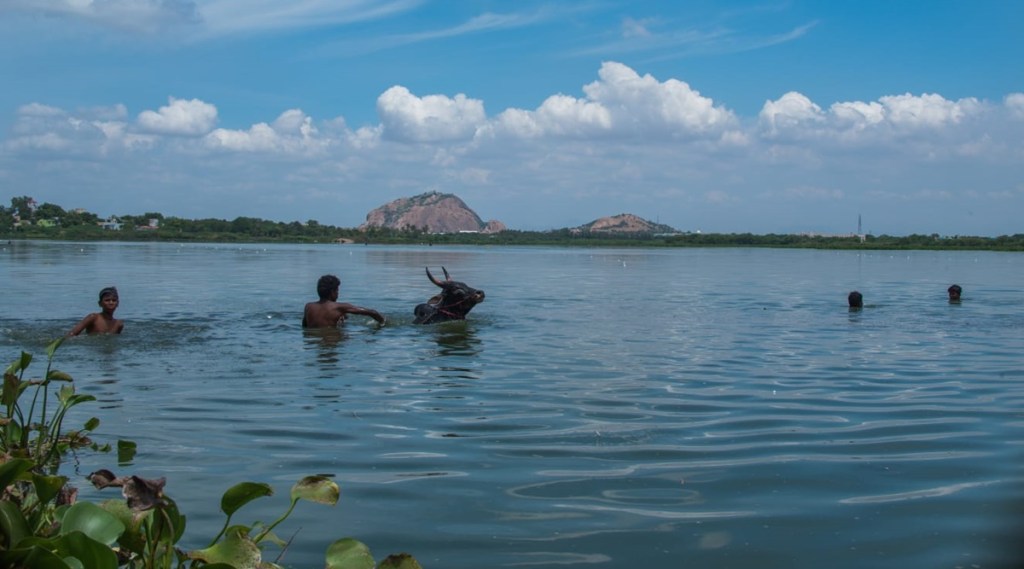 Rekla races are to Tamil Nadu’s western districts what jalllikattu is to its southern districts. (Photo: Karthik Selvam)

 Rekla races involve getting bulls tied to purpose-made carts to run a distance.
 The price of a bullock cart used in the race can go up to Rs 2 lakh.

 Share


