


Stay updated with the latest - Click here to follow us on Instagram

Journalism of Courage
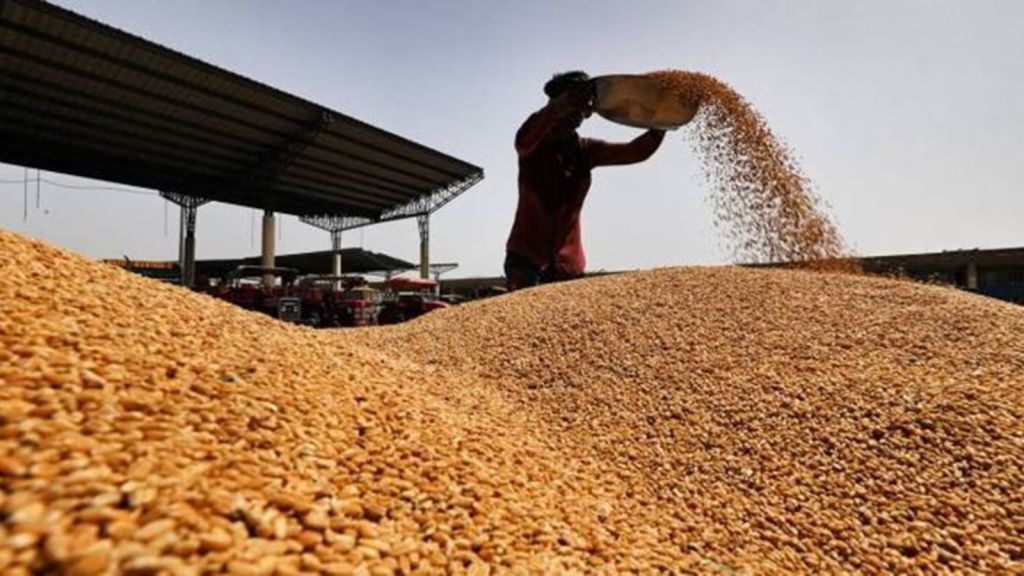 A Mandi Board official said the wheat needed to be moved before paddy arrival gathered momentum.
Punjab is heading into the paddy procurement season with an unusual problem. Nearly 12 lakh metric tonnes of wheat is occupying space in rice mills across the state, raising concerns among millers about where they will store the paddy expected to arrive from October 1. Another 1.83 lakh MT of Central pool wheat procured by state agencies for eventual handover to the Food Corporation of India (FCI) remains in mandi yards.
Rice mills are primarily meant to receive paddy, mill it into rice and hand it over to government agencies. But Punjab’s persistent storage shortage has led procurement agencies in recent years to use the space vacated after the paddy season to store wheat procured during the April-May procurement cycle.
This year, however, the two procurement cycles are threatening to overlap.
“Earlier, such a situation had never arisen where wheat from the previous season was still lying when the new paddy procurement season began. We have to make space for paddy, but more than 50,000 bags of wheat are still lying in my mill,” said a rice miller, adding that the government needed to urgently move out the stocks.
Another miller from the Doaba region said around one lakh bags of wheat were stored at his rice mill. If the stocks are not cleared, millers could struggle to accommodate the paddy allocated to their mills during procurement, he said.
“The practice of using rice-mill space for wheat emerged from Punjab’s chronic grain-storage problem. Once rice is milled and delivered to government agencies, the space becomes available. Instead of leaving it vacant, agencies have increasingly used it to store wheat after procurement. But that space is required again when paddy starts arriving,” said a senior officer of the Punjab Food and Civil Supplies Department.
The pressure is not limited to rice mills. The government’s “Mandi Yards Priority Liquidation List” identifies nearly four dozen mandi yards and storage locations where Central pool wheat stocks from RMS 2026-27 remain stored, with a combined quantity of 1.83 lakh MT.
The stocks are spread across Fatehgarh Sahib, Hoshiarpur, Gurdaspur, Kapurthala, Ropar, SAS Nagar, SBS Nagar, Amritsar and Patiala, among other districts. Dhariwal in Gurdaspur, for instance, has around 14,000 MT listed at one location and another 16,000 MT at a second mandi-yard entry. Ropar mandi yard has around 9,000 MT, while several other locations have stocks running into thousands of quintals.
Sources in the Punjab Mandi Board said paddy arrival at several of these locations are expected from September 20 onwards, with arrivals continuing through October 15, leaving a narrow window to clear out wheat.
A Mandi Board official said the wheat needed to be moved before paddy arrival gathered momentum.
“If the existing wheat is not moved out in time, the mandi yards will have to accommodate fresh paddy arrival,” the official said, adding that this will lead to glut in several Mandis.
The immediate concern is the timing. Paddy procurement in Punjab is concentrated into a relatively short period. During peak arrivals, thousands of tonnes can reach mandi yards in a single day. Wheat occupying storage space reduces the buffer available to absorb these arrivals,” said another Mandi Board officer.
For rice millers, the issue is more immediate. Their premises have to accommodate paddy for drying and milling before rice is delivered to government agencies. Wheat stocks occupying that space could disrupt the entire procurement and milling cycle.
The overlap points to a larger structural problem in Punjab’s grain-storage system, where space vacated after one procurement season is repeatedly used for another crop without adequate additional capacity being created.
Punjab Food, Civil Supplies and Consumer Affairs Minister Lal Chand Kataruchak could not be contacted for comment.
Stay updated with the latest - Click here to follow us on Instagram