4 min readShimlaFeb 27, 2026 02:02 PM IST
First published on: Feb 27, 2026 at 02:02 PM IST
A day-long standoff between teams of the Delhi and Himachal Pradesh police in Shimla has brought the focus on compliance with established procedures governing inter-state arrests, with both sides placing their versions on record and the matter now under judicial scrutiny.
Senior officers in Shimla said the Delhi Police team, comprising 15 to 20 personnel, was not in uniform and had not informed the local police before taking three persons into custody from a resort in Chirgaon. They also pointed to the alleged absence of prior intimation to the local police station, non-conduct of medical examination before moving the accused out of the state, and the presence of personnel from Haryana as indicators that the operation involved more than one state.

Himachal Police said it intervened to ensure adherence to due process and required the visiting team to seek transit remand and complete medical examination of the suspects before leaving the state. Officers cited the guidelines laid down by the Delhi High Court in Sandeep Kumar versus State (Government of NCT of Delhi) and others on December 12, 2019, which prescribe safeguards for police teams conducting arrest or search operations outside their jurisdiction.
Superintendent of Police, Shimla, Gaurav Singh, said an FIR has been registered at Police Station Chirgaon on a complaint by the resort owner, alleging abduction, theft and trespass. “The investigation is going on. The FIR was initially against unknown persons, but most of the suspects have now been identified. The matter is sub judice and we will proceed in accordance with law,” he said, adding that the transit remand was granted by the competent court after medical examination at Ripon Hospital.
In an earlier statement, Singh said Shimla Police received information from Chanshul Resort regarding a group of individuals in civilian clothes travelling in vehicles bearing registration numbers from outside the state who allegedly took away three persons and removed electronic equipment, including a DVR. Police teams from Shimla and Solan intercepted the vehicles at Shoghi, ISBT Shimla and Dharampur. Verification, he said, revealed that the individuals were police personnel from Delhi and Haryana acting in connection with a case registered in Delhi. The court of ACJM-II subsequently granted transit remand of about 18 hours.
The guidelines relied upon by Himachal Police require that officers travelling outside their state record reasons if acting without a warrant in urgent circumstances, contact the local police station in advance, carry relevant documents including the FIR, and make appropriate diary entries. They also mandate that transit remand be sought from the nearest Magistrate, who must apply judicial mind and ensure compliance with statutory safeguards under the CrPC and constitutional protections. The safeguards draw upon principles laid down by the Supreme Court in D. K. Basu v. State of West Bengal.
Counsel appearing for the three suspects, advocate Sandeep Dutta, opposed the grant of transit remand before the court of ACJM-II Ekansh Kapil, contending that the arrest was illegal for want of procedural compliance and proper documentation.
Advocate Nand Lal, representing the Delhi Police, maintained that the arrests were lawful and that the transit remand was granted on merits. He said two of the suspects were residents of Uttar Pradesh and one of Madhya Pradesh.
With an FIR now registered in Himachal Pradesh and the Delhi case proceeding separately, the legality of the operation and the competing claims over procedural compliance are expected to be tested in court.

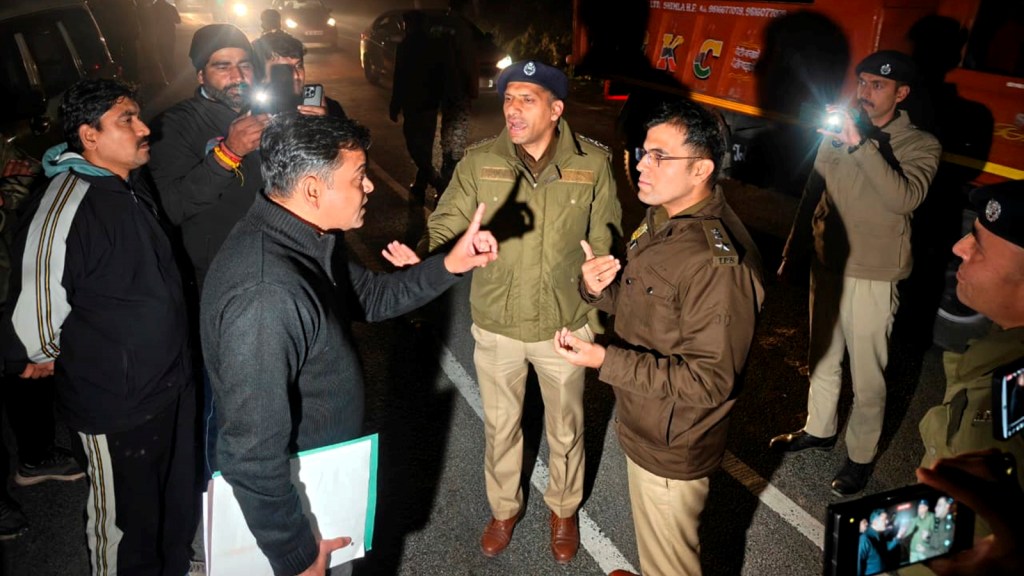 Himachal Police said it intervened to ensure adherence to due process and required the visiting team to seek transit remand and complete medical examination of the suspects before leaving the state.


 Share


