The Punjab government seems unwilling to send a panel of IPS officers to the Union Public Service Commission (UPSC) for director general of police (DGP) appointment, as it is considering reiterating its earlier stand that a legislation passed by the Assembly empowers it to select its own police chief.
The UPSC had asked the Punjab government on February 18 to send a list of eligible IPS officers within 10 days in compliance with a February 5 Supreme Court order, which expressed strong disapproval over states continuing with acting DGP arrangements instead of making regular appointments.
“This is reminiscent of a similar stand taken by the state government in November 2024, when the state had told the UPSC that our Vidhan Sabha had passed legislation empowering the state to appoint its own DGP. The CM is also the home minister of the state. The file has to be cleared by him. In case any urgency surfaces in his absence, his approval could be taken on the phone,” the official added.
The Punjab Assembly had passed the Punjab Police Amendment Bill on June 20, 2023. It is still awaiting presidential assent. It was sent to the governor, who forwarded it for the consideration of the President. The state had also taken a legal opinion in November 2024 when the UPSC had sought a similar panel.
“It is a matter of principle,” an official privy to the developments said. “If the Vidhan Sabha has already passed the Bill empowering the state to appoint its own DGP, why should the government send a panel? If it is taken as a contempt of court orders, we will move the Supreme Court. The home department has been seeking a direction since morning, but it is a political decision in the end. We will tell the court that Vidhan Sabha has passed a Bill that allows the state to appoint a DGP through a committee chaired by a high court judge. We had taken a legal opinion earlier. Our legislation allows us to change rules,” the official added.
What the SC said vs what the Punjab Bill provides
DGPs are currently appointed based on the directions of the Supreme Court in the 2006 Prakash Singh case, as per which the state government is supposed to send a list of seniormost eligible officers in the state to the UPSC, three months before the retirement of the incumbent DGP. The UPSC vets the list based on the officer’s seniority, service record, integrity, and field experience, and sends the state a shortlist of three officers, one of whom the state is expected to appoint as the new DGP. The apex court’s directions also say that the DGP so appointed should have a tenure of at least two years, and should have at least six months of service left at the time of selection.
The Punjab Police Amendment Bill, 2023, provides for constituting a seven-member committee, to be headed by a retired chief justice or a retired judge from the Punjab and Haryana High Court, to prepare the panel of three senior officers. The other members of the selection panel include the chief secretary, a nominee of the UPSC, a nominee of the Punjab Public Service Commission, the administrative secretary of the home department, a nominee of the Union Ministry of External Affairs and a retired Punjab Police DGP. The committee will prepare the panel of three officers from a pool of eligible names based on length of service, work record and range of experience. The DGP so appointed will have a minimum tenure of three years.
The current scenario in Punjab
Punjab currently has 17 DGP-rank officers. However, the seniormost officer, 1989-batch IPS officer Sanjeev Kalra, is nearing retirement and may fall outside eligibility norms requiring a minimum residual service period.
Another senior officer, Parag Jain, is serving on central deputation and is unlikely to return for the state post. Among those expected to be considered are four 1992-batch officers, including Gaurav Yadav, Sharad Satya Chauhan, Harpreet Singh Sidhu, and Kuldeep Singh.
Yadav was appointed as officiating DGP on July 5, 2022, four months after the Aam Aadmi Party (AAP) government took over the reins of the state. As per the norms, the state can post an officiating DGP for a maximum period of six months. Yadav, however, has already completed three years and eight months as acting DGP, and is likely to continue for some more time.
Yadav was not among the top three senior-most IPS officers when he was appointed the acting DGP. He had superseded six others, Dinkar Gupta (1987), V K Bhawra, Prabodh Kumar and Iqbal Preet Singh Sahota (all 1988 batch), and Sanjeev Kalra and Parag Jain (both 1989 batch). Gupta, Bhawra, Sahota, and Prabodh Kumar have retired.
Kalra is the Special DGP, Home Guards, and is retiring on February 28. Jain is on central deputation and is the Research and Analysis Wing (RAW) chief. Yadav has three batchmates in Punjab: Sharad Satya Chauhan, Harpreet Singh Sidhu and Kuldeep Singh. Chauhan and Sidhu are his seniors in the gradation list. “In case Punjab sends a list, Yadav’s name would anyway be there in the panel of three. But for the government, it is a matter of principle,” a source said.
In March 2023, the Centre had asked the Punjab government why it was not sending the panel of eligible officers for appointment as regular DGP. The state never responded to that letter.

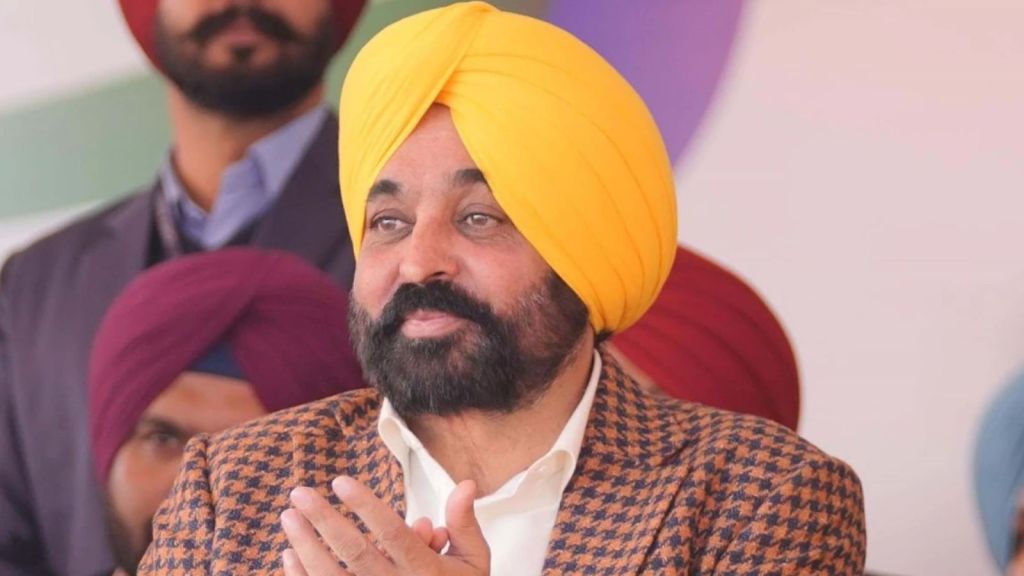 The Bhagwant Mann government is considering reiterating its stand based on the Punjab Police Amendment Bill. (File Photo)


 Share


