Barely 27 hours, and around 140 km apart, two private universities in Punjab witnessed student protests that began with unverified claims involving female students and girls’ hostels, spread rapidly through social media networks and eventually turned violent.
Chitkara University in Patiala’s Rajpura saw hundreds of students gather late on September 25 after social media posts alleging that two girl students were missing were circulated among hostel residents. Less than 27 hours later, at around 2 am on September 27, a similar chain of events unfolded at Lovely Professional University (LPU) in Phagwara after a social media message claimed that a female student had been raped by an outsider in a girls’ hostel.

The protests at both campuses drew large gatherings, brought police onto the premises and ended in clashes, arson and major damage to property. Both universities subsequently announced a break, with large numbers of students leaving for home.
The Punjab Police is now examining the similarities between the two incidents, including the role of “unverified messages” and rumours in triggering the protests.
“Several points are being looked into. There may be similarities, but we are investigating both cases separately,” said Praveen Kumar Sinha, DGP (Law and Order).
A senior police officer monitoring both cases told The Indian Express that, so far, there was no evidence to substantiate the information being circulated by students at either university.
“It seems there were messages, rumours spread by word of mouth and a growing discord between the students and university authorities that resulted in these incidents. Chitkara happened first, which added credibility to such rumours in the LPU case as well. But all these points are being looked into,” the officer said.
LPU: Five-line message triggers protest
In the LPU case, a five-line message began circulating on a social media app on Sunday evening under the heading: “Rape by a male worker in girls hostel of LPU”. The message claimed that the incident took place in GH-3, a girls’ hostel, and that the warden had sent the student home instead of taking action. It also alleged that the university had been ignoring cases of suicide and rape.
Senior police officers said the message spread rapidly across social media and student groups, followed by appeals for students to gather at the university’s main gate late Sunday night.
Students subsequently gathered at the gate and the protest escalated into a rampage, with shops in the Uni Mall on campus vandalised and vehicles set on fire. Property was damaged at several locations on the campus.
Around 4 am, students moved outside the campus and blocked Delhi-Amritsar National Highway-44 on the Jalandhar-Phagwara stretch. The blockade continued into Sunday evening, when protesters clashed with police personnel attempting to clear the highway and restore traffic.
Several students and police personnel were injured during multiple rounds of stone-pelting and cane-charge.
Police said they had found no evidence so far to substantiate the rape allegation contained in the message. The matter remains under investigation.
SSP (Patiala) Harmandeep Singh Hans said, “The matter is under investigation. I would not like to comment anything further on it at this stage.”
Chitkara: Rumours, hostel checks and a midnight protest
The Chitkara episode had begun at least two days before the September 25 protest, with a series of incidents that later became the subject of speculation among students.
Police said a “haunting” audio was played through a speaker inside a girls’ hostel on September 23. An ambulance arrived the following morning, while a priest visited the hostel on the afternoon of September 25 afternoon.
Around 10.30 pm that day, hundreds of hostel students gathered after social media posts circulated about allegedly missing girls. They demanded answers from the university and sought CCTV footage.
As the situation turned tense, police were called to the campus. Two police vehicles were damaged, some university property was ransacked and an inspector was allegedly manhandled.
Police said the students who raised the alarm could not provide the names or identifying details of the girls they claimed were missing. Subsequent checks by the university and police found no evidence of a suicide or a missing student.
They said the earlier “scary audio” appeared to have been part of a student prank, while hostel rooms had already been checked by the warden.
Police said students who raised the alarm could not provide the names or identifying details of the girls they claimed were missing. The university and police subsequently said they found no evidence of any suicide or missing student. They said the earlier “horror” sounds appeared to have been a student prank, while hostel rooms had already been checked by the warden.
The university later clarified that the ambulance had arrived around 2.50 am on September 24 for a student returning from hospital, and that the priest who visited the hostel on September 25 had come to meet his daughter, who was a student there.
Police initiated legal formalities and recorded a Daily Diary Report, but no FIR had been registered as of the latest update.
A pattern police are examining
Despite differences in the allegations, police are examining the common sequence in the two incidents: late-night claims involving female students and hostel areas, rapid circulation of unverified information among students, large gatherings, intervention by police and, eventually, violence and damage to property.
Officials are also examining whether the Chitkara episode influenced the way unverified claims were received and circulated at LPU less than a day later.
The immediate academic fallout was similar. Both universities announced a break after the unrest, with students leaving the campuses for home.
Police officers, however, have cautioned against drawing a direct link between the two incidents until their investigations are complete.

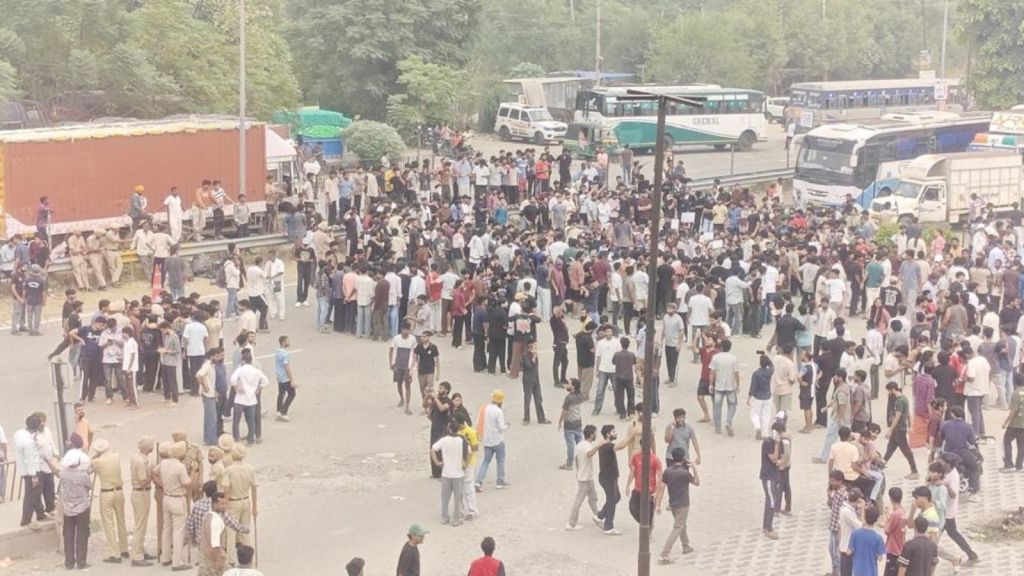 The Punjab Police have formed an SIT to investigate the incident that triggered the unrest at LPU. (Express File Photo)


 Share


