Journalism of Courage



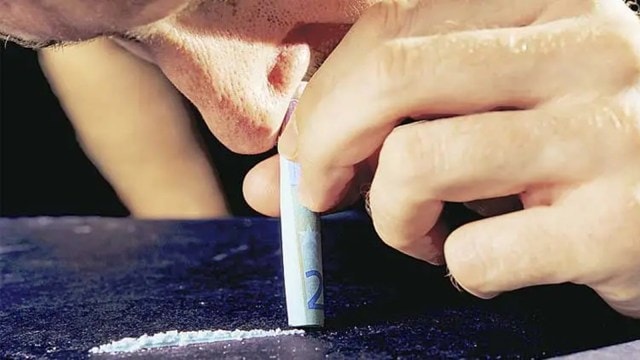 The scale of misuse of pharma drugs could be gauged from the fact that Punjab Police, from 2022 to June end this year, recovered 4.25 crore intoxicant pharma drugs in the form of tablets and capsules etc.
The Punjab Food and Drug Administration (FDA) has suspended 455 licences of retail chemists and wholesalers from January to May this year – translating into an average of three each day – for contravening provisions of the Drugs and Cosmetics Act and its rules relating to maintenance of sale and purchase records.
The crackdown comes at a time when the state, which is struggling to rein in the menace of drugs, is witnessing an increase in the use of habit-forming drugs.
The scale of misuse of pharmaceutical drugs can be gauged from the fact that from 2022 to June this year, the Punjab Police recovered 4.25 crore intoxicant drugs in the form of tablets, capsules etc. Out of 4.25 crore, 2.76 crore drugs were recovered this year alone, till June end, with the Punjab anti-drug Special Task Force (STF) in May recovering nearly 2 crore tablets of Alprazolam, a benzodiazepine used to treat anxiety and panic disorders, and 70 lakh capsules of Tramadol, an opioid analgesic administered to relieve pain, allegedly manufactured at a pharma unit in Baddi in Himachal Pradesh.
Eight habit-forming drugs have been notified as restricted under the state drug policy and special permission, in addition to a licence, is required to keep and sell such drugs. Yet, the use of pharma drugs for addiction continues to rise.
“These drugs have the potential to be misused. But given their therapeutic use and keeping in mind those who legitimately require the drugs for medicinal purposes, eight drugs have been notified as restricted drugs,” a Punjab FDA official said.
The eight restricted drugs are Codeine, Dextropropoxyphene, Diphenoxylate, Pentazocine, Nitrazepam, Buprenorphine and their salts and formulations and oral solid dosage forms of Tramadol and Tapentadol. As per the policy, chemists or druggists who intend to stock, purchase or sell these eight drugs for justified reasons shall get permission or approval from the department and the monthly sale or purchase has to be submitted at the office of the drug control officer or zonal licensing authority concerned.
While retail chemists are permitted to keep 500 tablets or capsules of Tramadol and Tapentadol after obtaining permission, wholesale stockists and distributors are permitted to keep 5,000 tablets or capsules of Tramadol and Tapentadol and clearing and forwarding agents are permitted to keep 50,000 tablets or capsules with permission from the licensing authority.
As per the official, who did not wish to be named, 12 licences to keep and sell drugs were also cancelled between January to May this year. The official said the decision on whether to suspend or cancel the license depended on the ‘degree’ of the contravention. The official said any licence is cancelled following the proper procedure involving issuing a show-cause notice.
There are around 27,000 chemists in Punjab, of which 430 have special permission to store and sell the eight restricted drugs. As per the FDA official, 27 violators were convicted last year and four this year with as many as 669 alleged offenders continuing to face trial for contravening provisions of the Drugs and Cosmetics Act.
Last year, from January to December, 1,048 licences were suspended for contravention of rules, again translating into the suspension of nearly three licences in a day, on average. The licences were suspended after 11,297 inspections, translating into action against 9.2 per cent of the total alleged violations checked.
This year, 455 licences have been suspended till May after 3,623 inspections, translating to action against over 12 per cent of the total alleged cases of contraventions checked.
Concern over misuse of Pregabalin
Speaking to The Indian Express outside a government de-addiction centre in Fatehgarh Sahib last week, a 23-year-old man hooked to Pregabalin said that he switched to the habit-forming drug from poppy husk, which he had been consuming earlier, due to its “easy availability”. The man’s brother-in-law who accompanied him at the centre said he will be travelling to Canada in a few months and the family “wants him clean before he lands there”.
Apart from the misuse of Pregabalin, the anti-drug STF is also concerned about the misuse of drugs like Tapentadol, which the officials say was being “used as a substitute for another misused drug Tramadol”.
Tapentadol, an opioid analgesic to treat pain, and Pregabalin, a neuropathic pain reliever, are not covered under the Narcotic Drugs and Psychotropic Substances (NDPS) Act.
The two medicines are among five ‘medicines of concern’ and are ‘most prevalent’ as per an internal classification made by the anti-drug STF. Three other medicine salts that are not covered under the NDPS Act but are ‘medicines of concern’ in the fight against drugs in Punjab are Pentazocine, Gabapentin and Codeine.
Another set of five ‘medicines of concern’ has been classified as covered under the NDPS Act and includes Buprenorphine, which is ‘most prevalent’. Buprenorphine, notably, is administered in state government-run Outpatient Opioid Assisted Treatment (OOAT) centres as part of therapy to patients hooked to various drugs. The other four drugs covered under the NDPS Act and classified as ‘medicines of concern’ are Dextropropoxyphene, Dyphenoxelate, Nitrazepam and Tramadol Hydrochloride.
Concerned over the misuse of Pregabalin by addicts, the Punjab government took up the matter with the Centre, urging it to categorise the medicine as a Schedule H drug (a prescription drug). “To regulate Pregabalin’s use and dosage, prohibitory orders are in place by the district administration but easy availability from areas in adjoining states remains a cause of concern. Those hooked to drugs consume it in much higher doses than prescribed for treatment of genuine health issues,” a doctor in Bathinda district said.
Punjab Food and Drug Administration Commissioner Dr Abhinav Trikha told The Indian Express, “Somewhere in October last year, we took up the matter with Centre to categorise Pregabalin as a prescription drug and to ensure its full record is maintained. A committee comprising of experts from AIIMS, PGIMER and one of our representatives is deliberating on it.”
Trikha said the medicine was among the restricted ones in Punjab. “We have restricted eight drugs. To keep and sell these eight drugs, a chemist or a wholesaler has to get permission, in addition to the normal licence which is granted.”
Punjab Chemist Association president Surinder Duggal said to check the misuse of pharma drugs, the focus should be on analysing the records of manufacturers. “There are around 27,000 chemists in Punjab and around 430 of them have the licence to keep and sell restricted drugs. Enforcement authorities should analyse the records of the manufacturers over the years. The same should be then matched with the billing records of chemists, wholesalers and stockists. The chemists, wholesalers and stockists are permitted to keep limited quantities of restricted drugs. The records of manufacturers over the years should be analysed,” said Duggal, who recently led a delegation of the association to meet Trikha, offering suggestions to eradicate drug menace from Punjab.
‘300 FIRs relating to misuse of Alprazolam’
Continuing with the investigation into the alleged pharma drug misuse racket where it seized nearly 2 crore Alprazolam tablets and 70 lakh Tramadol capsules manufactured in a Baddi firm earlier this year, the anti-drug STF, to its shock, learnt that there were 300 First Information Reports (FIRs) across the state over a period of time involving the misuse of “much in demand” tablet sold under a specific brand name.
The border range STF teams headed by Superintendent of Police Vishaljit Singh and Deputy Superintendent of Police (DSP) Vavinder Mahajan, beginning with a recovery of intoxicant pharma drugs from Beas in Amritsar district in February, went on to unearth a racket which involved a Maharashtra-based firm getting the medicine manufactured from Baddi unit. Punjab Police investigators say they were shocked after, in addition to the recovery of tablets and capsules, they recovered 725 kg of raw material for manufacturing Tramadol capsules and 40 kg for manufacturing Alprazolam tablets.
According to DSP Mahajan, the police have so far arrested eight accused in the racket spread across Punjab, Himachal Pradesh, Haryana, Uttar Pradesh and Maharashtra. “During the course of investigations, we obtained data from districts across the state and found out that there were 300 FIRs under the NDPS Act registered in connection with the illegal use of a specific brand of Alprazolam that we seized. A noted pharma company owned the brand and entered into an agreement with the Baddi firm. We are investigating the role of the company which owned the brand,” Mahajan told The Indian Express.
Recovery of psychotropic substances in NDPS Act cases in Punjab
2022
Number of cases registered – 3,752
Number of accused arrested – 4,899
Intoxicating powder recovered – 80.66 kg
Pills/capsules recovered – 67.19 lakh
2023
Number of cases registered – 3,211
Number of accused arrested – 4,208
Intoxicating powder recovered – 92.11 kg
Pills/capsules recovered – 81.42 lakh
2024 (Till June 30)
Number of cases registered – 1,121
Number of accused arrested – 1,472
Intoxicating powder recovered – 807 kg
Pills/capsules recovered – Nearly 2.77 crore

 8 min read