The Punjab government’s decision to introduce poori-chole in mid-day meals at government schools has not gone down well with teachers who said they found making the meal a time-consuming process.
As per the mandate, students up to Class 8 should be served poori-chole every Wednesday. The teachers said the teaching was affected on the only Wednesday they had to try the new menu so far, January 3.
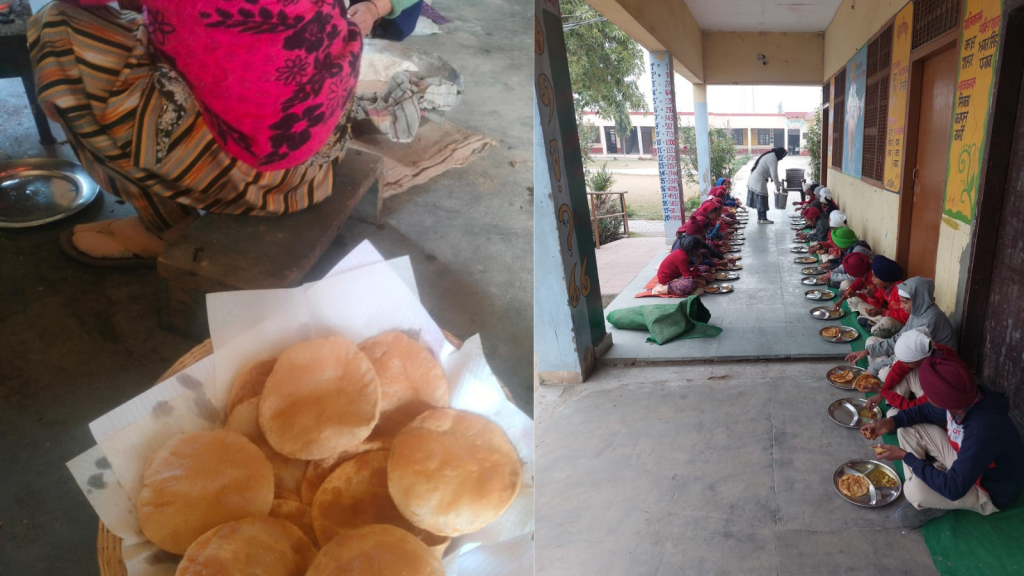
They said the mid-day meal cooks and even the teachers incharge were held up for almost the whole day as poori had to be served hot to the students. In addition to this, cooking involved the use of excess oil for which there is no provision in the budget, they said.
“Earlier kale chole and roti used to be served to students every week and that was going well. However, poori chole every week doesn’t seem to be a wise menu as it takes a lot of time to prepare pooris. As pooris have to be served hot, teachers serve them to students classwise. On the first Wednesday itself, teachers were confused with this menu as the turn of Class 8 for midday meal came at around 3 pm because the meal was served in small batches,” Digvijay Pal Sharma, president of Democratic Teachers Front, told The Indian Express.
He added, “Not only this, it involves using a large quantity of oil for which expenses have not been added to the mid-day ration. Though they have increased Rs 5 per student as expenditure for introducing bananas every Monday, there has been no increase in the budget of oil for including poori-chole every Wednesday.”
Jagveeran Kaur, general secretary of DTF (Moga), who posted at a government senior secondary school at the Buttar village, said,”There are around 170 midday meal students in our school, and while making and later serving poori-chole to the students classwise, we remained busy from 10 am to 3 pm. Teachers were told to watch that students should not drink water after eating hot pooris as normally children drink and water these days is cold.”
A school incharge in a Sangrur school said, “Though I remain on my toes always to follow government schemes, even I found this poori chole menu cumbersome. Our school has over 350 students till middle school, and 10 litres of oil was consumed that day while we remained busy till 3 pm. Midday meal cooks are not experienced in handling this menu. A few schools have up to 700 students who are under midday meal scheme. One day of regular studies was hampered a lot.”
“Government officials should personally visit the schools and see the hassles rather than framing rules while sitting in Chandigarh,” said Balbir Singh Longowal, general secretary of DTF Punjab.
Longowal, an English teacher in a government high school in the Namol village in Sangrur, said there are 190 mid-day meal students in his school. “As helpers were busy in rolling pooris, class teachers themselves had served food to the students as they didn’t want to waste their time. We insist the officials stay for a day in schools and understand the problems,” he said.
Digvijay said, “On some special occasions or festivals, most schools themselves get poori-chole or some other special item cooked for students. The government needs to reconsider their decision to include poori-chole in the weekly menu.”
Earlier on Monday, the government introduced bananas to the menu. Suggestions came from teachers and Abohar MLA Sandeep Jakhar that local fruits such as kinnow can be considered instead of banana to give a boost to farmers.
Varinder Singh Brar, general manager of Midday Meal Society in Punjab, when contacted, said, “I had a meeting with midday meal cooks before introducing this menu and they had no issue. Students like poori-chole. Hence, this has been introduced for three months only. In the summer, we will see some other options. Teachers should take to new things in a positive manner.”
“If there is any issue regarding funds, they can be discussed and we will provide them the same. As of now, nearly 19 states in India have poori-chole in the menu. We are the 20th state. In a few schools where strength is more, it could have caused problems. But they should try it for a while as things do settle gradually.”
How midday meal works in Punjab schools
The Punjab government gives 100 grams of wheat and rice per student of classes 1-5 and 150 grams of wheat and rice for students of classes 6-8. In addition, the per day allowance for each student up to class 5 is Rs 5.45 and Rs 8.17 for students in classes 6-8. This allowance includes the cost of vegetables, cooking oil, grinding of wheat, fuel cost, spices, pulses, transport charges and other miscellaneous expenses.
The earlier menu used to be roti-sabzi for three days and gravy vegetable/pulses-rice for the other three days. On Wednesday, they used to serve black gram and roti, which have now been replaced with poori-chole. Banana on Monday is an additional item apart from the routine mid-day meal. For bananas, the government will give Rs 5 per student.
Varinder Singh Brar said, “Punjab University did a survey on more than 240 schools in which students said they liked banana and mango the most among fruits. Poori-chole was also given as a favourite choice. Hence, we are trying to provide nutrition and tasty food to students. Teachers should cooperate for some time.”

 They said the mid-day meal cooks and even the teachers incharge were held up for almost the whole day as poori had to be served hot to the students. In addition to this, cooking involved the use of excess oil for which there is no provision in the budget, they said.


 Share


