
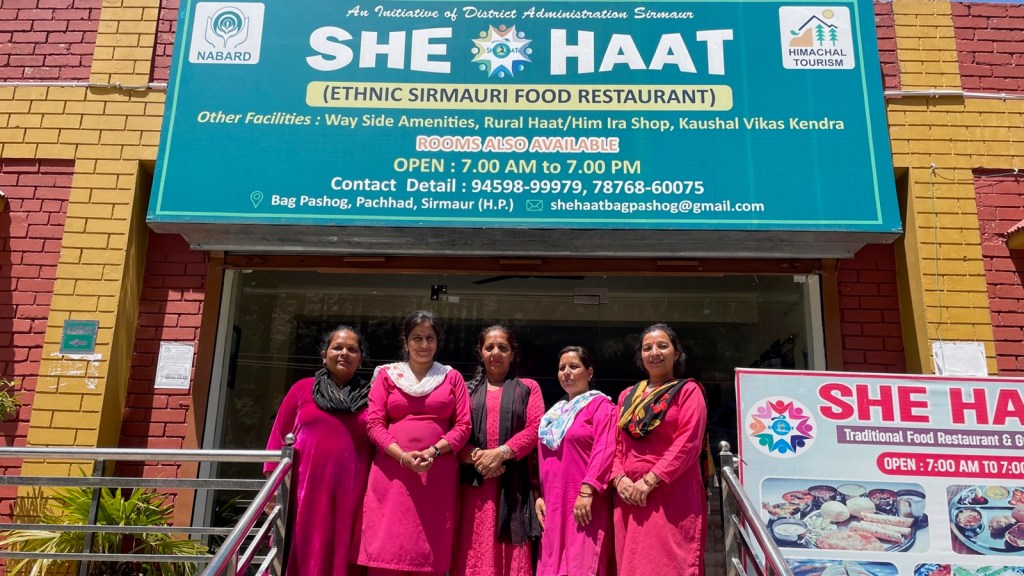
“Initially, people would ask us how women could run a hotel or clean toilets. Now, the same people ask if there’s any vacancy for their wives,” says 40-year-old Reena Sharma or Renu, the receptionist at ‘She Haat’ who doubles up as a cook. She was a homemaker until four years ago.
At the scenic Bag Pashog village of Sirmaur district in Himachal Pradesh, an hour’s drive from the hill town of Kasauli, a group of 23 women has scripted an admirable success story using their culinary skills.

She Haat, the ethnic restaurant they run, is a one-of-its-kind culinary venture in rural Himachal Pradesh that attracts travellers with its traditional Sirmauri cuisine. Adding to the taste of their meals is the breathtaking locale that overlooks the mighty Churdhar peak.
The initiative, which was launched with the support of the district administration and village panchayat, has not only made these women financially self-reliant but has also boosted their confidence.
Besides the ethnic restaurant which houses a kitchen and seating area, the site also has a “rural haat” where the women, dressed in pink suits, sell handicrafts as well as organic produce from their farms. The project also includes a two-room guest house and green spaces for visitors to relax.
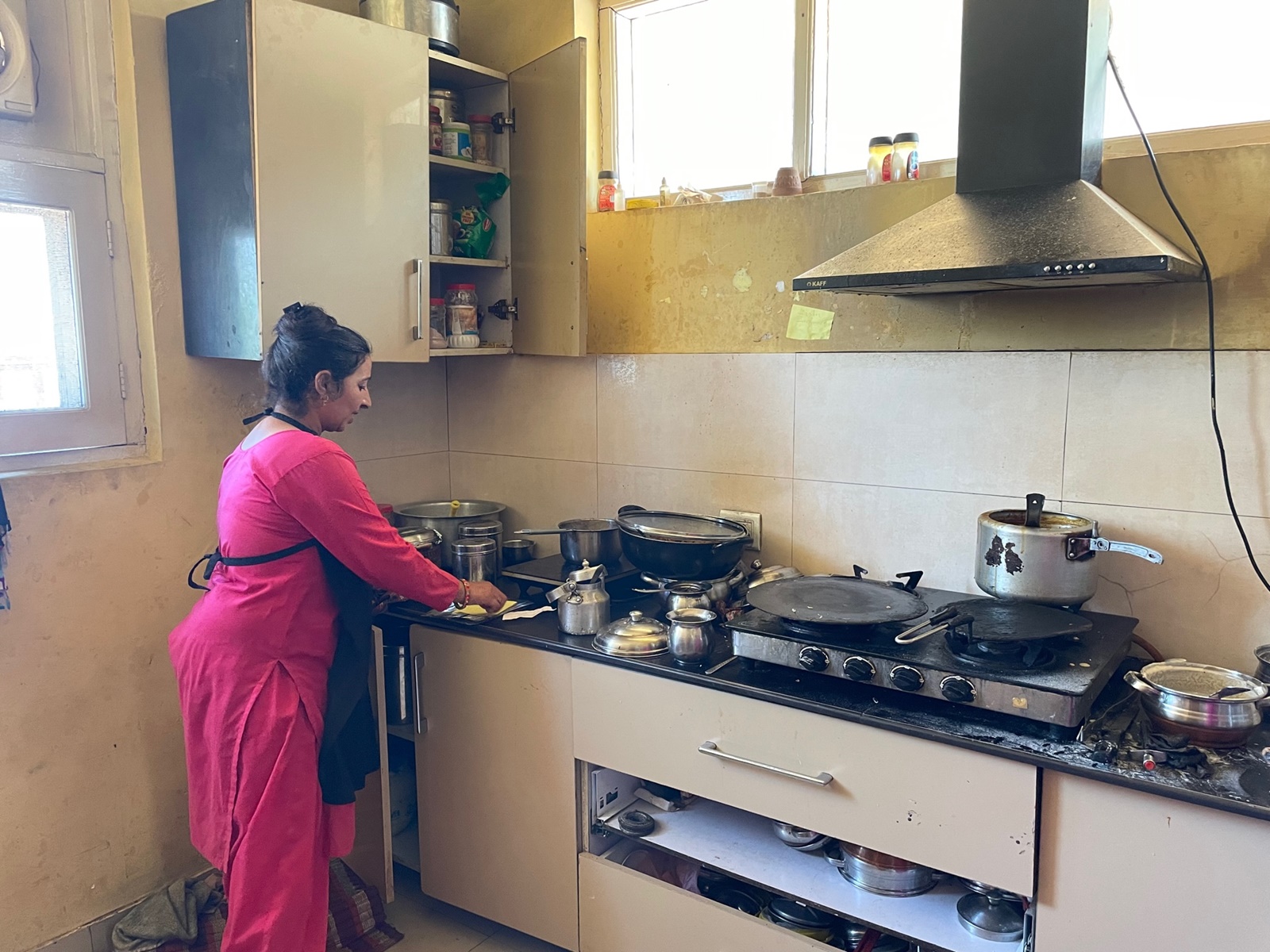 She Haat restaurant’s kitchen. (Express Photo by Divya Goyal)
Self-sustaining model that survived the pandemic
What makes She Haat unique is its self-sustaining financial model. The traditional food served in the restaurant is prepared by the women using fresh vegetables, milk, homemade ghee and spices from their own farms or procured from local farms. At the end of each month, the profit is shared between the staff members after deducting necessary expenses. The balance sheet is submitted for inspection to the local Pachhad sub-divisional magistrate (SDM), the ex-officio head of the She-Haat society.
“The people who eat or stay here appreciate the homely feeling. That’s how we take care of the place. From preparing food to housekeeping, the women here do all the work, irrespective of whether she is illiterate or a graduate. She Haat survived and is thriving now because we have maintained it like our home. If they are united, women can do anything. We never knew that our local food could take us places,” says Renu, who looks after her two children after her husband abandoned them. She walks 4 km daily to reach She Haat from her village Tikri Pajerli.
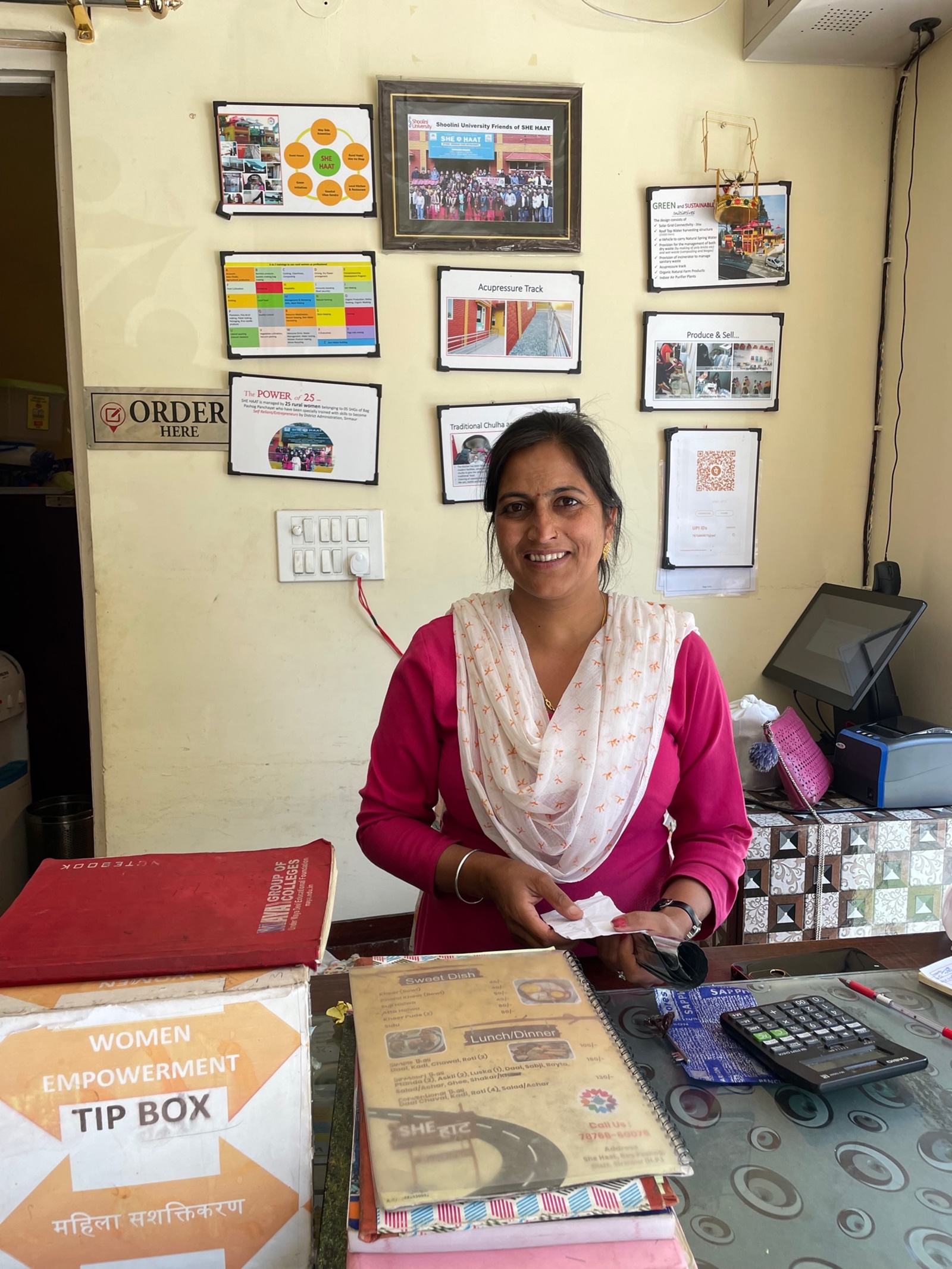 Earlier confined to her home, Renu now also handles reception area at She Haat. (Express Photo by Divya Goyal)
Opened in December 2020, when the global pandemic was at its peak, She Haat “even survived Covid” and the women say it was all because of the unrelenting efforts of R K Pruthi, who was the Sirmaur deputy commissioner at the time, along with the then village pradhan Parkash Dutt Bhatia. They would ensure that the restaurant never ran out of orders despite low footfall.
“During the Covid period, we would get orders to prepare food for government offices, hospital staff, patients, etc. We also worked without pay for some months but did not let the venture close,” says Renu, confidently answering phone calls and issuing receipts to customers in the reception area.
The restaurant offers an elaborate ‘hill special’ menu – pateela dal, local mushrooms, jimmikand (yam), patande (crepe), siddu with ghee, patile and loshike (pancakes), bathu ki kheer, makki ki ate ki pinni,
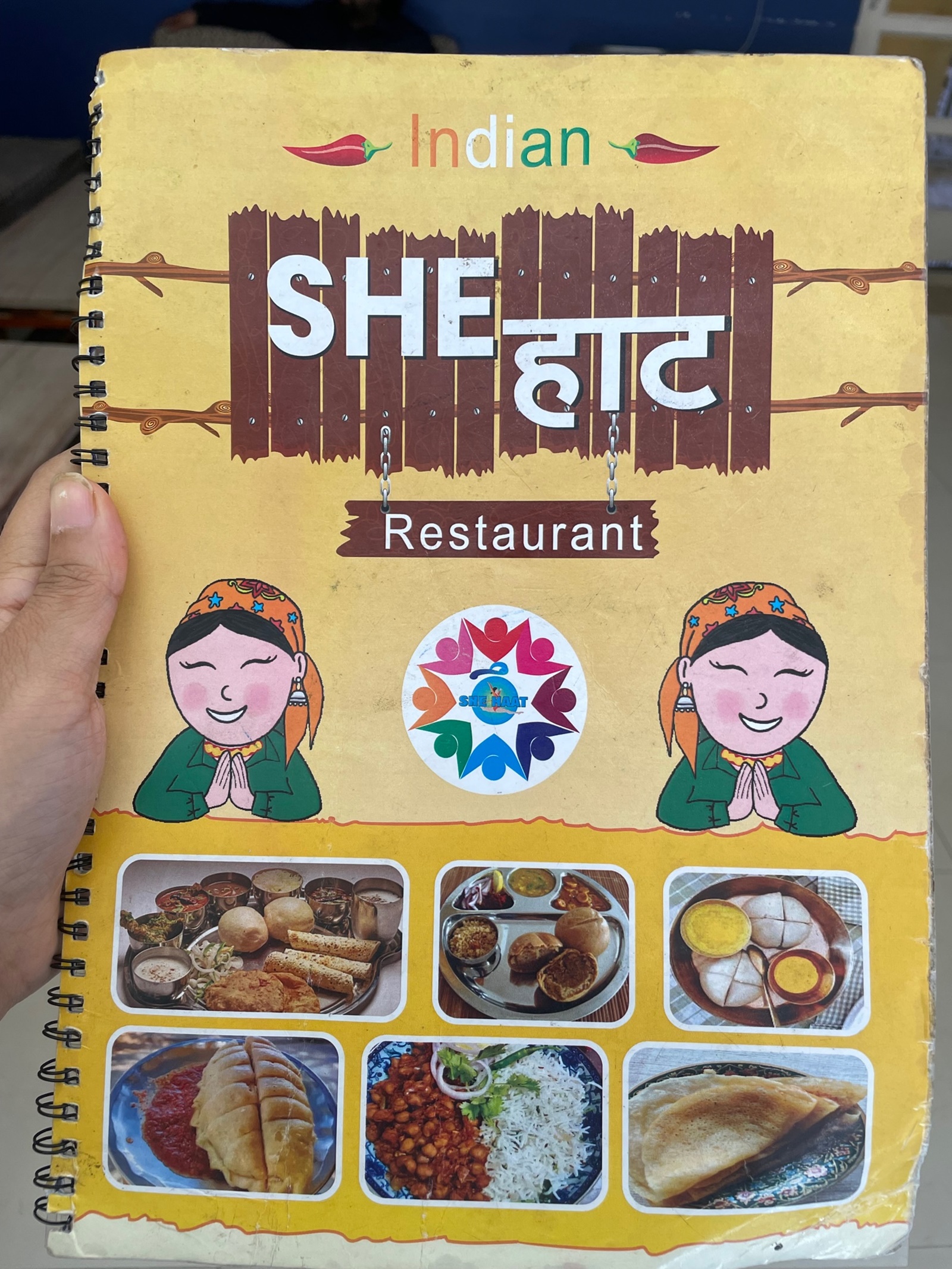 The menu of the restaurant. (Express Photo by Divya Goyal)
Sirmauri thaali (dal, kadhi, askali, patande, poodey, kheer), lushka, saag, bedwi (parantha), geeche (pakora made of arbi leaves) – you name it. That too, at nominal prices. The kitchen has a traditional chulha or clay stove where the local fare is prepared.
At the shop, women sell organic ghee, freshly crushed spices, pickles, squashes, hand-woven baskets, chapati boxes and so on. “Women who don’t work at the Haat can also send their products here for sale and we also take groceries for the restaurant from local women to support their income,” Renu adds.
 Gayatri, one of the workers, cooking traditional food on earthen chulha. (Express Photo by Divya Goyal)
How it all started
IAS officer R K Pruthi, credited as the force behind the project, says the lack of safe, hygienic washrooms for women travellers on the highway was a real problem in the area. “We wanted a group of women who would take care of such a facility like their home. The next step was to make it an economically viable project, and hence we thought of reviving traditional food. None other than local women can prepare it better,” the former deputy commissioner of Sirmaur says.
“I am proud to say that the women working here are not ashamed to do any work — from cleaning the washrooms to stitching, knitting and preparing food — they are doing everything. She Haat is a fine example of how rural tourism can help women to become self-reliant,” adds Pruthi, who is now the Registrar of Cooperative Societies, Himachal Pradesh.
“She Haat is also an eco-friendly facility that serves fresh, mountain-sourced drinking water and has solar panels and a rainwater harvesting system. Our work was to set up the initial infrastructure for them. It cost around Rs 70 lakh, including rooms, kitchen, etc. The land was provided by the village panchayat. We arranged funds from different sources, including NABARD, state tourism department, CSR initiatives, etc,” he says.
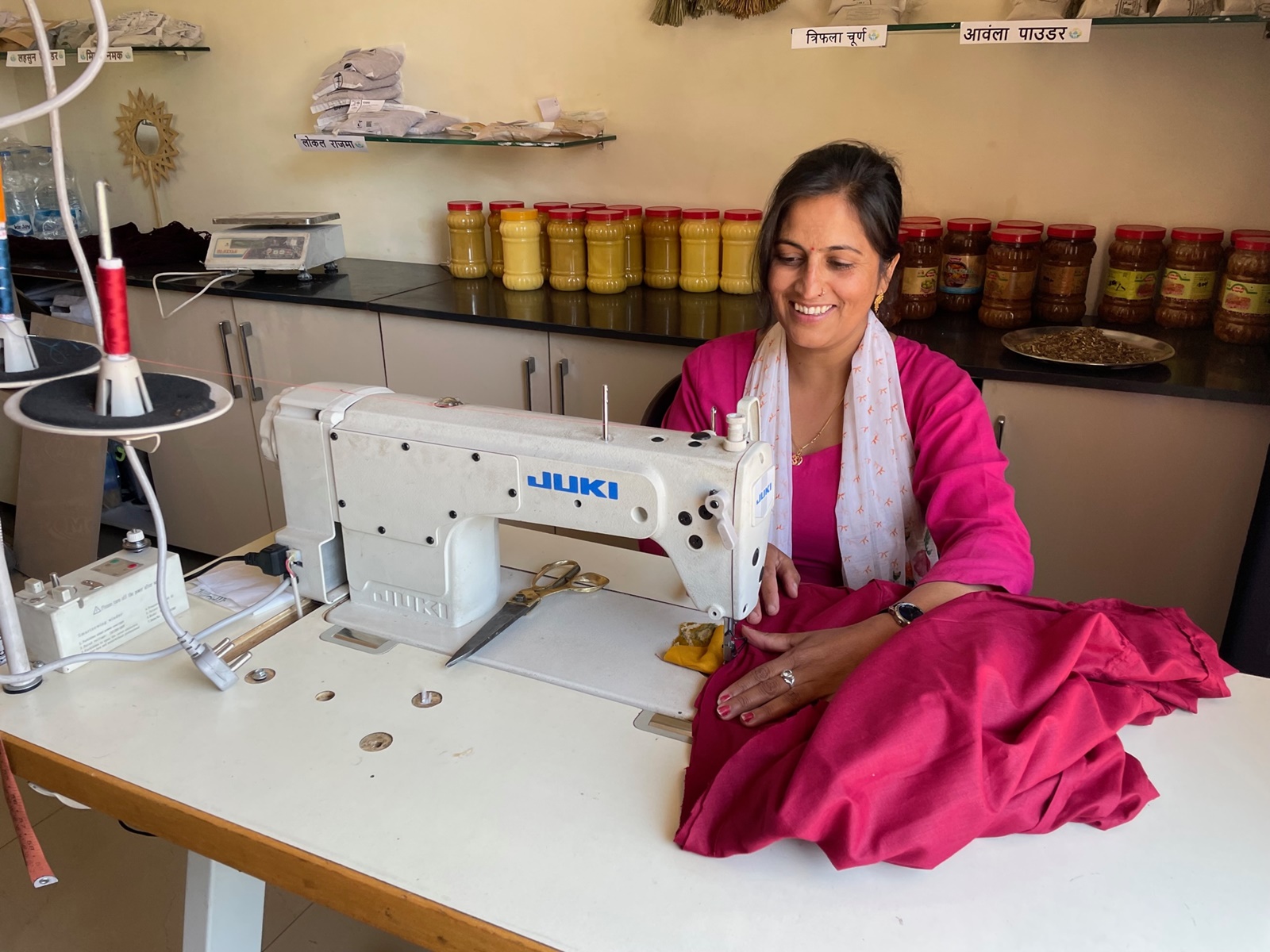 Renu working at the stitching centre. (Express Photo by Divya Goyal)
“The women here deserve credit for working as a team and making it successful despite so many initial hiccups, including Covid. The project is one of its kind in Himachal Pradesh where women have stayed united to achieve their dreams.”
He adds that before the restaurant was officially opened, the women were made to undergo special training in hospitality, food hygiene and finance management to hone their skills.
Former village head Bhatia, who faced several on-ground challenges during the launch, says, “Everyone had to be counselled, including the women, their husbands, in-laws. I moved from home to home, mobilising women. Initially, the women got no money but they worked hard and stayed united. Today they have set an example for the entire state.”
‘Not having to ask anyone for money is deeply satisfying’
If one woman working at She Haat is a graduate, another never went to school, a third was married off as a child, while another is a divorcee. But they all say the same thing – that they had never imagined a world outside their houses which is also why they take care of She Haat like it is their own home.
The most satisfying feeling they have experienced so far, the women say, is that they no longer have to ask others for money, even for their small needs or desires.
Anita Sharma, 50, the head of the workers at She Haat, who hails from Genyana village located 4 km away, says: “By the time our outlet was opened formally, Covid had struck. Par humne himmat nahi chodi (But we did not give up). Earlier, I reared cattle and remained home the entire day. Women here are paid on an hourly basis and work in shifts. While regular workers get an assured sum of Rs 3,500 per month, it could go up to Rs 4,000-5,000 a month after the profits are equally distributed. More than the money, what matters is how it has changed the lives of women here.”
“Baahar ki duniya ka humein kya pata tha…maangna padta tha paisa (What did we know about the world… We had to ask for money). For three-four months initially we worked for free but soon people started praising and paying for our food and services. Now it feels so good when people praise our food,” says Anita, who has studied till Class 12.
Gayatri, 40, from Tikri Pajerli village, who has studied till Class 10, says, “Not having to ask anyone for money, not even my husband, is deeply satisfying. I had never imagined that the food I cook would be appreciated. I live in a joint family but my in-laws supported me so I could work here.”
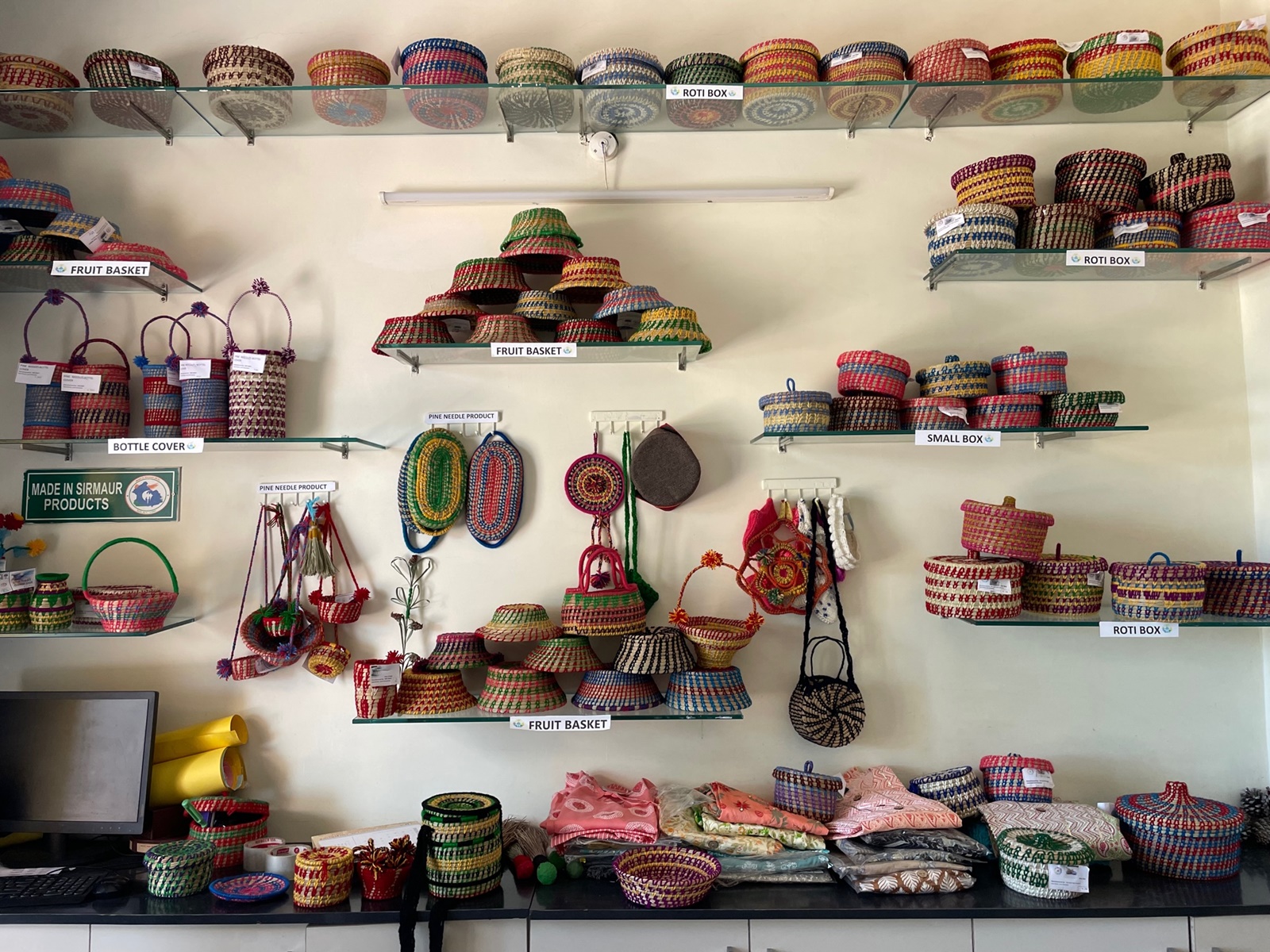 Handcrafted products which are sold by women at She Haat. (Express Photo by Divya Goyal)
Kamla, 41, from Bag Pashog, underlines that their venture has been successful mainly because the women stand united. “My husband runs a repair shop. I have only studied till Class 10. Initially, people mocked us a lot saying that we will only clean utensils and washrooms. But now the same people ask if we can find work for their wives or sisters at She Haat. Our unity is the key to our success. Even if we argue or disagree, it is hardly for a few minutes.”
Renu adds, “After my husband left us, although my in-laws always supported me, I wanted to do something on my own. But I struggled to even talk to others. Due to this job, I was able to contribute to the education of both my children. My daughter is pursuing postgraduation and son is doing his graduation. We now clock sales of Rs 10,000 or more a day, and monthly it is Rs 3-4 lakh. After deducting maintenance and input costs, each woman easily gets Rs 4,000-6,000, depending on shifts.”
A widow from Tikri Pajeli, Tara Devi, 56, says that after her husband’s death, she began to work at an Anganwadi to raise her children. “At She Haat now, our work is valued. For me, talking to strangers was a big issue. I was only 13 when my parents married me off to a man 20 years older. He died, leaving me with two children. I never went to school. But now I can read and also write a bit.”
Meera Thakur, 47, a divorcee, says She Haat gave her a new lease of life. “None of us had ever dreamt of having our own restaurant where people would pay for our desi food. After my marriage fell apart, I used to think that my world had ended but now it feels like life has just started.”


 Share


