3 min readChandigarhApr 20, 2026 10:53 PM IST
First published on: Apr 20, 2026 at 10:53 PM IST
Days after several departments of the Chandigarh Administration voiced their opposition to the Bed and Breakfast (B&B) policy drafted by the Chandigarh Tourism Department, Monday saw representatives of over 200 residents associations rejecting the policy.
The Director Tourism of UT Administration had convened a meeting of the members of Federation of Sectors Welfare Associations of Chandigarh (FOSWAC) and Chandigarh Residents’ Associations Welfare Federation (CRAWFED) to deliberate on the draft policy, allowing accommodations in residential houses to promote tourism in the city. FOSWAC and CRAWFED combined represent more than 200 residents welfare associations (RWAs).

CRAWFED chairman Hitesh Puri while speaking to The Indian Express said that it is alright to promote tourism but why at the cost of peaceful living of the residents.
“There are senior citizens majorly (in the city). Who will be responsible for the nuisance that happens in these residential turned commercial units? Will the law enforcement agencies begin checking each house as to what is happening in the basements or upper floors,” Puri said.
CRAWFED also raised concerns over the policy’s potential impact on law and order, civic infrastructure, and the overall residential character of the city. The members highlighted issues such as parking congestion, inconvenience to neighbouring residents, and the likelihood of increased commercial activity in residential areas.
The association also pointed out that the proposal runs contrary to the long-standing policy of the Chandigarh Administration, which discourages commercial activities in residential zones.
FOSWAC chairman Baljinder Singh Bittu said that already at a 6-marla house, many cars are parked and the policy says that let out up to eight rooms.
“While the Bed and Breakfast policy provides a framework, its implementation and proposed expansion are leading to clear misuse of residential properties for commercial purposes, which is against the spirit of Chandigarh’s planned urban structure, Bittu told The Indian Express.
“Establishments hotels and guest houses operating in designated commercial areas comply with strict regulations and pay applicable charges, unlike such operations in residential houses. Also there will be continuous movement of unknown guests poses serious safety concerns, particularly for families, women, and senior citizens.”
Bittu also said that many such establishments operate without proper approvals such as fire safety clearance, food safety licensing, and taxation compliance. The residents also mentioned that there will be disturbance to peaceful living with noise, crowding, and commercial activity affecting the quality of life of residents.
FOSWAC said that it is not in favour of the policy and urged the administration to not allow any commercial/tourist activity in residential premises and restrict them strictly to designated commercial zones.
As per the new draft policy, property owners intending to operate a B&B must register their premises with the prescribed authority. The policy allows owners to let out up to eight or more rooms per homestay unit. Interestingly, it does not mandate the physical presence of the owner or family members on the premises, provided all other conditions are fulfilled.

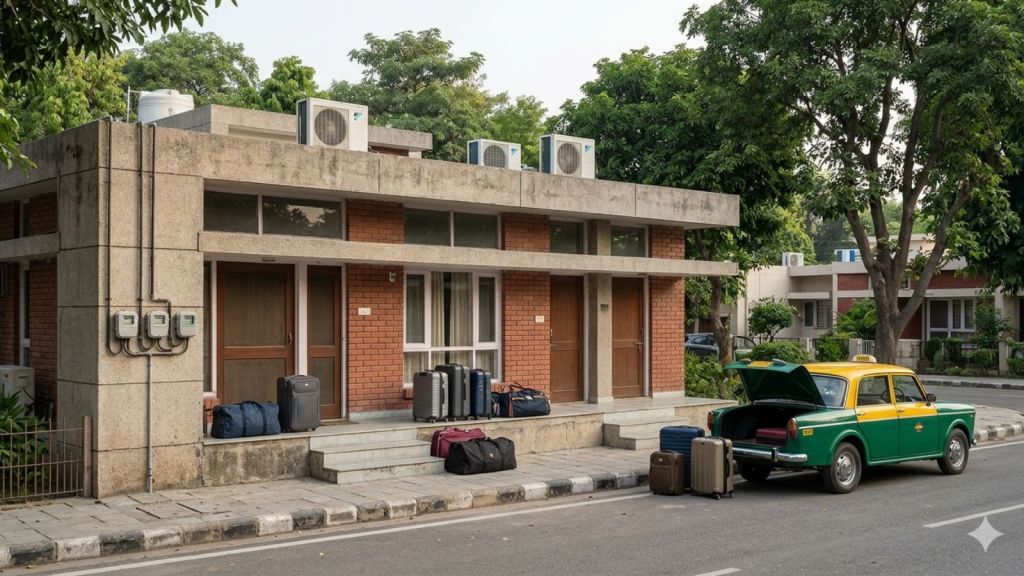 FOSWAC chairman Baljinder Singh Bittu said that already at a 6-marla house, many cars are parked and the policy says that let out up to eight rooms. (Image generated using Google Gemini)



 Share


