3 min readAmritsarMay 7, 2026 06:38 PM IST
First published on: May 7, 2026 at 06:37 PM IST
It has been a year since India suspended the Kartarpur Corridor pilgrimage – the visa-free passage for Indian pilgrims to Gurdwara Darbar Sahib in Pakistan’s Narowal district – “until further notice” following Operation Sindoor on May 7 last year.
On the day of the closure, nearly 150 Indian pilgrims had arrived at the Integrated Check Post (ICP) for the pilgrimage to the historic gurdwara but were asked to return home. Gurdwara Darbar Sahib is the final resting place of Guru Nanak Dev, the founder of Sikhism.

Devotees still come to the Zero Line to have a glimpse of the shrine, which is situated a few kilometres inside Pakistan from the international border. A raised platform from where devotees could get a better view of the gurdwara was also damaged in the floods last year.
The closure has drawn sharp criticism from the Shiromani Gurdwara Parbandhak Committee (SGPC), the apex Sikh religious body. On March 28, the SGPC formally passed a resolution in its annual budget session demanding the immediate reopening of the corridor.
SGPC Chief Secretary Kulwant Singh Mannan said, “The stand of the SGPC on the matter is crystal clear from the beginning – the corridor should be reopened at the earliest.” He, thereafter, remarked, “When cricket ties could be restored, then why not religious ones?”
The SGPC’s resolution stressed that the prolonged closure has deeply hurt the religious sentiments of the Sikh community worldwide.
Inaugurated on November 9, 2019, by Prime Minister Narendra Modi to mark the 550th birth anniversary of Guru Nanak Dev, the corridor allowed visa-free travel for up to 5,000 Indian pilgrims daily.
Apart from the Kartarpur Corridor pilgrimage, the retreat ceremony at the Attari-Wagah border was also suspended in the wake of the Pahalgam terror attack and the subsequent Operation Sindoor.
The ceremony resumed in a limited capacity on May 20, 2025, without the usual handshakes and distribution of sweets.
The impact on the ceremony’s character has been profound. Now, audiences on both sides can no longer see each other, as the gates remain shut from start to finish.
Gone too is the synchronisation between BSF soldiers and Pakistani Rangers – the mirrored kicks, the eyeline locked across the Zero Line, the unspoken competitive tension that made the event uniquely gripping. Earlier, both sides would come within inches of the Zero Line during the intense parade, almost crossing it. Spectators could gauge who had the sharper drill that evening. Now, the Indian audiences watch only the BSF, and Pakistani audiences see only their Rangers.

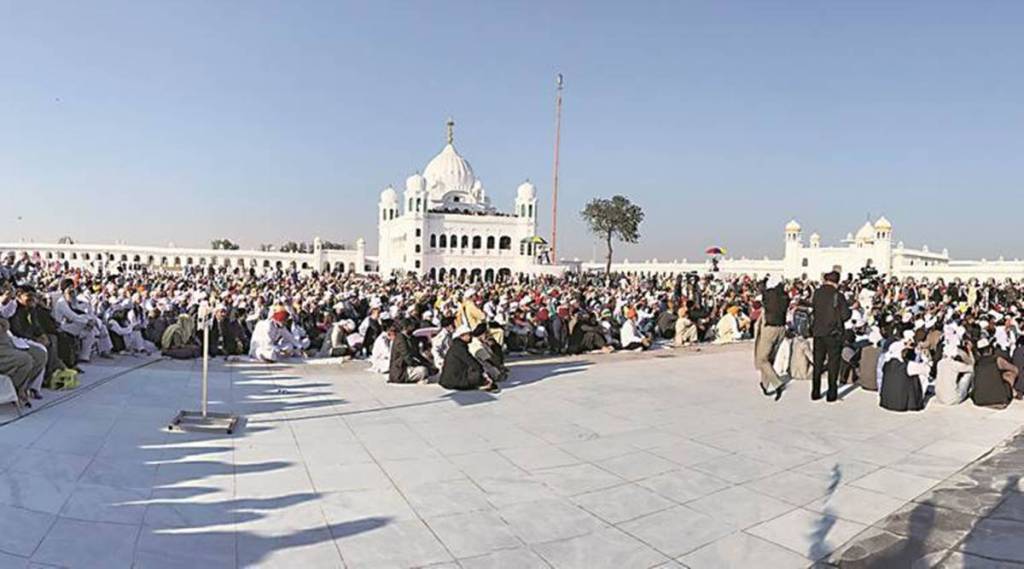 Kartarpur Corridor, which connects Gurdwara Darbar Sahib (Pakistan), the final resting place of the first Sikh Guru, with Dera Baba Nanak in Gurdaspur, has been closed since Operation Sindoor. (File)


 Share


